2026 Best Portable Traffic Lights for Global Buyers
Choosing the best Portable Traffic Lights in 2026 requires more than comparing prices, battery capacity, or product photographs. Global buyers need equipment that performs reliably beside roadworks, bridge repairs, temporary lane closures, and emergency maintenance zones. A unit may look impressive in a catalog, yet fail when rain covers its lens or a battery weakens during a cold morning shift.
Real-world details matter.
This guide examines portable signal systems through practical purchasing criteria. These include visibility distance, signal timing accuracy, wireless communication, battery endurance, transport weight, charging options, and protection against dust and water. It also considers installation time, operator training, spare parts, and after-sales support. Experienced contractors often discover that a simple control interface prevents costly mistakes during a busy traffic diversion. That lesson is easy to overlook.
Performance claims should be checked against test records, technical documentation, and applicable regional requirements. Certification expectations differ between countries, so buyers should confirm local acceptance before placing large orders. Reliable manufacturers should explain their testing methods clearly and provide traceable specifications. Independent inspections may also be sensible for major infrastructure projects.
No product fits every road.
A lightweight system may suit urban maintenance, while a larger solar-assisted model may serve remote construction areas. Weather, road width, traffic volume, and work duration can change the decision completely. Some evaluations may remain imperfect because field conditions vary more than laboratory results suggest. Still, careful comparison can reduce operational risk, improve traffic flow, and support safer temporary road management for buyers worldwide.
Portable Traffic Lights: Definition, Components, and Operating Principles
Portable Traffic Lights: Definition, Components, and Operating Principles
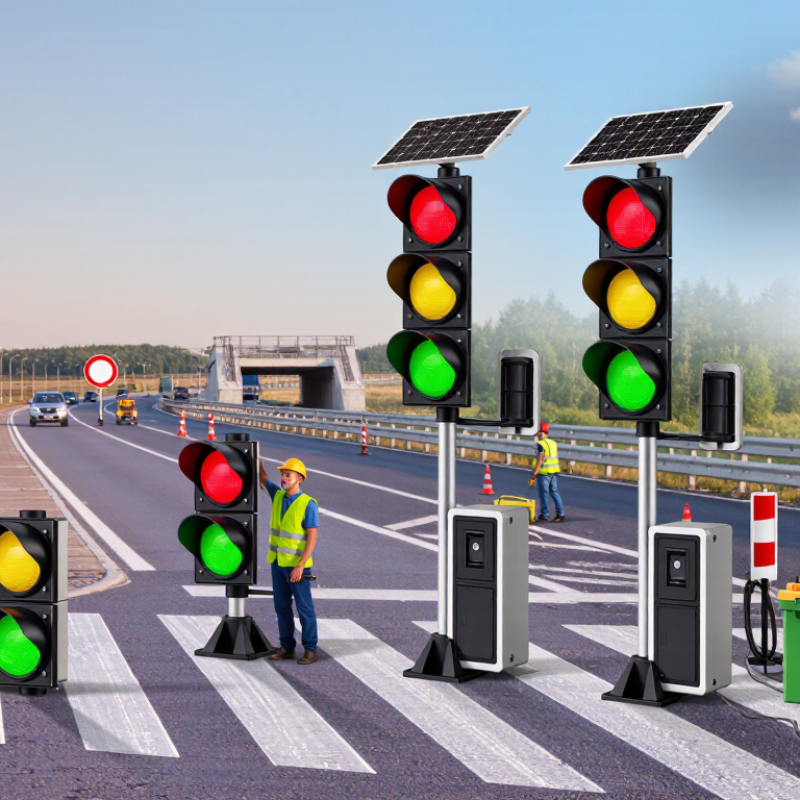
Portable traffic lights are temporary signal systems used to control vehicles and pedestrians near roadworks, bridge repairs, and narrow lanes. Unlike fixed signals, they can be moved, aligned, and programmed for changing traffic conditions. A typical unit includes an LED signal head, telescopic stand, control cabinet, rechargeable battery, and communication link. Some models also use vehicle sensors, pedestrian buttons, or countdown displays.
The signal head provides clear red, amber, and green indications in daylight, rain, and dusty conditions. The control cabinet manages timing, phase changes, and communication between paired units. Wireless links reduce cable hazards, while wired links may offer steadier performance in difficult environments. Batteries should provide enough operating time for the planned shift, with reserve capacity for delays. Small details matter. Stable feet prevent movement on uneven surfaces.
The operating principle is simple but carefully controlled. One direction receives green while the opposing direction remains red. Amber gives drivers a short warning before the phase changes. Paired lights must remain synchronized, even when traffic demand changes. Vehicle sensors can extend or reduce green time, but poor positioning may produce inaccurate decisions. Manual override controls help trained operators respond to incidents or unusual queues.
Field checks should include lens cleanliness, battery condition, signal alignment, and communication status. A weak radio connection can create confusion. A practical concern is often overlooked: temporary lights may be visible, yet poorly placed signs still cause hesitation. Good equipment cannot correct every setup mistake.
2026 Best Portable Traffic Lights for Global Buyers - Portable Traffic Lights: Definition, Components, and Operating Principles
A practical comparison of portable traffic-light configurations, operating features, and purchasing considerations for temporary road works, bridge maintenance, lane closures, emergency response, and other short-term traffic-control applications.
| Evaluation Dimension | Portable Traffic-Light Category | Typical Configuration or Specification | Operating Principle | Best-Fit Application | Key Buyer Considerations |
|---|---|---|---|---|---|
| Definition | Temporary two-way traffic-control system | Two or more movable signal heads connected by wired or wireless communication | Alternately gives right-of-way to opposing traffic streams so that only one direction proceeds at a time | Single-lane road works, bridge repairs, utility construction, and temporary lane closures | Confirm that the system is permitted for temporary traffic management in the intended country or region |
| Signal arrangement | Three-aspect signal head | Red, amber, and green lamps arranged vertically or horizontally according to the applicable local practice | Red stops traffic, green permits movement when the route is clear, and amber warns of an approaching phase change | General temporary traffic control on public or private roads | Verify lens diameter, mounting height, visibility distance, and compatibility with local signal conventions |
| Control mode | Pre-programmed timed control | Fixed red, amber, and green intervals configured for the work zone | A controller repeats a programmed cycle without requiring a permanent traffic-signal cabinet | Sites with predictable traffic flow and stable work-zone geometry | Useful when simplicity is important; timing should allow adequate clearance for the longest vehicle path |
| Control mode | Vehicle-actuated control | Vehicle detectors or radar sensors connected to the signal controller | The controller detects approaching vehicles and adjusts or calls the next traffic phase | Low-volume roads, uneven traffic demand, and locations where fixed timing causes unnecessary delay | Check detection range, false-detection resistance, weather performance, and sensor mounting requirements |
| Communication | Wired synchronization | Signal units connected by a cable, commonly routed along the road edge or work-zone boundary | Timing commands and phase status travel through a direct physical connection | Short work zones where cable routing is practical | Provides a direct link but requires cable protection against vehicles, water, machinery, and trip hazards |
| Communication | Wireless synchronization | Paired signal units using a dedicated radio link or other approved wireless communication method | One controller or paired controllers exchange timing information without an interconnecting cable | Longer or changing work zones, bridge projects, and locations where cables are difficult to protect | Evaluate communication range, frequency approval, antenna position, interference resistance, and link-loss behavior |
| Power system | Rechargeable battery power | Sealed rechargeable battery pack with a charger and battery-status indication | Stored electrical energy powers the lamps, controller, detectors, and communication equipment | Portable projects without convenient access to mains electricity | Battery runtime depends on lamp technology, temperature, cycle timing, radio use, and battery condition |
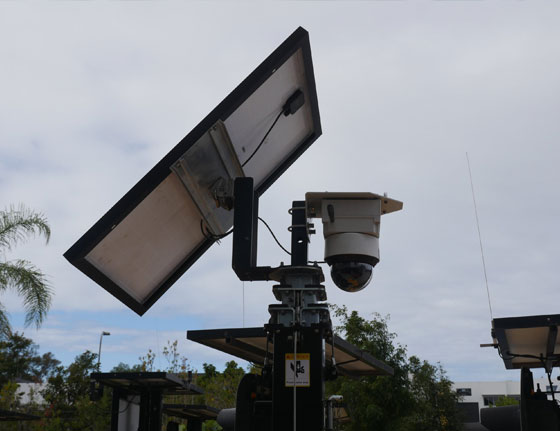
| Power system | Solar-assisted power | Solar panel, charge controller, rechargeable battery, and low-power signal equipment | Solar energy recharges the battery during daylight while the battery supplies power during operation and at night | Remote work zones and projects requiring reduced generator use | Assess daily sunlight, panel orientation, seasonal weather, battery reserve, shading, and snow or dust exposure |
| Lamp technology | LED signal modules | High-efficiency light-emitting diodes behind colored lenses or optical filters | LEDs convert electrical energy directly into visible light with low heat generation and fast switching | Most modern temporary traffic-control applications | Look for uniform light output, low-voltage protection, replaceable modules, and sufficient daytime visibility |
| Visibility | Day and night operation | Automatic or manual brightness control with optical shielding to reduce glare and conflicting light | The system adjusts light intensity or uses different operating levels for ambient conditions | Projects operating continuously across daylight and nighttime periods | Confirm visibility in direct sunlight, rain, fog, and darkness without creating excessive nighttime glare |
| Mobility | Trailer-mounted system | Signal heads mounted on a towable frame with stabilizers, battery enclosure, and adjustable supports | The complete traffic-control unit can be transported and positioned with limited site assembly | Longer projects, highway maintenance, and locations requiring frequent relocation | Check towing requirements, parking stability, wheel or axle condition, lifting points, and transport dimensions |
| Mobility | Tripod or pole-mounted system | Lightweight signal head on a collapsible stand, pole, or compact base | A small portable unit is manually positioned and secured at each end of the controlled section | Short-duration work, pedestrian areas, private sites, and narrow access routes | Prioritize low setup effort, ballast or anchoring options, compact storage, and resistance to accidental impact |
| Safety component | Controller and fail-safe logic | Microprocessor controller with cycle memory, fault monitoring, and configurable operating modes | The controller coordinates signal phases and can place the system in a safe state when a fault is detected | Any work zone where conflicting green indications must be prevented | Ask how the system responds to low battery, communication loss, lamp failure, detector failure, and controller reset |
| Safety component | Manual override and emergency mode | Local control panel, remote control, all-red mode, or flashing mode where legally permitted | An authorized operator can stop normal sequencing or select a predefined emergency state | Emergency works, incident response, changing road layouts, and maintenance operations | Controls should be protected against accidental operation and clearly indicate the current system status |
| Environmental protection | Outdoor enclosure and weather resistance | Sealed electrical enclosure with protected connectors, drainage provisions, and corrosion-resistant structure | The enclosure limits the entry of water, dust, and debris into control and power components | Rain-exposed, dusty, coastal, or highly variable outdoor environments | Review the declared ingress-protection rating, operating-temperature range, corrosion protection, and cable sealing |
| Traffic management | Queue and clearance management | Adjustable phase timing, minimum green time, maximum red time, and intergreen or clearance interval | The controller allows one direction to clear the controlled section before releasing opposing traffic | Variable work-zone lengths, heavy vehicles, and roads with changing traffic demand | Measure the actual controlled distance and consider vehicle type, slope, visibility, and pedestrian activity |
| Global purchasing | Regulatory and documentation package | Installation instructions, electrical data, risk information, maintenance guidance, and conformity documents where required | Documentation supports correct installation, operation, inspection, and compliance assessment | International procurement, public infrastructure projects, and contractor fleet purchasing | Requirements vary by jurisdiction; request local-language manuals, test reports, and applicable conformity evidence |
| Maintenance | Serviceable modular design | Replaceable lamp modules, batteries, fuses, connectors, controller components, and detector units | Individual parts can be inspected or replaced without discarding the complete traffic-light assembly | Contractors operating multiple units or projects in remote locations | Compare spare-part availability, battery replacement intervals, diagnostic indicators, and technician access |
| Selection priority | Best overall configuration for many temporary works | LED signal heads, rechargeable battery power, wireless synchronization, adjustable timing, and fault monitoring | Combines low energy consumption, flexible installation, coordinated phase control, and basic operational safeguards | General road maintenance and medium-duration lane closures | Select only after confirming local traffic regulations, work-zone geometry, visibility, and required operating duration |
Technical values and operating features should be verified against the supplier’s current datasheet, installation manual, testing records, and the regulations applicable to the destination market.
Related Posts
-

Exploring Innovative Alternatives to Solar Street Lights for Sustainable Urban Lighting Solutions
-
Leading the Global Market with Best Led Solar Lights Outdoor from China's Premier Manufacturers
-

The Future of Sustainable Illumination: Embracing Solar Powered LED Lights
-

The Ultimate Comparison of Solar Led Parking Lot Lights for Modern Facilities
-
How to Choose Solar Street Lights With Pole for Your Needs?
-
Revolutionizing Urban Lighting with Eco Friendly Solar Street Lights