2026 Top COB Fine Pitch LED Display Manufacturers
COB fine pitch LED displays are moving from specialist installations into control rooms, broadcast studios, corporate spaces, and premium retail. Their appeal is tangible: a close-view image with fewer exposed components, a smoother surface, and less visible pixel structure. But a specification sheet cannot tell the whole story. Cabinet alignment, service access, image consistency, and support after installation matter just as much.
Market forecasts show why manufacturers are investing in this category. MarketsandMarkets projected the broader LED display market would grow from USD 7.1 billion in 2024 to USD 10.3 billion by 2029, a 7.7% compound annual growth rate. That estimate covers LED displays overall, not COB fine pitch LED products alone. It is useful context, not proof that every supplier will deliver the same results.
This 2026 guide compares manufacturers through practical criteria: pixel-pitch options, brightness control, reliability testing, calibration, and service capability. Look beyond headline claims. Ask how a damaged module is replaced, how color uniformity is maintained across a large wall, and whether the quoted viewing distance fits your room. Small details matter. Manufacturer rankings can also shift as product lines and regional support change. Treat this list as a starting point, then verify current specifications, references, and warranty terms before choosing a display partner.
What Defines a COB Fine Pitch LED Display?
2026 Top COB Fine Pitch LED Display Manufacturers
What Defines a COB Fine Pitch LED Display?
A COB fine-pitch LED display places bare LED chips directly onto a circuit board, then covers them with a shared protective coating. That differs from displays using separately packaged surface-mounted LEDs. The coating helps protect the emitting surface from knocks and dust, while the compact chip layout supports dense pixels and close viewing. In practice, “fine pitch” often means pixel pitches of 2.5 mm or less, but the boundary varies across the industry.
Pixel pitch is the distance between neighboring pixel centers. A smaller pitch can make text and thin lines look smoother at short viewing distances, such as in a control room. But it can also increase cost and make individual pixel repairs more demanding. The distinction is useful, though not perfect. AVIXA’s 2024 Industry Outlook and Trends Analysis projects professional audiovisual revenue to grow from $325 billion in 2024 to $402 billion in 2029. This indicates a growing AV market, not a COB-specific sales forecast.
Tips: Match pitch to the nearest viewer, not just the room’s headline screen size. Check surface uniformity, low-brightness performance, and repair procedures in person. A specification sheet cannot show every real-world flaw. Ask for a close-up demo with fine text and moving content.
How COB Technology Shapes Fine Pitch Display Performance
COB (chip-on-board) packaging places LED chips directly on a circuit substrate and covers them with a protective layer. In fine-pitch displays, this design can reduce exposed connections and create a smoother pixel surface. The difference is noticeable at close viewing distances, where small gaps and uneven reflections stand out. That matters in control rooms, studios, and retail spaces.
A sealed surface can help resist dust and incidental contact, while dense pixel layouts support crisp text and graphics. It is not magic. Heat still needs a dependable path away from the chips; packaging alone cannot solve thermal design. Manufacturers need to manage substrate materials, bonding consistency, calibration, and cabinet ventilation. A display may look excellent in a showroom but show color shifts after hours of operation. Sustained-brightness testing is essential.
COB can make individual pixel repairs more complex, and its upfront cost may exceed that of other packages. Not every installation needs the tightest pixel pitch. Compare viewing distance, ambient light, and maintenance access alongside specifications. Inspect dark scenes, fine lines, and gray gradients on the actual display. Details matter. The technology can support strong performance, but execution determines whether that performance lasts. A datasheet alone rarely reveals every practical trade-off.
2026 Top COB Fine Pitch LED Display Manufacturers — How COB Technology Shapes Fine Pitch Display Performance
Smaller pixel pitch means more pixels per square meter. Values are calculated for square pixels using (1,000 ÷ pixel pitch in millimeters)²; they illustrate pixel density, not measured performance differences between packaging technologies. COB packaging can support fine-pitch designs through direct chip mounting and a protective encapsulation layer.
Criteria for Comparing COB Fine Pitch LED Manufacturers in 2026
When comparing COB fine pitch LED manufacturers in 2026, start with viewing distance and room conditions, not headline pixel pitch. A 0.9 mm display may suit a control room viewed nearby, while a bright lobby needs different brightness and contrast settings. Request measured brightness, grayscale performance, refresh behavior, and color uniformity at multiple levels. Ask how the measurements were taken; one showroom demonstration proves little.
Inspect module construction, thermal management, and repair procedures. Can technicians replace a damaged module without disturbing adjacent cabinets? Request sample test reports and check whether they match the proposed configuration. Evaluate color consistency across a full wall, not just one cabinet. A polished specification sheet can still leave questions about long-term maintenance.
I would also verify spare-part availability and response times in writing; these details are easy to overlook.
Tips: View a sample at your intended distance and content brightness. Use fine text, dark scenes, and moving images. Note visible seams, reflections, and uneven color. A quick visit helps, but it cannot replace a documented reliability plan.
Key Applications and Market Trends for COB Fine Pitch Displays
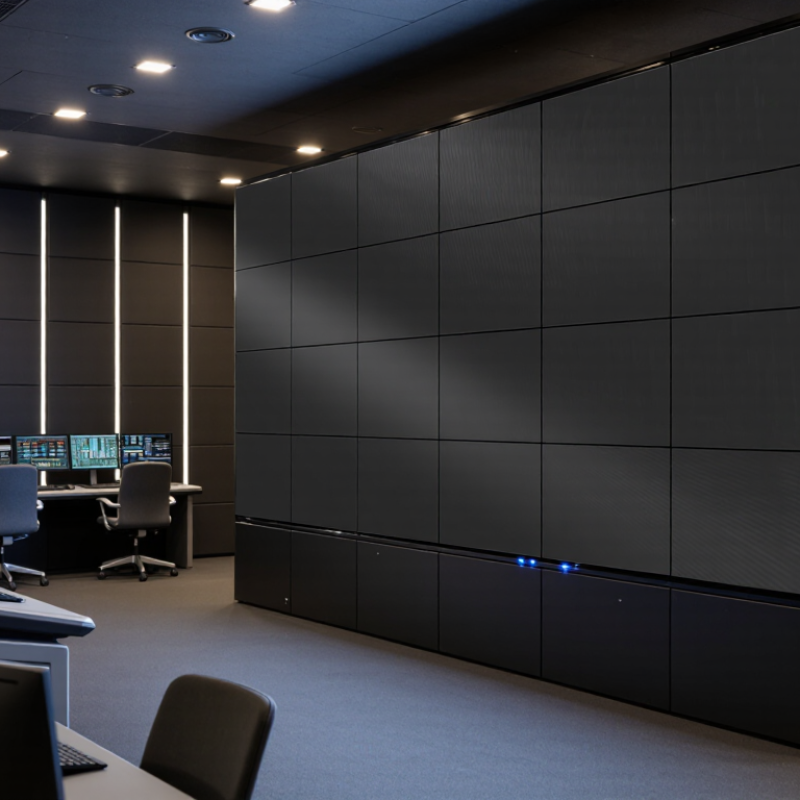
COB fine-pitch LED displays serve control rooms, meeting spaces, broadcast studios, and premium retail interiors. Their compact pixel spacing supports clear images when viewers sit close to the screen. The sealed surface can also help protect LED components from dust and minor contact. In a control room, operators may read maps and small labels across a large canvas. In a store, vivid product visuals can draw attention without requiring a large viewing distance. Installation conditions still matter.
Market interest is growing as organizations seek seamless, large-format images with fewer visible gaps. COB packaging is one option, not a universal replacement for other display technologies. Buyers should compare pixel pitch, brightness, service access, power use, and total operating cost. Better contrast is useful, but room lighting can change the result. A display that looks impressive in a dark showroom may feel too bright in a sunlit lobby. Specifications alone do not tell the whole story.
Tips: View sample content from your expected distance, including fine text and moving footage. Ask how damaged modules are repaired and what maintenance access requires. Check ventilation and power needs before planning the wall. Small details matter. A rushed site survey can lead to costly adjustments later.