5 Best Melasma Nanosecond Picosecond Laser Machines
Melasma can appear as brown or gray-brown patches across the cheeks, forehead, or upper lip. It often returns, even after visible improvement. Choosing a laser therefore requires more than comparing advertised power or speed. This guide introduces five nanosecond and picosecond laser machines commonly considered for melasma-related treatment, with attention to practical features and limitations. Results vary.
Melasma Nanosecond Picosecond Laser systems deliver short pulses of energy, but their wavelengths, spot sizes, pulse settings, and cooling options differ. These details can affect how a qualified practitioner plans treatment for different skin tones and pigment patterns. A machine’s specifications alone cannot predict an individual result. That matters. Melasma may worsen with irritation, heat, or sun exposure, so careful assessment and conservative settings are important.
The comparison focuses on factors buyers and practitioners can verify, including available wavelengths, user controls, safety features, service support, and suitability for clinical use. It does not treat any device as a guaranteed cure or replace medical advice. A dermatologist or appropriately trained laser professional should assess the diagnosis, skin type, and treatment history before procedures begin. Patch testing and follow-up may also be appropriate. Even a promising device can disappoint when expectations are unrealistic, and that deserves honest consideration.
Understanding Melasma and Its Response to Laser Treatment
Melasma is a chronic pigment disorder, not simply a surface stain. Brown or gray-brown patches often appear on the cheeks, forehead, and upper lip, where sunlight reaches the skin. The 2017 review in the International Journal of Women’s Dermatology reports prevalence estimates of about 1% in the general population and 9–50% in higher-risk groups. These wide ranges reflect differences in populations and study methods. Melasma is more common in women and darker skin types, but it can affect anyone. Heat and visible light may also aggravate pigmentation. Small triggers matter.
Nanosecond and picosecond lasers deliver brief energy pulses that target pigment, but melasma’s biology makes results unpredictable. Pigment may sit at different depths, and inflammation from treatment can sometimes darken the skin, especially in darker phototypes. Clinical reviews describe laser treatment as an option for selected, treatment-resistant cases, rather than a guaranteed first choice. Settings, wavelength, skin tone, and aftercare all influence risk and response. A lighter patch after one session does not prove lasting control; recurrence is common when triggers persist. This is the awkward truth: a powerful device can clear visible pigment and still leave the underlying tendency untouched. Assessment by a qualified dermatologist, careful test spots, and consistent sun protection help guide safer decisions.
How Nanosecond and Picosecond Lasers Target Pigment
5 Best Melasma Nanosecond Picosecond Laser Machines
How Nanosecond and Picosecond Lasers Target Pigment
Melasma forms when pigment-producing cells create excess melanin, often in visible brown or gray-brown patches on the cheeks and forehead. Nanosecond and picosecond lasers deliver energy in extremely brief pulses: 10⁻⁹ and 10⁻¹² seconds, respectively, as defined in the BIPM International System of Units. Depending on wavelength and settings, that energy can disrupt pigment particles through heat and pressure-like effects. The body then gradually clears some fragments. Shorter pulses do not automatically mean better results.
Melasma is stubborn. Lasers may reduce visible pigment, but irritation and excess heat can also trigger darker patches, especially in deeper skin tones. Clinical reviews describe laser treatment as an option requiring careful selection and monitoring, rather than a guaranteed fix. Evidence varies by device, settings, and patient, so a machine’s pulse duration alone cannot establish its effectiveness. That distinction matters.
Tips: Ask a qualified dermatologist about wavelength, test spots, and realistic treatment goals. Take a clear baseline photo in consistent lighting. Discuss sun protection and recurrence before treatment; even a good response may fade unevenly.
5 Best Melasma Nanosecond Picosecond Laser Machines - How Nanosecond and Picosecond Lasers Target Pigment
Important: Laser treatment is not a guaranteed or universally first-line treatment for melasma. It may worsen or reactivate pigmentation, and recurrence is common. Daily broad-spectrum sun protection and a dermatologist-guided treatment plan are essential. Pulse durations and treatment suitability vary by device and patient.
Key Criteria for Comparing Melasma Laser Machines
5 Best Melasma Nanosecond Picosecond Laser Machines
Key Criteria for Comparing Melasma Laser Machines
Compare machines by wavelength, pulse duration, spot size, fluence control, and cooling—not by marketing claims. Melasma can affect different skin depths, and excess heat may worsen pigmentation in some patients. A 1064-nm wavelength is commonly assessed for darker skin types, while other wavelengths require careful patient selection. Nanosecond and picosecond labels alone do not predict safer or better results.
The 2014 clinical and epidemiological review by Handel, Miot, and Miot in Anais Brasileiros de Dermatologia reported prevalence estimates ranging from 1% in the general population to 9–50% in higher-risk groups. That variation makes adjustable settings and clear treatment records important. Check whether the device displays energy consistently, supports small parameter changes, and has documented calibration and maintenance. Ask for clinical evidence involving comparable skin phototypes, not only before-and-after images. Details matter.
For a practical comparison, review the operator interface, cooling method, service support, and availability of adverse-event guidance. Request published outcomes that report recurrence and follow-up duration, since short-term fading can be misleading. I would not rank pulse speed alone; it is an easy but incomplete shortcut. A small gap remains: studies use different protocols, so direct machine comparisons may be weak. Choose evidence and control features over impressive specifications.
Melasma Laser Machines: Key Comparison Criteria
Pulse duration is one technical criterion when comparing nanosecond and picosecond lasers. The chart shows exact unit conversions—not specifications for particular machines or evidence of treatment effectiveness.
1 nanosecond equals 1,000 picoseconds. For a fuller comparison, check wavelength, available spot sizes, fluence range, cooling, safety features, and clinical evidence. Laser treatment can worsen pigmentation in some people with melasma; suitability should be assessed by a qualified clinician.
Five Leading Nanosecond and Picosecond Laser Machines
Five Leading Nanosecond and Picosecond Laser Machines
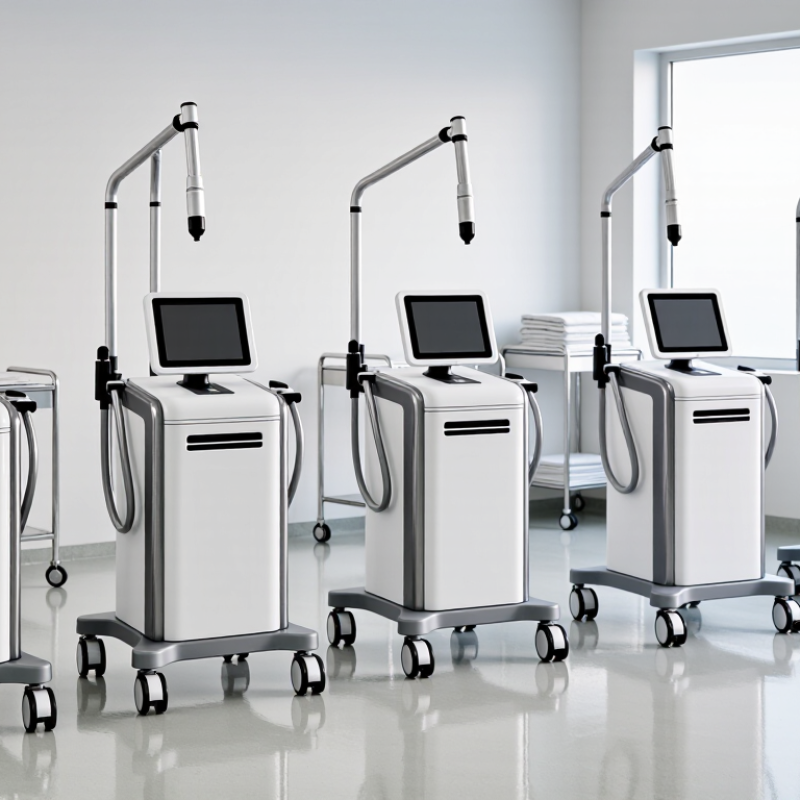
Five leading options for melasma-prone skin are 1064 nm Q-switched Nd:YAG, 532 nm Q-switched Nd:YAG, 755 nm picosecond alexandrite, 1064 nm picosecond Nd:YAG, and picosecond systems with fractional lens arrays. These describe laser platforms, not guaranteed treatments. DermNet NZ’s clinical reference estimates melasma affects about 1% of the general population and up to 50% of high-risk groups. Skin tone matters. Pigment depth, recent tanning, and previous irritation can change the risk of darkening after treatment.
Nanosecond devices deliver energy in billionths of a second; picosecond devices use trillionths. Shorter pulses do not automatically mean better results. A 2022 systematic review in the Journal of Cosmetic Dermatology found varied outcomes across laser studies, reflecting differences in settings and patient selection. A practitioner should assess the skin, explain likely benefits and risks, and use conservative settings. Recurrence remains possible.
Tips: Ask which wavelength suits your pigment and skin tone, and whether a test spot is appropriate. Confirm eye protection and cooling are available. Daily broad-spectrum sunscreen is essential; visible light can also worsen pigmentation. Keep a simple record of settings and skin response. Small steps help. These details matter, though real-world results can still be unpredictable.
Safety, Treatment Planning, and Expected Outcomes
5 Best Melasma Nanosecond Picosecond Laser Machines
Safety and planning matter more than a machine’s pulse label. Melasma can darken after heat or irritation, especially in deeper skin tones. A qualified clinician should review skin type, medications, previous reactions, and recent sun exposure before choosing a wavelength or settings. Baseline photographs and a small test area can help reveal unwanted pigment changes. Keep expectations cautious. Results vary.
A sensible plan often pairs conservative laser settings with daily broad-spectrum sunscreen and visible-light protection. In a randomized 2014 Journal of the American Academy of Dermatology study, 68 women used either iron-oxide sunscreen or UV-only sunscreen for eight weeks. The iron-oxide group’s melasma severity score improved by about 75%, compared with 60% in the UV-only group. That study supports light protection; it does not prove a laser will deliver the same result. Nanosecond and picosecond treatments may lighten patches, but recurrence and post-inflammatory darkening remain possible. Follow-up photos, symptom checks, and gradual treatment spacing help guide adjustments. A tidy device ranking can mislead: the same settings may not suit every face, and even careful plans sometimes need revision.