Blog

7 Best Polymeric Surge Arresters for Global Buyers

Global electricity demand is accelerating, placing greater pressure on transmission and distribution equipment. The International Energy Agency’s Electricity 2024 report projects average global demand growth of about 3.4% annually through 2026. More energized networks also face switching surges, lightning exposure, pollution, and aging insulation.

A Polymeric Surge Arrester can help limit these transient overvoltages while offering practical advantages in weight, hydrophobicity, and installation flexibility. However, polymeric housing alone does not guarantee dependable protection. Buyers should examine continuous operating voltage, rated voltage, energy capability, pressure-relief performance, leakage-current behavior, and long-term sealing quality. Details matter.

This guide evaluates seven leading options for global buyers using recognized technical principles rather than marketing claims. IEC 60099-4:2014+A1:2018 defines testing and performance requirements for metal-oxide surge arresters. IEEE Std C62.11-2020 provides complementary guidance for non-linear resistor-type arresters. CIGRE technical publications also stress coordinated insulation design, correct system grounding, and realistic service conditions.

Field experience shows that climate can change the purchasing decision. A coastal substation may demand stronger pollution resistance, while a high-altitude installation may require careful thermal and insulation review. The lowest purchase price is rarely the complete cost.

Not every winner fits.

The following comparison considers certification evidence, construction quality, application range, supplier support, and published reliability information. Some product data remain difficult to verify across regions, so buyers should request current test reports, traceable certificates, installation instructions, and warranty terms before approval. A ranking can guide judgment, but it cannot replace engineering review.

7 Best Polymeric Surge Arresters for Global Buyers

What Polymeric Surge Arresters Are and How They Protect Electrical Systems

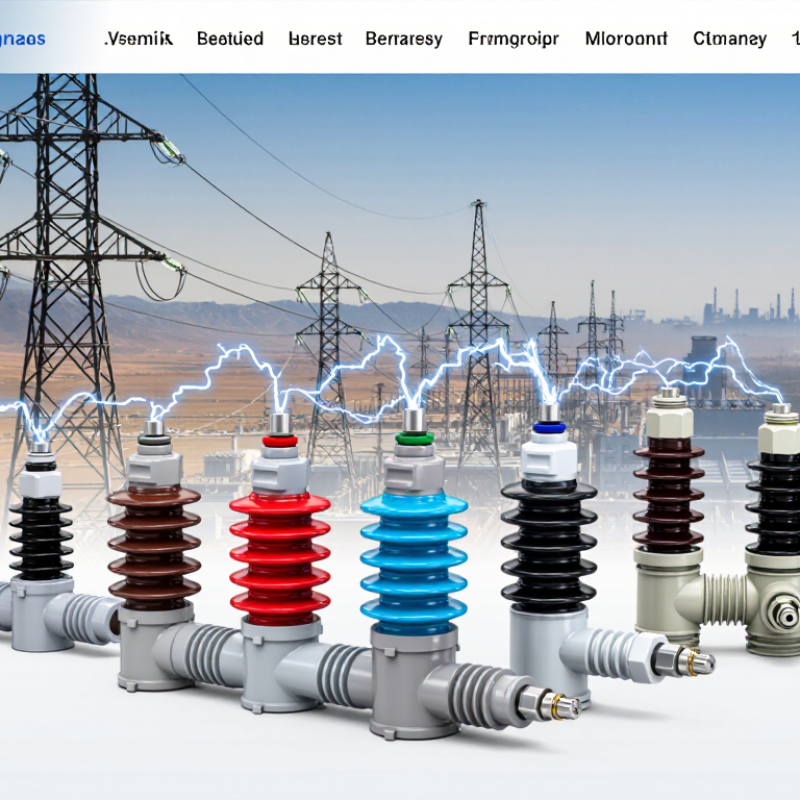
Polymeric surge arresters are compact protective devices used on medium- and high-voltage electrical systems. Their core usually contains zinc-oxide metal-oxide varistors. Under normal voltage, the varistors carry only a small leakage current. During lightning or switching events, their resistance falls sharply. This creates a controlled path for surge energy to flow toward ground.

The polymeric housing provides insulation and resists moisture, dust, and mechanical impact. Unlike older porcelain designs, it is lighter and less likely to break into heavy fragments. A reliable installation still depends on correct grounding. Short, straight earth connections reduce residual voltage and improve protection. I have found that long, loose conductors can weaken an otherwise suitable arrester.

Selection requires more than checking the system voltage. Engineers should review continuous operating voltage, discharge current, energy capability, pollution level, altitude, and available fault current. The arrester must also match the transformer, cable, or switchgear it protects. Check the clearance around the housing.

Small details matter.

Field teams should inspect cracked sheds, loose terminals, contamination, and unusual leakage-current readings. A damaged polymer surface may not fail immediately, which makes routine testing important. Remote monitoring can reveal gradual deterioration, but it is not infallible. Even the best arrester cannot compensate for poor grounding or incorrect coordination. That point is easy to overlook. A practical design combines verified specifications, careful installation, and maintenance records that reflect actual site conditions.

Key Performance Criteria for Comparing Global Surge Arrester Options

When comparing polymeric surge arresters, global buyers should begin with electrical fit, not catalog appearance. Check the continuous operating voltage, rated voltage, and residual voltage at the expected discharge current. A lower residual voltage can improve equipment protection, but only when the arrester remains stable during normal system stress. Energy capability also matters. Lines with repeated switching events may need greater thermal and mechanical margins than simple distribution feeders.

Environmental conditions often decide long-term reliability. Review creepage distance for pollution levels, altitude correction, ultraviolet exposure, humidity, and salt contamination. The polymer housing should resist tracking and erosion after years of outdoor service. Hydrophobicity is useful, but it is not magic. Inspectors should still check seals, bonding hardware, and signs of surface cracking. Measure it cold.

Global procurement adds practical tests. Ask for routine and type-test evidence, traceable serial records, clear installation instructions, and documented quality controls. Confirm that test reports match the exact design, not a similar-looking model. International standards provide a common language, yet local grid practices can differ. A technically compliant arrester may still be poorly matched to an unusual earthing system or transformer arrangement.

Field teams should examine separation distances and connector torque during installation. Small errors can reduce protection performance. Buyers should also compare replacement access, packaging strength, training support, and expected service life. A spreadsheet can still mislead. Price is visible; thermal ageing, transport damage, and inspection time are not. Independent verification is worthwhile when failure would interrupt a critical facility.
Seven Leading Polymeric Surge Arrester Types for Different Applications

Polymeric surge arresters serve different network duties, not one universal role. The IEA’s Electricity Grids and Secure Energy Transitions report estimates that over 80 million kilometres of grids may need addition or replacement by 2040. Protection choices therefore deserve careful application planning. IEC 60099-4 defines key tests, including the 8/20 μs current impulse. Field conditions still decide performance.

Seven leading types cover common needs:

low-voltage distribution arresters protect service entrances; medium-voltage distribution arresters handle feeder switching and lightning impulses; riser-pole arresters shield underground-to-overhead transitions; line-mounted arresters reduce outages on exposed transmission sections; station-class arresters protect busbars and major equipment; transformer-specific arresters limit stress near bushings; railway or traction arresters support electrified transport systems. Each type uses a sealed polymeric housing, but energy capability, creepage distance, cantilever strength, and temporary overvoltage rating can differ sharply. Fit follows risk. A catalog ranking can mislead.

Tips: Check the system’s maximum continuous operating voltage before selecting a model. Confirm altitude, pollution level, grounding impedance, and expected fault current. Compare residual voltage at the equipment’s terminals, not only at the arrester. CIGRE guidance repeatedly highlights coordination between insulation levels, earthing, and arrester location. Shorter leads usually improve protection. Installation quality matters greatly. In practice, even a technically excellent arrester can underperform when bonding is long, loose, or poorly inspected. That uncomfortable detail is easy to overlook.

Global Standards, Voltage Ratings, and Installation Requirements

Global Standards, Voltage Ratings, and Installation Requirements

For global buyers, the seven best polymeric surge arresters should be compared against recognized technical standards. IEC 60099-4 and IEEE C62.11 are common references for metal-oxide arresters. Local certification may also apply. Standards are not interchangeable. Check test reports, factory quality records, and product traceability before ordering.

Voltage selection requires more than matching the system’s nominal voltage. Review rated voltage, continuous operating voltage, nominal discharge current, and temporary overvoltage capability. The grounding method matters greatly. A poorly grounded network can expose an arrester to higher stress. Select the arrester using system studies, not a catalog number alone.

It sounds obvious, yet this mistake still appears in project specifications.

Installation changes performance. Keep phase and earth connections short, straight, and separated from control wiring. Avoid sharp loops that increase residual voltage during a surge. Install the arrester close to the transformer, switchgear, or cable termination it protects.

Verify clearances, mounting strength, earthing impedance, and tightening torque against project rules and local electrical codes. Outdoor units also need suitable resistance to ultraviolet exposure, pollution, moisture, altitude, and wind. A polymer housing is not automatically suitable for every climate.

Inspect connections after commissioning and after severe storm activity. Field conditions can challenge even a correctly tested product.

How to Select the Best Polymeric Surge Arrester for Your Project

When selecting a polymeric surge arrester, begin with the project’s actual electrical conditions. Compare seven candidates against continuous operating voltage, temporary overvoltage, and expected fault levels. A higher rated voltage is not automatically safer. It may reduce protective performance.

Check residual voltage at the equipment’s insulation level. Keep the protection margin clear, especially near transformers, cables, and renewable energy converters. Review the rated discharge current and energy capability for repeated lightning or switching events. Small errors matter. Confirm compliance with IEC 60099-4 and local utility requirements. Ask for routine and type-test evidence, not only a sales datasheet.

Environment changes the selection. In coastal areas, salt deposits can raise leakage current across the housing. Choose suitable creepage distance and inspect the sealing design. At high altitude, air insulation behaves differently, so derating may be necessary. Polymer housings are light and resistant to shattering, but poor installation can still cause failure. Check mounting strength, line connections, earthing paths, and clearance before approval. I have seen projects focus on purchase price while overlooking cable length and grounding impedance. That approach can weaken an otherwise capable arrester. A spreadsheet can still mislead. Include site measurements, maintenance access, and expected service conditions in the final comparison. When uncertainty remains, request independent test records and have a qualified engineer verify the protection coordination.