Choosing the best Power Inverter For Home in 2026 takes more than comparing wattage labels. The right unit should match your appliances, battery, and expected backup time. A refrigerator may draw modest power while running, then demand a sharp surge when its compressor starts. A small detail on paper can become a dark kitchen at midnight.
The market context matters, too. Ember’s Global Electricity Review 2025 reports that solar generation rose 29% worldwide in 2024. That growth brings more households into contact with solar and battery systems, where inverter performance affects usable power. NREL photovoltaic reliability researcher Dr. Sarah Kurtz’s published work offers a useful principle: evaluate components for dependable operation over time, not just impressive ratings. This is a paraphrase of her reliability research, not a direct quotation.
This guide compares home inverters by continuous and surge capacity, output waveform, battery compatibility, efficiency, and safety features. It also separates grid-tied, off-grid, and hybrid models, since they serve different needs. Check the label. Check the manual. A pure sine wave output is generally suitable for sensitive electronics, but system compatibility still matters. Ratings can be confusing, and no single model is best for every home. The most reliable choice is the one that handles your real loads, works with your battery, and has credible documentation behind its claims.
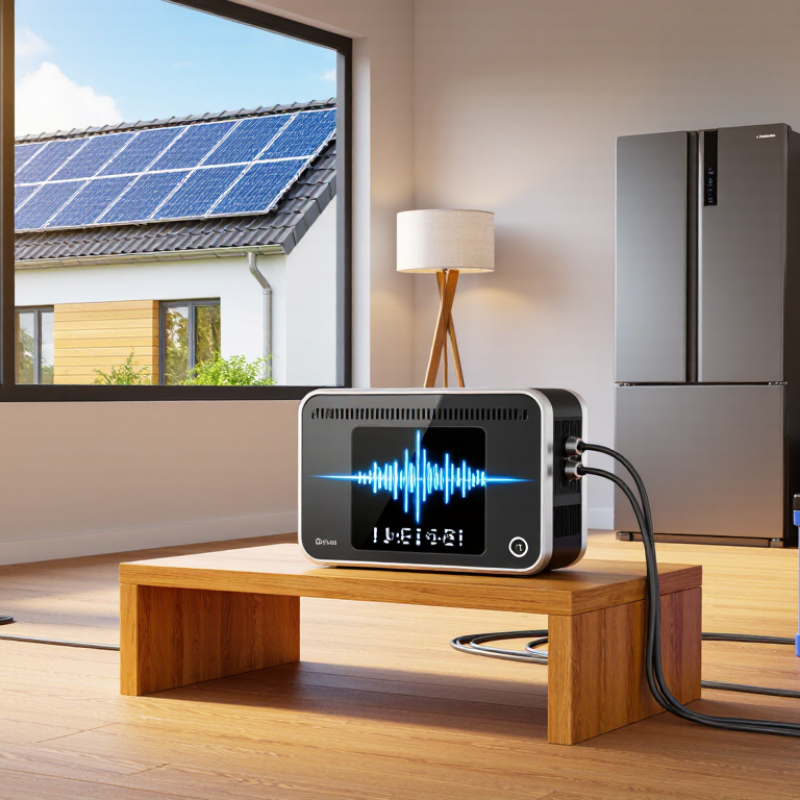
A home power inverter converts direct current from a battery or solar storage system into alternating current, the type used by most household outlets. The battery provides the energy; the inverter changes its electrical form and manages the output voltage and frequency. No stored energy, no backup power. During an outage, the inverter can run selected appliances, such as a router, a few lights, or a refrigerator, if its capacity and battery supply are sufficient.
Two ratings matter: continuous wattage and surge wattage. Continuous wattage describes the load it can support over time; surge capacity covers brief startup demands from motors and compressors. Add the running loads, then consider what might switch on together. It is easy to underestimate a refrigerator’s startup draw. A pure sine-wave output closely resembles utility power and is often suitable for sensitive electronics, though the appliance manual remains the best guide. Some systems also include a charger or transfer function, but these features vary.
For home backup, an inverter must work with the battery voltage and intended wiring arrangement. A grid-connected system needs appropriate isolation so it cannot send power back onto utility lines during an outage. That detail is not obvious from a product label. A qualified electrician can check the installation, grounding, and circuit requirements. It may feel excessive for a small setup, but mistakes here can cause real harm.
For a few essential circuits, a pure sine-wave inverter is usually the practical choice. It supplies AC power similar to grid electricity, which suits refrigerators, routers, and many modern electronics. Check both continuous output and surge capacity: a fridge compressor may briefly draw much more power when starting. Small loads need less capacity. Avoid choosing by headline wattage alone.
A home with rooftop solar and batteries may suit a hybrid inverter, which manages both sources and can support backup operation. An off-grid inverter is designed for homes without grid supply, often with battery charging controls. For short interruptions, a battery-based UPS inverter can keep a computer or network equipment running with little interruption. EIA’s Electric Power Annual reports about 5.5 hours of average U.S. customer interruption time in 2022, including major events; local experience can differ sharply.
Battery sizing matters as much as inverter type. NREL’s 2024 Annual Technology Baseline uses roughly 85% round-trip efficiency for lithium-ion storage as a modeling benchmark, not a promise for every home system. Some energy is lost during charging and conversion. List essential loads, estimate their running hours, and check whether the inverter supports split-phase output if your household needs it. I would still verify the numbers with an installer; estimates often miss brief startup surges.
| Inverter type | Typical output and setup | Best suited to | Advantages | Limitations and checks |
|---|---|---|---|---|
| Pure sine-wave inverter | Converts battery DC to smooth AC; common home systems provide 120 V, 60 Hz in North America. Available in many power ratings. | A battery-backed circuit for electronics, refrigerators, pumps, and other appliances that need clean AC power. | Compatible with most household AC loads, including many motors and devices with sensitive electronics. | The inverter alone does not provide a battery, charging, or automatic transfer. Match continuous and surge ratings to the loads. |
| Modified sine-wave inverter | Produces a stepped approximation of AC power; ratings and waveform quality vary by model. | Limited, budget-conscious backup for loads specifically confirmed to work with this waveform. | Can cost less than a comparable pure sine-wave unit for basic applications. | Some motors may run hotter, noisier, or less efficiently; certain chargers, medical devices, and electronics may not operate correctly. Check each device’s requirements. |
| Inverter/charger | Combines a battery inverter and AC battery charger; many models include an AC transfer switch. Power and transfer behavior are model-specific. | Homes with a fixed battery bank and backup circuits that need charging from utility power or a generator. | Combines key backup functions in one system and can switch supported loads to battery power when utility power fails. | Confirm transfer time, charger compatibility, battery voltage, and whether the unit supports the intended electrical panel and loads. |
| Hybrid solar inverter | Typically manages solar PV, a compatible battery, and household AC; backup output and operating modes depend on the system design. | Homes adding solar and battery storage, especially where solar charging and backup are both priorities. | Can coordinate solar generation, battery charging, and selected backup loads in one integrated system. | Not every grid-tied solar system supplies power during an outage. Confirm backup capability, battery compatibility, islanding protection, and required installation equipment. |
| Portable power station with built-in inverter | Packages a battery, inverter, and charging inputs in one unit; AC output, battery capacity, and charging options vary widely. | Portable or plug-in backup for small appliances, communications equipment, and a few essential devices. | Quick to deploy and generally requires less setup than a permanently installed battery system. | Runtime and output are limited by the unit’s capacity and rating. Do not connect it to home wiring unless the equipment and installation method are approved for that use. |
Practical takeaway: for most home backup loads, a pure sine-wave inverter is the appropriate waveform choice. The best system type depends on whether you need a standalone battery inverter, automatic utility backup, solar integration, or a portable all-in-one unit. Check appliance starting surges, total running watts, battery capacity, transfer requirements, and local electrical codes before choosing.
Choosing the best home inverter starts with a list of what must run during an outage. Read each appliance’s label or manual, and note its running wattage. A refrigerator, router, a few lights, and a kettle may seem like a modest group. Together, their demand can exceed a small inverter’s capacity. Decide which items will operate at the same time, not just which ones are in the house.
Add the running watts for those selected loads. Then account for startup surges: compressors in refrigerators and motors in pumps can briefly draw more power than they use normally. Check the inverter’s continuous rating and surge rating; both matter. That gap matters. A unit rated for a high short-term peak may still be unable to run several appliances continuously. For example, a 1,500-watt kettle can use most of a 2,000-watt inverter’s available output by itself.
Leave some headroom instead of sizing the inverter exactly to your calculated total. Real appliances vary, and you may add a load later. Battery capacity is a separate question: a larger battery can extend runtime, but it cannot make an undersized inverter deliver more power. That distinction is easy to miss. My own first estimate would probably overlook a rarely used device, so check the list against an actual outage routine. For fixed wiring or heavy loads, ask a qualified installer to verify the setup.
A home inverter should match the loads you actually need, not an optimistic wattage estimate. The U.S. Energy Information Administration reported that customers averaged 5.5 hours without power in 2022, including major events. During an outage, a refrigerator may start with a brief surge well above its running load. Check both continuous and surge ratings, then allow headroom for pumps or heating controls. Small detail, big difference.
Safety features matter just as much. Look for overload, short-circuit, over-temperature, and low-voltage protection, plus clear alarms and a manual shutoff. NREL’s 2024 Annual Technology Baseline treats residential battery storage as a system with distinct power and energy limits; an inverter’s kilowatt rating alone does not tell you how long backup will last. A listed inverter, such as equipment certified to the applicable UL 1741 requirements, is a stronger starting point than an unverified product description. Have a qualified electrician confirm grounding, neutral bonding, and transfer-switch compatibility.
Compatibility can be easy to overlook. Pure sine-wave output is generally the safer choice for sensitive electronics and many modern appliances. Compare the inverter’s output voltage and frequency with your home circuits, and check whether its battery input matches the battery’s chemistry and operating range. I would still test the setup under realistic load; labels do not reveal every awkward startup surge. Sources: EIA, Electric Power Annual 2022; NREL, 2024 Annual Technology Baseline.
The best home inverter is the one that matches your essential loads, battery, and outage plan—not simply the one with the highest wattage. List what must stay on: perhaps a refrigerator, router, a few lights, and a medical device. Add their running watts, then check each appliance’s starting surge. Motors can briefly demand much more power. Leave headroom; household loads rarely behave neatly.
Compare continuous output, surge capacity, waveform, efficiency, and battery compatibility. A pure sine-wave output suits sensitive electronics and many appliances. Check whether the inverter supports your battery’s voltage and chemistry, and whether its charging limits fit your setup. The U.S. Energy Information Administration reported an average of 5.6 hours of electricity interruptions per customer in 2022, including major events. That figure is a planning reference, not a prediction for your home. Runtime depends mainly on usable battery energy and the load you actually run.
Keep power and energy separate. NREL’s 2024 Annual Technology Baseline models battery storage using both power capacity, measured in kilowatts, and energy capacity, measured in kilowatt-hours. That distinction helps prevent a common mismatch: an inverter may run several devices at once, yet an undersized battery may not run them for long. Ask an electrician to verify wiring, protection, and installation needs. A paper calculation can miss a real startup surge. Check the manual’s limits before buying.