
Choosing a Chemistry Lab Table is more than comparing prices or finishes. In a busy laboratory, the work surface must handle daily use, occasional spills, and equipment with different weights. The frame, joints, edge treatment, and storage details matter too. Small details matter.
China has a broad supplier base, from specialist laboratory furniture makers to larger manufacturers serving schools, research facilities, and industrial laboratories. Their products can vary in materials, customization, documentation, and production capacity. A phenolic resin top, for example, may suit some applications, while epoxy resin or stainless steel may better match others. The right choice depends on the chemicals used, cleaning routines, and expected service life. One catalog cannot answer every question.
This guide introduces leading manufacturers and the factors buyers can use to assess them. It considers product range, manufacturing experience, quality controls, customization, and communication during project planning. Buyers should request current specifications, sample project details, and clear information about testing and warranty terms. Check the load rating. Confirm the tabletop material. Ask how the supplier handles replacement parts and installation guidance. These steps do not remove every risk, and published claims still deserve verification. A strong supplier relationship often starts with precise questions, not a glossy brochure. That is worth remembering.
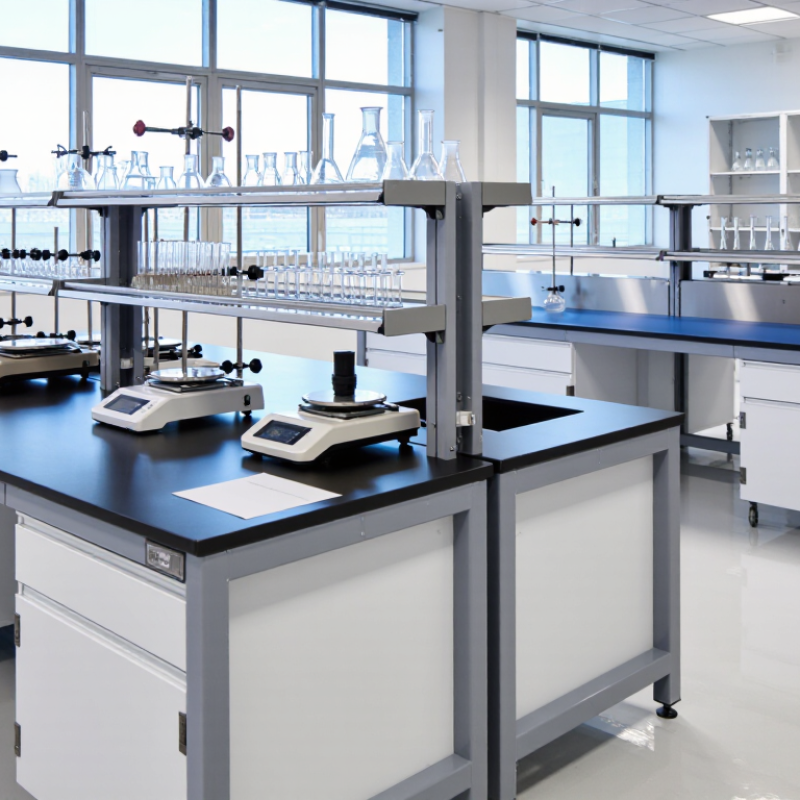
A chemistry lab table is a stable workbench designed for experiments, sample preparation, and instrument use. It typically combines a rigid frame, a cleanable work surface, and optional drawers, sinks, or utility connections. Its core functions are to support equipment, resist routine chemical exposure, and keep work areas organized. Small details matter: a vibrating balance, a raised edge, or a poorly placed outlet can disrupt daily tasks. SEFA’s laboratory casework and work-surface standards describe performance tests for factors such as load capacity and chemical resistance. Buyers should check the test method and material limitations, not rely on broad claims alone.
The surface must match the actual work. Epoxy resin, phenolic resin, and stainless steel each suit different conditions; none is universal. Still, even a resistant surface can be damaged by prolonged spills or harsh cleaning. The U.S. National Research Council’s Prudent Practices in the Laboratory emphasizes selecting equipment for the hazards and procedures involved. That guidance makes table selection a safety decision, not merely a furniture choice. Grand View Research estimated the global laboratory furniture market at about USD 1.8 billion in 2023, reflecting sustained demand for functional lab spaces. Yet market growth says little about an individual table’s quality. Check load ratings, joint construction, cleanability, and service access against the lab’s real workflow.

How Chinese Manufacturers Design and Produce Laboratory Tables
Design begins with the work, not the catalog. Manufacturers discuss experiments, equipment weight, sink placement, and cleaning routines with buyers. A table for microscopy needs a steady surface. A wash station needs sealed edges and dependable drainage. Small details matter.
Engineers turn these needs into drawings, specifying frame dimensions, worktop materials, joints, and storage. Steel frames are cut, welded, and checked for alignment. Worktops are trimmed, finished, and fitted to reduce gaps where spills could collect. Before shipment, teams inspect dimensions, fasteners, surface condition, and stability. A sample setup can reveal awkward reach or blocked access. It is easy to miss something on a drawing.
Tips: Ask for material samples and load details. Confirm sink cutouts, service openings, and delivery access before approving production. Keep written specifications.
Production quality depends on consistent checks, not appearance alone. Buyers should ask how the maker tests wobble, edge sealing, and finish adhesion. Requirements vary by laboratory, so one table design will not suit every task. A rushed choice can leave equipment cramped or cleaning difficult. Even a well-made table may need a small adjustment after installation; that deserves honest planning.
The table summarizes common design choices and representative specification ranges for chemistry laboratory tables. Actual specifications vary by project, applicable standards, and manufacturer.
| Design or production area | Common options or representative range | How it supports laboratory use |
|---|---|---|
| Worktop materials | Epoxy resin, phenolic resin, ceramic, stainless steel, or compact laminate, selected according to the intended use. | Material selection balances chemical exposure, heat, moisture, cleanability, and budget. Compatibility should be checked against the chemicals and procedures used. |
| Worktop thickness | Often approximately 12–25 mm, depending on the material and whether the top is supported or reinforced. | Thickness and support design affect stiffness, edge durability, and the table’s suitability for equipment loads. |
| Overall table height | A common seated work-surface height is about 750 mm; standing-height benches are often around 850–900 mm. Project-specific heights vary. | Height should be coordinated with stools, users, instruments, and the laboratory’s accessibility and workflow requirements. |
| Frame construction | Welded or bolted steel frames are common; some designs use stainless steel or other materials for specific environments. | Frame layout, bracing, leveling feet, and anchoring options contribute to stability and help manage equipment loads. |
| Cabinet and finish options | Cabinetry may be made from coated steel, stainless steel, or laboratory-grade board. Powder-coated finishes are commonly specified for steel components. | Finish and cabinet material should match the room’s cleaning routine, moisture conditions, chemical exposure, and storage needs. |
| Chemical splash management | Optional raised edges, upstands, sinks, drainboards, and reagent shelves can be incorporated into the layout. | These features help contain spills and organize work areas; they do not replace suitable chemical handling and spill-control procedures. |
| Utilities and service integration | Layouts may include service towers or connections for electrical outlets, water, gas, and drainage, subject to the project design. | Utility positions should be coordinated with qualified building-services professionals and local electrical, plumbing, and laboratory safety requirements. |
| Manufacturing and quality checks | Typical production steps include drawing review, material cutting, frame fabrication, surface finishing, assembly, and inspection. | Useful checks include dimensions, joints and edges, surface finish, leveling, assembly fit, and confirmation of specified materials and accessories. |
| Customization and installation | Common project variables include table length and depth, sink location, storage configuration, service routing, and room-specific dimensions. | Final drawings and site measurements help confirm clearances, access routes, utility locations, and installation requirements before production. |
Leading chemistry lab table manufacturers in China serve universities, testing centers, and industrial laboratories with different workflows. A useful supplier understands more than dimensions. They ask what chemicals are handled, how equipment is arranged, and where water or power connections belong. Details matter.
Experienced manufacturers typically offer steel, compact laminate, or epoxy resin work surfaces. Each suits different conditions. Buyers should compare chemical resistance, edge treatment, frame stability, and load capacity using clear product specifications. A table may look sturdy in a showroom yet behave differently under daily use. Ask for test records and confirm how results apply to the selected configuration.
Reliable production also depends on consistent inspection, careful packaging, and installation support. Request drawings that show sinks, service fittings, and cabinet clearances before production begins. Small layout errors can become costly after delivery. Not every catalog explains these limits well. That is worth checking. When comparing leading manufacturers, review sample finishes, communication speed, replacement-part availability, and the detail behind their quality procedures. Factory visits or video inspections can clarify how surfaces are finished and frames are assembled, though they cannot replace written specifications. A careful comparison helps buyers select tables suited to real laboratory routines, rather than choosing by appearance alone.
When comparing chemistry lab table manufacturers in China, look beyond the quoted price. Ask for drawings, material specifications, load ratings, and clear production lead times. A low quote may exclude installation details or accessories. Check whether the manufacturer can explain how the worktop, frame, and storage units fit together.
Match materials to actual laboratory use. Epoxy resin worktops handle many common chemicals and provide a seamless surface, but confirm compatibility with the substances and cleaning agents used in your facility. Phenolic surfaces are lighter and often easier to install. Stainless steel suits some wet or clean areas, though it may not fit every chemical application. Inspect sample edges, joints, and sink cutouts; small finishing flaws can become daily cleaning problems. Ask for relevant test records and written warranty terms. A sample helps. It is not the whole story.
Tips: Request photos of completed installations, then ask about similar table layouts and utility needs. Compare cabinet hinges, adjustable feet, service outlets, and replacement-part availability. Put every specification in writing. Some details are easy to overlook, even with a careful checklist.
Top Chemistry Lab Table Manufacturers in China
Key Factors for Selecting a Chinese Laboratory Table Supplier
Supplier selection should begin with the work the table must support. A chemistry bench may face acids, solvents, heat, heavy glassware, and repeated cleaning. Ask for the countertop material’s chemical-resistance data, not just a general claim. Confirm load capacity, frame construction, edge sealing, and compatibility with sinks or service fixtures. A neat sample helps, but it cannot reveal long-term performance.
Request drawings, material specifications, inspection records, and photos of comparable installations. Check whether dimensions, utility cutouts, and cabinet layouts match your room plan. If possible, review a physical sample and inspect seams, welds, coating consistency, and drawer movement. Discuss packaging and replacement-part support before production. Small details matter. A supplier may answer quickly during quotation, yet slower communication later can complicate revisions. That is worth testing early, although one delayed reply is not proof of poor service.
Tips: Send the same technical checklist to each supplier. Ask how they test chemical resistance and verify finished dimensions. Clarify who approves drawings and how changes are recorded. Compare evidence, not only price. Leave room for trial orders.
Compare material specifications when evaluating laboratory table suppliers. This chart shows chromium and nickel composition ranges by mass for Type 304 and Type 316 stainless steel, based on ASTM A240/A240M. Ask suppliers for material certificates and confirm that the selected grade suits your laboratory’s chemicals and operating conditions.