China Top 10 Screw Air Compressor Manufacturers?
Choosing a reliable screw air compressor manufacturer in China requires more than browsing a ranking list. Buyers should examine engineering experience, production quality, testing procedures, and after-sales support. This guide introduces ten notable Chinese manufacturers and explains the practical reasons they deserve attention.
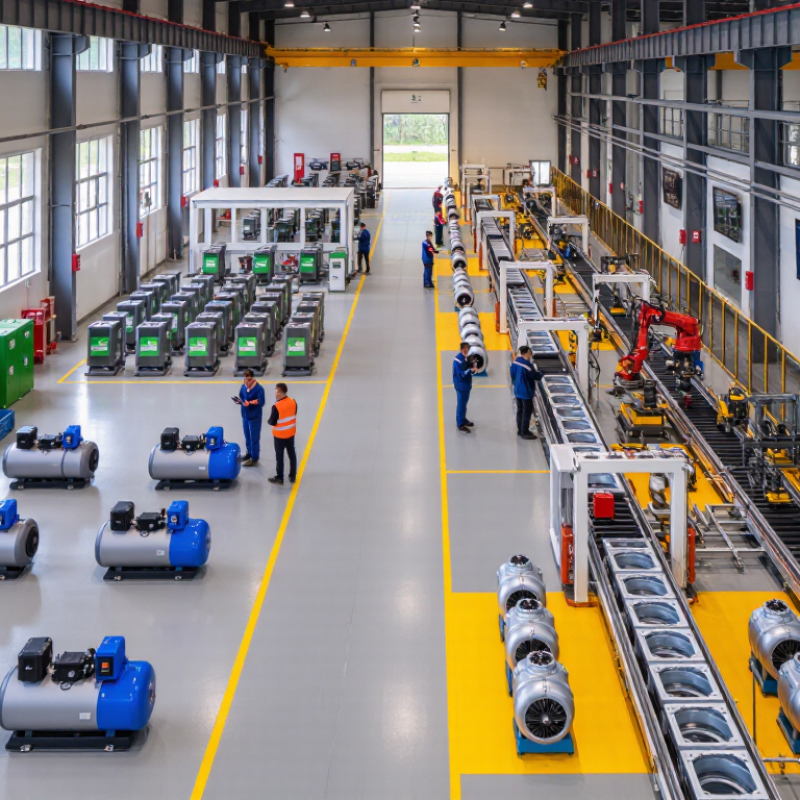
The evaluation considers compressor efficiency, pressure stability, noise control, component quality, and customization capability. It also reviews service networks, export experience, certifications, and warranty policies. A factory visit can reveal useful details, such as organized assembly lines, calibrated testing equipment, and clearly recorded inspection results. These details often matter more than attractive product photos.
Performance depends on the application. A food-processing plant may require oil-free air and strict hygiene controls. A metal workshop may prioritize continuous duty, simple maintenance, and stable airflow. Energy consumption also deserves careful attention, because a compressor running eight hours daily can significantly affect operating costs. However, public information is sometimes incomplete. A polished brochure is not proof. Buyers should request test data, reference projects, and written service commitments before making a decision.
This article is an informed starting point, not a substitute for technical verification. Manufacturer capabilities can change, and product quality may differ between models or production batches. We therefore encourage readers to compare specifications carefully, inspect documentation, and discuss real operating conditions with qualified engineers. The right screw air compressor should fit the plant, workload, climate, and maintenance resources—not merely win a place on a list.
Screw Air Compressors: Types, Uses, and Core Technologies
China Top 10 Screw Air Compressor Manufacturers
Screw air compressors use twin rotors to compress air continuously. Oil-injected models suit general factory production, while oil-free models support food, pharmaceutical, and electronics processes. Each type has trade-offs. Oil-free designs reduce contamination risk, but often require tighter maintenance and higher purchase budgets.
Variable-speed drive units adjust motor speed when demand changes. Fixed-speed units can remain efficient under stable, heavy loads. According to the U.S. Department of Energy’s Improving Compressed Air System Performance sourcebook, compressed air may consume about 10% of industrial electricity. The same guidance notes that leaks can waste 20% to 30% of compressor output. A hissing fitting may represent real operating cost.
Core technologies include permanent-magnet motors, intelligent controllers, heat recovery, and multi-stage separation. ISO 8573-1 helps users define air purity by particles, water, and oil. Dryer selection also matters. Refrigerated dryers fit many workshops, while desiccant dryers reach lower dew points. The wrong choice can increase energy use unnecessarily.
For a China top-10 comparison, buyers should examine measured flow, specific power, noise, service response, and spare-parts access. Laboratory figures may not match a dusty plant with fluctuating demand. That is worth questioning. A reliable evaluation needs site data, pressure logs, leak surveys, and lifecycle cost calculations, not only catalog horsepower.
China Top 10 Screw Air Compressor Manufacturers? — Screw Air Compressors: Types, Uses, and Core Technologies
The chart presents representative operating pressure points commonly used in industrial screw-compressor applications. General factory air and instrument air typically operate around 7–10 bar, while PET bottle blowing requires much higher pressure and is commonly supplied by multi-stage compression systems. Actual requirements depend on equipment design, air quality, flow rate, duty cycle, and applicable standards.
How China’s Leading Manufacturers Are Evaluated
Evaluating China’s top screw air compressor manufacturers requires more than ranking output or factory size. Real experience starts with machine behavior under pressure. Reviewers should inspect rotor machining, oil separation, cooling paths, and control settings. A serious evaluation includes a witnessed load test, not only a showroom demonstration. Record discharge temperature, vibration, noise, and power consumption at different loads. Small details matter. A compressor that sounds smooth for ten minutes may behave differently after eight hours.
Professional knowledge helps compare specifications fairly. Air delivery should be checked against pressure, inlet conditions, and measurement standards. Energy claims need test data, operating curves, and clear assumptions. Ask for maintenance intervals, spare-part availability, and response times in the target region. Factory technicians should explain failure alerts without hiding behind technical language. Certification documents, quality records, and traceable serial numbers strengthen authority. Independent inspection adds credibility, especially for large projects.
Trust also depends on what manufacturers admit. A supplier that explains limits may be more reliable than one promising perfect efficiency. Speak with current users and verify service histories. Review warranty exclusions carefully. I would also examine packaging, wiring, manuals, and final inspection photos. These checks can reveal rushed work. No evaluation is flawless; reviewers may overvalue price or polished presentations. Rechecking assumptions after installation is necessary, because field conditions rarely match the sales sheet.
China’s Top 10 Screw Air Compressor Manufacturers
China’s Top 10 Screw Air Compressor Manufacturers are often assessed through engineering depth, factory consistency, and after-sales support. The strongest manufacturers usually provide oil-injected and oil-free screw compressors for factories, workshops, and process facilities. Their equipment may include variable-speed drives, permanent-magnet motors, air dryers, and remote monitoring systems.
A practical evaluation starts with operating conditions. Check the required pressure, air flow, duty cycle, ambient temperature, and installation space.
A compressor running beside a dusty metalworking line needs stronger filtration and easier maintenance access. In contrast, food or pharmaceutical production may require oil-free air and documented contamination control.
Experienced suppliers should explain these differences clearly, not simply promote the largest motor.
Service quality deserves equal attention. Ask about spare-part availability, technician response times, commissioning procedures, and warranty limits. Inspecting a factory can reveal useful details, such as clean assembly areas, calibrated testing instruments, and traceable inspection records.
Yet no manufacturer is perfect. Published energy figures may reflect controlled laboratory conditions rather than a hot, dusty plant. Buyers should request site-based calculations and verify noise, efficiency, and pressure stability after installation. A lower purchase price can become expensive when filters, seals, and emergency repairs are overlooked.
Shortlist suppliers that provide transparent data, practical training, and realistic performance expectations.
Comparing Products, Certifications, and Service Networks
When comparing China’s top ten screw air compressor manufacturers, product data should come before marketing claims. Check oil-injected and oil-free designs against your actual air demand, pressure, and duty cycle. A 75 kW variable-speed unit may reduce energy use in a factory with changing loads. It may perform poorly if the control range is unsuitable. Ask for measured noise, specific power, and cooling performance at your operating temperature.
Certifications reveal manufacturing discipline, but they do not guarantee every machine will fit your site. Review ISO 9001 for quality systems, CE documentation for applicable markets, and pressure equipment records where relevant. Request test reports that identify the model, test conditions, and measurement method. Generic certificates are weak evidence. I have seen brochures omit inlet temperature and pressure-drop details. That matters.
Service networks often separate a reliable supplier from a cheaper one. Compare regional technicians, spare-parts warehouses, commissioning procedures, and emergency response targets. Ask whether remote monitoring can identify high discharge temperature, clogged filters, or abnormal vibration. A practical test is simple: request a sample maintenance schedule and the price of a separator, air filter, and controller. Slow replies are revealing. Also check training quality, warranty exclusions, and support after installation. Some suppliers offer impressive coverage on paper, yet local support remains thin. That gap deserves careful questioning.
China Top 10 Screw Air Compressor Manufacturers? - Comparing Products, Certifications, and Service Networks
| Rank | Manufacturer Profile | Main Product Range | Typical Power Range | Variable-Speed Options | Oil-Free Options | Common Certifications | Export Coverage | Service Model |
| 1 | Large-scale industrial manufacturer | Rotary screw, two-stage screw, centrifugal, and reciprocating systems | 7.5–355 kW | Available | Available | ISO 9001, CE | Global distributors | Factory support plus authorized dealers |
| 2 | Established compressor specialist | Oil-injected screw, permanent-magnet, and low-pressure systems | 7.5–250 kW | Available | Limited range | ISO 9001, CE, EMC | Asia, Europe, Middle East | Regional service partners |
| 3 | Energy-efficiency focused manufacturer | Permanent-magnet variable-speed screw compressors | 5.5–315 kW | Core product line | Selected models | ISO 9001, CE | Worldwide distributors | Remote diagnostics and dealers |
| 4 | Heavy-duty industrial equipment producer | Single-stage, two-stage, and high-pressure screw systems | 11–450 kW | Available | Selected models | ISO 9001, CE, SGS testing | More than 50 markets | Dealer network and factory training |
| 5 | Mid-market compressed-air specialist | Compact screw compressors, dryers, and air receivers | 7.5–160 kW | Available | Limited range | ISO 9001, CE | Asia, Africa, Latin America | Local agents and spare-parts support |
| 6 | Custom-engineered air-system supplier | Customized screw packages, boosters, and air treatment | 15–355 kW | Project-based | Project-based | ISO 9001, CE, RoHS | Export project support | Application engineering and commissioning |
| 7 | Cost-competitive OEM manufacturer | Oil-injected screw compressors and private-label systems | 5.5–250 kW | Available | Limited range | ISO 9001, CE | OEM export markets | Distributor-led service |
| 8 | Low-pressure and specialty-air manufacturer | Low-pressure screw blowers, vacuum systems, and compressors | 7.5–220 kW | Available | Selected models | ISO 9001, CE | Regional export network | Industry-specific technical support |
| 9 | Food, pharmaceutical, and electronics supplier | Oil-free screw, clean-air systems, and air treatment | 15–160 kW | Available | Core product line | ISO 9001, CE, ISO 8573-1 applications | Asia and selected global markets | Application validation and service partners |
| 10 | Regional full-system manufacturer | Screw compressors, dryers, filters, tanks, and control systems | 5.5–132 kW | Available | Limited range | ISO 9001, CE | Selected overseas markets | Direct sales and regional agents |
Comparison note: Product configurations, certifications, export coverage, and service availability vary by model, application, destination country, and contract terms. Buyers should verify current certificates, performance data, warranty conditions, and local service capability before purchase.
How to Choose the Right Chinese Manufacturer
Choosing among China’s top screw air compressor manufacturers requires more than comparing catalog prices.
A reliable buyer should inspect factory capability, testing records, energy data, and after-sales support.
The U.S. Department of Energy reports that compressed air may consume 10–30% of industrial electricity. Small efficiency differences can therefore become significant operating costs.
Ask each manufacturer for measured specific power, delivered air flow, pressure stability, and test conditions. Request reports aligned with ISO 1217, and confirm air-quality claims against ISO 8573-1 when clean air is required.
A serious factory should explain motor efficiency, inverter control, separator design, cooling performance, and maintenance intervals in practical terms. Marketing numbers alone are weak evidence.
Service capacity matters as much as engineering.
Check spare-parts availability, technician response times, remote monitoring, and warranty exclusions.
The DOE also notes that system leaks can waste 20–30% of compressor output, so the supplier should provide leak-testing guidance and commissioning support.
Visit the production line if possible. Look at assembly cleanliness, calibration labels, pressure testing, and how rejected units are handled.
Do not choose only by the lowest quotation.
That is a common mistake. A cheaper compressor may include shorter warranties, limited parts, or optimistic efficiency figures.
Ask for references from factories with similar pressure, duty cycles, climate, and air demand.
I would also compare five-year ownership costs, not just purchase prices.
Some specifications remain difficult to verify before installation, so independent acceptance testing is worth considering.