Blog

China Top 10 LED Solar Street Light Manufacturers?

Choosing the right Led Solar Street Light manufacturer requires more than comparing catalog prices. Product photos can look convincing, while real performance depends on battery quality, solar-panel efficiency, optics, and installation conditions.

This guide examines China’s top ten manufacturers through practical criteria. These include factory experience, technical certifications, lighting performance, warranty terms, and completed outdoor projects. We also consider whether each supplier explains battery cycles, controller protection, IP ratings, and lumen output clearly. Details matter. A street beside a humid coastline needs different protection from a dry industrial road.

Energy expert Amory Lovins said, “Efficiency is the cheapest energy source.” That principle fits solar street lighting closely. Efficient LEDs can extend nighttime operation, reduce battery stress, and improve long-term value. However, efficiency claims should be tested, not simply repeated in brochures.

The review focuses on manufacturers serving municipal, commercial, residential, and infrastructure projects. We look for evidence from factory audits, technical documents, field installations, and customer feedback. A strong manufacturer should provide more than attractive samples. It should explain how its system performs after cloudy days, dust accumulation, and seasonal temperature changes.

No ranking is perfect. Supplier capabilities can change, and published specifications may not reflect every project. Some manufacturers also present unusually optimistic figures. That deserves careful questioning. Readers should request test reports, installation references, and a complete energy calculation before purchasing. The following list offers a practical starting point, not a final verdict.
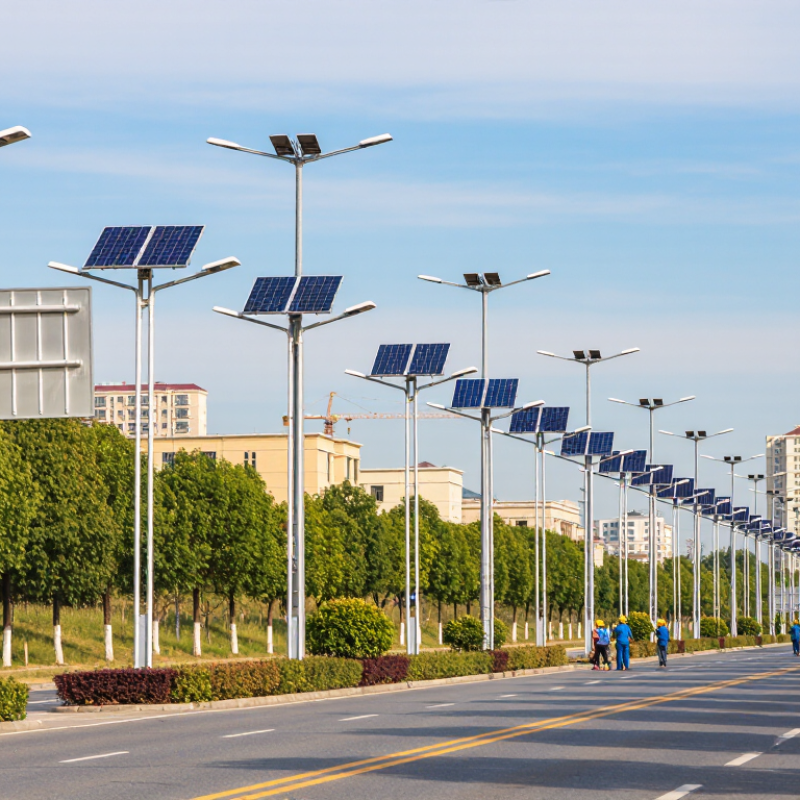
China Top 10 LED Solar Street Light Manufacturers?

How China’s LED Solar Street Light Industry Is Organized

China’s LED solar street light industry is not one uniform market. It is a layered manufacturing network. Core LED modules, lithium batteries, controllers, poles, and housings often come from different specialist clusters. Some factories assemble complete lights. Others focus on battery packs or intelligent controllers. This division lowers production costs and supports project-specific designs. It also makes supplier evaluation more difficult. A polished sample may hide weak internal components.

The most visible manufacturers usually fall into three groups: component specialists, integrated OEM factories, and engineering companies. Component specialists compete on test data and consistency. OEM factories combine housing, lighting, charging, and software functions. Engineering suppliers add site surveys, installation guidance, and after-sales service. Their real capability appears in records, not brochures. Buyers should request IES files, battery chemistry details, ingress ratings, salt-spray results, and night-time operating logs. A serious factory can explain warranty limits clearly. That matters.

The “top ten” idea needs careful handling. Rankings based only on export volume can overlook smaller factories with better thermal design or local support. Price comparisons can also be unfair when battery capacity, pole thickness, and autonomy days differ. A practical assessment includes factory audits, sample disassembly, random batch testing, and references from similar climates. Coastal projects need strong corrosion protection. Cold regions require closer battery testing. Field data disagrees. Even reliable suppliers sometimes overestimate winter runtime, so contracts should define measurable lighting levels and replacement procedures.

China’s LED Solar Street Light Industry: Typical Component Design Life

China’s LED solar street-light supply chain is organized around specialized component manufacturers and system integrators. These indicative design-life benchmarks reflect commonly specified service expectations: photovoltaic modules generally last the longest, while batteries and controllers are replaced more frequently. Actual service life depends on climate, operating cycles, materials, and maintenance.

Criteria for Ranking the Top 10 Manufacturers

China Top 10 LED Solar Street Light Manufacturers?

Ranking the top ten manufacturers requires more than comparing catalog prices. IEA PVPS Trends 2024 recorded about 456 GW of new global solar capacity in 2023. This growth increases demand for reliable off-grid lighting, but it does not prove product quality. Each manufacturer should be assessed through audited production capacity, traceable components, and documented project experience. Factory inspections matter. So does evidence.

Technical performance should carry the greatest weight. The U.S. Department of Energy’s 2023 solid-state lighting research report highlights efficacy, reliability, thermal management, and controls.

Therefore, ranking criteria should include measured luminaire efficacy, optical distribution, battery cycle life, photovoltaic conversion efficiency, and lighting autonomy during cloudy periods. A serious evaluation should request LM-79 or equivalent photometric testing, IEC 60598 safety compliance, suitable IP and IK ratings, and battery documentation under IEC 62619 where applicable.

Commercial reliability deserves equal attention. Compare warranty terms, spare-part availability, remote monitoring, installation guidance, and response times after failure. Suppliers should disclose annual output, quality-control sampling, and the percentage of returned units.

Independent references from roads, parks, and rural projects are stronger than polished brochures. A perfect ranking is impossible. Climate, road width, pole spacing, and maintenance access change the result.

Some published specifications may also reflect laboratory conditions, not dusty streets after three rainy seasons. Procurement teams should therefore score verified field data, lifecycle cost, and carbon-conscious materials alongside price.

China’s Top 10 LED Solar Street Light Manufacturers

China’s Top 10 LED Solar Street Light Manufacturers

China’s top 10 LED solar street light manufacturers are often judged by engineering depth, not advertising. Strong suppliers usually design the lamp, solar panel, battery system, controller, and housing as one package. This improves compatibility and simplifies maintenance.

In practical projects, examine lighting reports, battery cycle data, and outdoor test records. A reliable manufacturer should explain performance at low temperatures, during cloudy weeks, and under heavy rain. Check whether the LED module maintains stable brightness after several years. Ask for installation references in climates similar to yours. Factory visits can reveal assembly discipline, wiring quality, and testing equipment. Yet no supplier is perfect. Published efficiency figures may not match field results, especially when dust covers the panel or trees block sunlight. That gap deserves honest discussion.

Tips: Compare complete system costs, not only lamp prices. Confirm warranty limits, spare-part availability, and remote monitoring options. Request a sample unit before placing a large order. Test its charging time, illumination area, and battery protection features. Local road width and pole spacing also matter. A technically advanced product may still perform poorly when the design ignores site conditions. Independent photometric testing adds confidence, although it increases the project budget. Procurement teams should keep written records of every claim and test result. That habit prevents attractive promises from replacing dependable evidence.

Product Types, Technologies, and Key Features

China’s top 10 LED solar street light manufacturers should be assessed by product design, not catalog size. A 2024 market assessment by Grand View Research valued the global solar street lighting market at several billion dollars and projected strong growth through 2030. This expansion reflects demand for efficient lighting in roads, campuses, industrial parks, and rural areas.

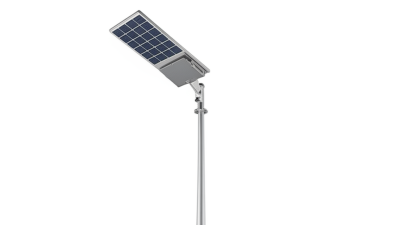
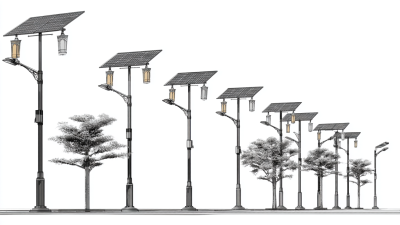
Product types vary widely. All-in-one units place the panel, battery, controller, and LED module inside one housing. Split-type systems use a separate panel, allowing better solar exposure and easier replacement. Integrated models look cleaner, but their compact batteries can be harder to service. Motion-dimming systems reduce output when streets are empty. Smart versions add remote monitoring, fault alerts, and adaptive brightness.

Technology choices deserve close inspection. Lithium iron phosphate batteries generally provide safer cycling and longer service than older lead-acid designs. LED efficacy above 160 lumens per watt is now achievable in premium configurations, according to recent lighting industry reports. Yet advertised figures may reflect laboratory conditions. Ask for measured output, battery capacity, IP and IK ratings, and autonomy at winter temperatures. The International Energy Agency continues to identify LEDs as a major efficiency opportunity, but solar performance still depends on local weather, shading, and installation quality. A product may look impressive on paper. Field testing often tells a different story.

China Top 10 LED Solar Street Light Manufacturers? - Product Types, Technologies, and Key Features

No. Anonymous Product Profile Product Type Typical LED Power Solar Module Battery Technology Control Technology Protection Rating Typical Autonomy Key Features and Suitable Applications
1 Compact All-in-One Profile Integrated solar street light 20–60 W Monocrystalline silicon, 60–150 Wp LiFePO4, 20–60 Ah PWM or MPPT charging; dusk-to-dawn photocell IP65–IP66; IK08 2–3 nights Lightweight housing, simple installation, and low maintenance for residential roads, parks, and pedestrian paths.
2 High-Efficiency All-in-One Profile Integrated high-output solar street light 60–120 W Monocrystalline silicon, 150–300 Wp LiFePO4, 50–120 Ah MPPT controller; programmable dimming IP66; IK08–IK09 3–5 nights Higher energy conversion and adaptive lighting for urban streets, access roads, and commercial areas.
3 Split-System Profile Separate panel and lamp assembly 40–150 W Monocrystalline silicon, 100–400 Wp LiFePO4 or lithium-ion, 40–160 Ah MPPT; external programmable controller IP66 for luminaire; IP65 or higher for enclosure 3–5 nights Flexible panel orientation and easier component replacement for highways, rural roads, and difficult climates.
4 Smart-Control Profile Network-ready solar street light 40–120 W Monocrystalline silicon, 120–350 Wp LiFePO4, 50–150 Ah LoRaWAN, NB-IoT, 4G, or Bluetooth monitoring IP66; IK08 or higher 3–5 nights Remote status monitoring, fault alerts, scheduling, and energy-use analysis for smart-city projects.
5 Motion-Sensing Profile Adaptive-security solar light 30–100 W Monocrystalline silicon, 90–250 Wp LiFePO4, 40–120 Ah Microwave or PIR sensor; multi-level dimming IP65–IP66; IK08 3–5 nights Reduces energy consumption by lowering output during inactive periods; suitable for pathways, parking areas, and low-traffic roads.
6 Highway Lighting Profile High-power split solar street light 100–200 W Monocrystalline silicon, 300–600 Wp LiFePO4, 120–250 Ah MPPT; astronomical timer and programmable profiles IP66; IK09–IK10 4–7 nights Longer pole spacing and high lumen output for arterial roads, highways, bridges, and logistics routes.
7 Decorative Urban Profile Architectural solar street light 20–80 W Monocrystalline silicon, 80–220 Wp LiFePO4, 30–100 Ah Photocell, timer, and optional remote control IP65–IP66; IK08 2–4 nights Decorative housings and controlled optical distribution for plazas, historic districts, resorts, and waterfronts.
8 Cold-Climate Profile Low-temperature solar street light 40–120 W Monocrystalline silicon, 150–350 Wp Low-temperature-rated LiFePO4 with battery heating or thermal management MPPT; temperature compensation and battery protection IP66; IK08 or higher 4–7 nights Designed for snow, frost, and reduced winter sunlight; suitable for northern regions and high-altitude locations.
9 Tropical and Coastal Profile Corrosion-resistant solar street light 40–120 W Monocrystalline silicon, 120–350 Wp LiFePO4, 50–150 Ah MPPT; overcharge, over-discharge, and surge protection IP66; IK08; anti-corrosion coating 3–5 nights Powder-coated aluminum, stainless-steel fasteners, and sealed electronics for humid, rainy, and salty environments.
10 Hybrid Backup Profile Solar and grid-hybrid street light 60–180 W Monocrystalline silicon, 180–500 Wp LiFePO4, 80–220 Ah MPPT with automatic grid backup and programmable switching IP66; IK09 3–7 nights without grid support Maintains lighting continuity during poor weather or extended cloudy periods for major roads, campuses, and public infrastructure.

Note: The specifications above are representative ranges commonly used in China-made LED solar street-light solutions. Actual performance depends on latitude, solar irradiation, mounting height, road geometry, lighting requirements, battery configuration, and local standards.

How to Choose the Right Chinese Manufacturer

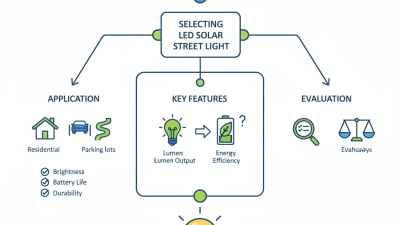
Choosing a Chinese LED solar street light manufacturer requires more than comparing catalog prices. Ask for factory registration, production photos, and recent project references. A serious supplier should explain panel efficiency, battery chemistry, LED efficacy, controller settings, and expected operating hours. Request test reports tied to the exact model, not a similar sample. Small detail, big difference. Confirm whether testing covers salt spray, thermal cycling, waterproofing, and battery safety. Standards claims should be verifiable through accredited laboratories.

Evaluate manufacturing capability during a video audit or site visit. Look for incoming-material inspection, aging tests, torque records, and serial-number tracking. Ask how rejected batteries and damaged modules are handled. Clear answers reveal process maturity. Check whether the supplier designs the system or only assembles imported parts. Request a sample with the final enclosure, firmware, mounting bracket, and cable lengths. A bright lamp in a showroom proves little. Measure illumination, charging behavior, and dusk-to-dawn performance in realistic conditions.

Commercial reliability deserves equal attention. Compare warranty wording, spare-part availability, response times, and payment milestones. Put lumen maintenance, battery replacement terms, delivery tolerances, and inspection rights in the contract. Verify export experience for your destination and confirm packaging against vibration and moisture. References should include contactable project owners, not only polished photographs. I would also order a pilot batch before a large purchase. It costs more initially, but it exposes weak documentation and uneven assembly. No evaluation is perfect; weather, soil, and installation quality can still change results. Record those risks honestly.