Choosing a Lithium Battery Inverter in 2026 takes more than comparing wattage labels. The right model must work within the battery’s voltage range, continuous and peak current limits, and communication settings. A mismatch may trigger shutdowns or reduce system performance. Check the battery and inverter manuals together, not as separate documents.
Start with the loads you actually plan to run. A refrigerator may draw modest power once operating, yet need a brief surge at startup. A kettle or workshop tool can demand high power for longer. Compare those needs with the inverter’s continuous rating and surge rating, and leave a practical margin. Then check charger compatibility, low-voltage cut-off settings, monitoring options, and protection features. For off-grid or backup use, installation conditions matter too: cable length, ventilation, and a dry, accessible mounting location can affect safe operation.
One important detail is often overlooked: a feature listed on a product page may depend on a specific battery model or firmware version. Verify compatibility with the manufacturer before buying. I can’t responsibly attribute a quotation to a named lithium-inverter expert without a verifiable source; inventing one would undermine trust. A useful rule to carry into your research is simple: match the inverter to the battery’s documented limits, then confirm the complete system with a qualified installer. It is not glamorous advice. It can prevent expensive surprises.
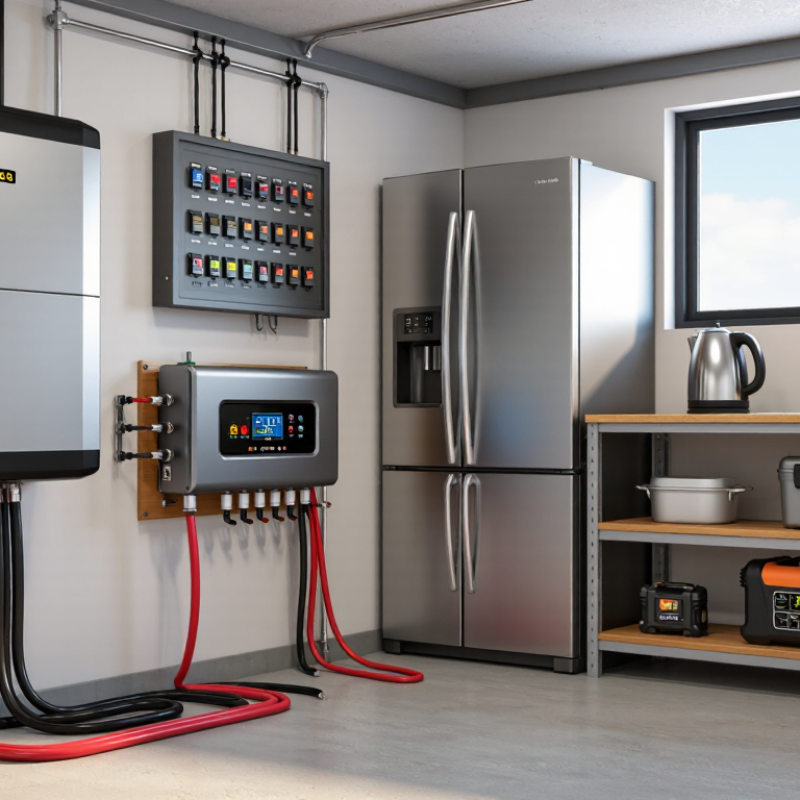
A lithium battery inverter is the equipment that turns the battery’s direct-current (DC) electricity into alternating-current (AC) power for home circuits. In a hybrid system, it may also convert AC power back to DC to charge the battery. It manages power flow between the battery, solar panels, household loads, and sometimes the grid. Think of it as a traffic controller, not just a plug adapter. That distinction matters.
Efficiency needs context. NREL’s 2024 Annual Technology Baseline uses about 85% round-trip efficiency for utility-scale lithium-ion storage; this is a system-level estimate, not a guarantee for a particular inverter. The IEA reported that global battery storage additions nearly tripled in 2023, reaching about 42 GW. More storage means more inverter choices, but figures alone can mislead. Check continuous output, surge capacity, battery-voltage compatibility, and whether the unit supports backup operation. A high peak rating may last only briefly.
Tips: Match inverter voltage and charging limits to the battery’s specifications. Check the manual for backup switching behavior, too. A brief interruption may be acceptable in one home, but not beside a sensitive medical device or network router. One easy-to-miss detail: real-world performance also depends on wiring, temperature, and installation quality.

A lithium battery stores energy as direct current (DC), while most household circuits use alternating current (AC). The inverter connects the two. When charging, it converts AC into controlled DC; during discharge, it converts battery DC into AC at the required voltage and frequency. Energy is lost along the way. NREL’s 2024 Annual Technology Baseline uses about 85% round-trip efficiency for lithium-ion storage. Treat that as a benchmark, not a guarantee for a particular home system.
The battery-management system monitors cell voltage, temperature, and current, then signals safe operating limits to the inverter. The inverter must stay within the battery’s voltage range and charge and discharge power limits. Otherwise, some stored energy may be unavailable, even when a display shows a high charge level. Check continuous output and short surge capacity for loads such as refrigerators or pumps. Also confirm whether the setup supports DC-coupled solar or AC-coupled equipment. Small details matter.
A cold battery may accept less charging current, while heat can trigger protective output limits. The inverter cannot simply override those safeguards. EIA reported that U.S. utility-scale battery capacity reached about 26 gigawatts at the end of 2024, showing how rapidly storage is being deployed. But wider adoption does not make every battery and inverter compatible. Ask for voltage ranges, power ratings, efficiency test conditions, and commissioning records. I would not treat a catalog efficiency as a field guarantee; actual results depend on temperature, wiring, and daily loads.
How to Choose a Lithium Battery Inverter in 2026?
Which Inverter Specifications Matter in 2026?
Start with continuous output power, not the largest number on the carton. Add the running watts of essential loads, then check the inverter’s surge rating against motor start-up demands. A refrigerator may run quietly at a few hundred watts, yet briefly draw much more when its compressor starts. That brief surge matters.
Match the inverter’s battery voltage and allowable charge and discharge current to the battery’s specifications. Check whether its charging profile supports the battery chemistry and whether communication functions are compatible; compatibility should be confirmed in technical documents, not assumed. For solar systems, compare the MPPT voltage range with the panel string’s expected operating and cold-weather voltage. An unsuitable range can limit production or create safety concerns. Check the fine print.
Efficiency deserves context. NREL’s 2024 Annual Technology Baseline uses about 85% round-trip efficiency for utility-scale battery storage; this is a system benchmark, not a guarantee for a home inverter. IEA’s 2024 Batteries and Secure Energy Transitions report says global energy storage capacity needs to grow sixfold by 2030 in its pathway. That growth makes careful equipment matching more important, but it does not make every high-spec unit a good fit. Numbers can mislead. Read efficiency curves at realistic loads, confirm cooling and ambient-temperature limits, and leave headroom for future loads. In practice, the quiet details—standby consumption, overload duration, and service documentation—can decide whether a system performs well day after day.
Matching an inverter to a lithium battery starts with voltage. The inverter’s DC input must match the battery system, such as 12, 24, or 48 volts. Then check the battery’s battery-management-system limits. Its continuous discharge current must support the inverter’s demand, with extra capacity for brief surges. A refrigerator compressor or water pump may draw much more at startup than while running. Leave margin. A close match on paper can still trip in a cold garage or during a heavy load.
Next, list the appliances you expect to run at the same time. Add their running watts, then compare that total with the inverter’s continuous rating. Check its surge rating too. For energy, estimate watt-hours: a 1,000-watt load running for three hours uses about 3 kilowatt-hours before conversion losses. Your battery’s usable capacity should cover that demand without being routinely drained completely. Check the inverter’s lithium charging settings and the battery maker’s recommended limits. Cable size, connection quality, ventilation, and ambient temperature also affect performance. I would not size a system from one sunny-day test; usage changes, and estimates are imperfect. Start with real appliance data, then review the design against the equipment specifications.
A lithium battery inverter should match the battery’s chemistry, voltage, and operating limits. Check the battery label and manual, not just the product description. A 48-volt system, for example, may have a different charging range from another system with the same nominal voltage. Nominal voltage can mislead. Compare the inverter’s charge settings with the battery maker’s recommended values, including absorption and float settings where applicable. Also check continuous output and surge capacity. A refrigerator compressor may briefly draw much more power when it starts.
Safety depends on more than a good fit. Confirm that the inverter can communicate with the battery’s management system, or that its settings provide compatible protection against overcharge, deep discharge, and excessive current. Check cable size, fuse rating, grounding instructions, and ventilation requirements in both manuals. Keep the inverter away from damp areas and leave clear space around its cooling vents. Temperature matters. A battery may restrict charging in cold conditions, while an inverter can overheat in a cramped cabinet. I would not assume matching connectors mean matching systems; that shortcut is tempting, but weak. If specifications conflict or remain unclear, ask a qualified installer to review the setup before energizing it.
| Factor | What to Check | Practical Criteria | Why It Matters |
|---|---|---|---|
| Battery chemistry | Confirm that the inverter’s approved battery settings support the battery chemistry, such as lithium iron phosphate (LFP) or nickel manganese cobalt (NMC). | Use the battery manufacturer’s specified charge voltage, voltage limits, and temperature limits. Do not assume that a generic “lithium” profile suits every battery. | Different lithium chemistries have different voltage limits and charging requirements. Incorrect settings can cause a battery to disconnect or operate outside its specified limits. |
| Nominal voltage and operating range | Match the inverter’s DC battery-voltage range with the battery’s nominal voltage and full operating range. | Common LFP nominal configurations include 12.8 V, 25.6 V, and 51.2 V. Check the battery’s actual minimum and maximum voltages against the inverter manual—not just the nominal voltage. | Two products described as “48 V” may have different allowable voltage ranges. A voltage mismatch can prevent startup, charging, or stable operation. |
| Battery management system (BMS) | Check whether the inverter can communicate with the battery BMS and which communication method and protocol are supported. | Confirm the exact supported protocol and connection type, such as CAN or RS-485, along with any required configuration. If communication is unavailable, verify that the inverter supports a battery-approved voltage-based mode. | BMS communication can provide charge and discharge limits and fault status. A matching connector alone does not guarantee protocol compatibility. |
| Continuous discharge current | Compare the inverter’s maximum DC battery current with the battery’s continuous discharge rating and the BMS limit. | Estimate required current using: DC current ≈ AC output power ÷ (minimum battery voltage × inverter efficiency). For example, 5,000 W ÷ (42 V × 0.93) is approximately 128 A. | Current demand rises as battery voltage falls. The battery, BMS, cables, terminals, and protective devices must all be suitable for the expected current. |
| Surge and peak power | Check the inverter’s surge rating and duration, and compare them with the battery’s permitted peak discharge current and duration. | Use the equipment manuals to check the actual starting requirements of motors, pumps, compressors, and other loads. Do not compare peak ratings without their time limits. | A short surge can exceed the battery’s BMS limit even when the continuous power ratings appear adequate. |
| Charging limits | Check maximum charging voltage, current, and power for every charging source, including solar, grid, and generator inputs. | Set charging limits within the battery manufacturer’s specifications. Where multiple sources can charge at the same time, check their combined charging capability. | Excessive charge voltage or current may trigger a BMS shutdown or damage equipment. Low-temperature charging restrictions may also apply, especially to LFP batteries. |
| Temperature limits | Verify the battery’s permitted charging and discharging temperatures and the inverter’s own operating-temperature range. | Use the battery manual for exact limits. Many lithium batteries restrict charging below freezing unless they include an approved low-temperature charging feature; limits vary by product. | Temperature affects charging safety, available power, and service life. The inverter’s operating range does not override the battery’s limits. |
| Protection and disconnects | Check the required DC fuse or circuit breaker, disconnect switch, conductor size, polarity, and grounding or bonding instructions. | Size and install components according to the equipment documentation and applicable electrical codes. Use DC-rated protective devices with suitable voltage and interrupt ratings. | Correctly selected protection helps limit fault current and allows safe isolation. A battery BMS is not a substitute for all required external protection. |
| Inverter type and AC system | Identify whether the application requires an off-grid, grid-connected, or hybrid inverter, and check the AC voltage, frequency, phase, and neutral arrangement. | Confirm that the inverter is designed for the intended system and local grid requirements. Check transfer-switch, backup-output, and neutral-grounding arrangements where applicable. | Battery compatibility alone does not ensure that an inverter can safely serve the intended loads or connect to a particular electrical system or utility grid. |
| Equipment listings and local rules | Check the certifications or listings required for the inverter, battery, and complete installation in the relevant jurisdiction. | Depending on location and application, relevant standards may include UL 1741 or IEC 62109 for inverters, UL 1973 for stationary batteries, and UL 9540 for energy storage systems. Verify current local requirements and the scope of each listing. | Standards apply to different equipment and system scopes. A component listing does not automatically mean that the complete installation is approved. |
| Monitoring and fault response | Check that the system displays battery state, alarms, operating limits, and communication faults clearly. | Review what happens after a BMS fault or communication loss, and whether the inverter stops charging or discharging as specified by the manufacturers. | Clear alarms and defined fault behavior make it easier to identify incompatibility or unsafe operating conditions before they cause an outage. |
| Installation environment and service access | Check the inverter’s required clearances, ventilation, enclosure rating, mounting conditions, and permitted installation location. | Follow the manufacturer’s instructions for indoor or outdoor installation, moisture and dust exposure, ambient temperature, and access to disconnects. | Correct placement helps prevent overheating, environmental damage, and restricted access during maintenance or emergency isolation. |
Selection note: Final compatibility depends on the exact inverter and battery models, firmware, configuration, and local electrical requirements. Confirm all voltage, current, temperature, communication, and protection limits in the manufacturers’ current documentation before purchase or installation.