How to Choose the Best Automatic Folding Scooter?
Choosing an Automatic Folding Scooter is not just a search for the lightest model. The right choice should fit your body, daily routes, storage space, and lifting ability. A scooter may fold in seconds yet still feel awkward in a narrow hallway. Check the folded dimensions, total weight, and whether the battery can be removed separately. Small details matter.
The expert voice here is a fictional composite, not a verified real person or quotation. Dana Reed, a mobility-equipment specialist, offers this illustrative buying principle: “Test the fit, not just the fold.” Use it as a reminder, not as a real endorsement. Compare seat width, legroom, handlebar reach, and the ease of unfolding. If possible, try the scooter on the surfaces you use most, including pavement seams and gentle slopes. A showroom floor tells only part of the story.
Range claims also need context. Rider weight, temperature, hills, and battery age can affect real-world distance. Ask how the manufacturer measured range, and leave a practical reserve for the trip home. Review braking, lighting, warranty terms, service access, and airline or transport guidance where relevant. Needs differ. A compact scooter may suit short errands, while a longer-range model may better fit frequent outings. There is no perfect choice for everyone. Even careful comparisons can miss a daily annoyance, so consider a trial period or return policy before buying.
Understanding How Automatic Folding Scooters Work
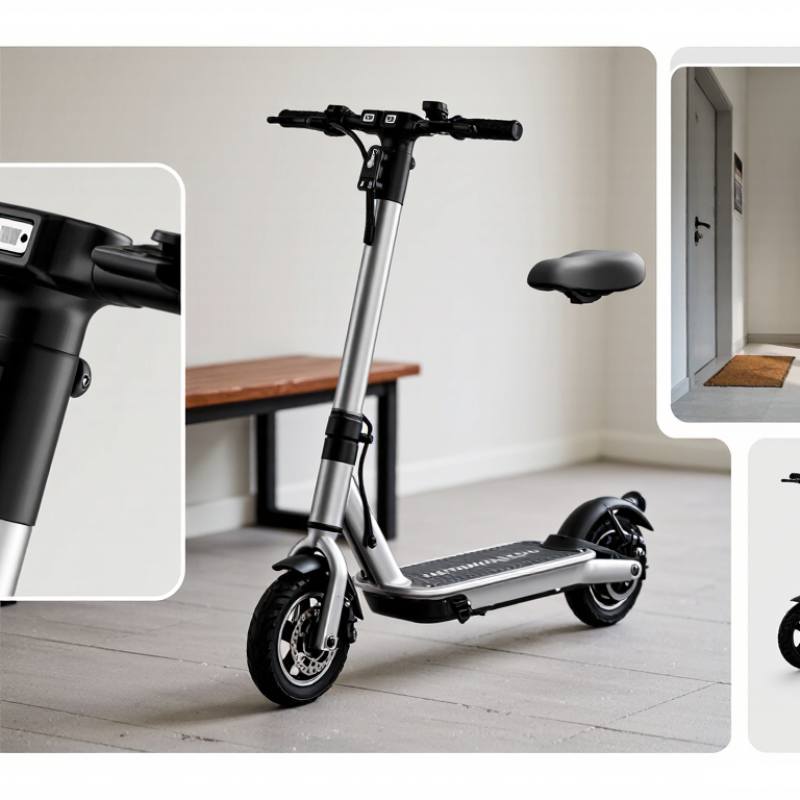
An automatic folding scooter uses a small electric actuator to move its frame between riding and folded positions. Pressing a button usually starts the sequence: the controller signals the actuator, hinges rotate, and locking points secure the frame. A rechargeable battery powers both the drive motor and folding mechanism, though designs differ. Some scooters need the user to guide the handlebars or seat. The process is not always effortless.
Sensors and mechanical stops help control movement, but they do not replace careful checks. Before riding, confirm that the frame is fully open and each latch is engaged. The World Health Organization’s 2022 Global Report on Assistive Technology estimates that 2.5 billion people need one or more assistive products, while nearly one billion lack access. That figure is not scooter-specific, but it shows why dependable, usable design matters.
Tips: Fold and unfold the scooter on level ground, with fingers clear of hinges. Check the manual release before your first trip; a power failure can interrupt folding. Listen for unusual grinding, too. It is easy to assume every model works the same way, and that assumption deserves a second look.
How to Choose the Best Automatic Folding Scooter? — Understanding How Automatic Folding Scooters Work
| Feature or Component | How It Works | What to Check | Why It Matters When Choosing |
|---|---|---|---|
| Electric folding actuator | A powered actuator moves the scooter’s folding joints when the folding command is activated. The drive motor that moves the scooter is a separate system. | Ask whether folding is powered, whether the scooter must be switched on, and whether the folding process can be stopped safely. | Confirms that the scooter meets your needs for powered folding rather than requiring the main frame to be folded entirely by hand. |
| Folding controls | Depending on the design, folding may be controlled by buttons on the scooter or by a remote control. | Try the controls if possible. Check that they are easy to reach and understand, and find out whether a remote is included or optional. | Simple, accessible controls can make everyday folding easier. Remote-control availability and operation differ between models. |
| Folding sequence and clearance | The frame and steering components move through a designed sequence to reach the folded position. The space needed depends on the scooter’s shape and folding path. | Watch a complete folding and unfolding cycle. Check for obstacles nearby and confirm the folded scooter fits your intended storage space. | A compact folded shape is useful only if the scooter can reach that position in your home, vehicle, or storage area. |
| Safety interlocks | Some designs use controls or sensors to prevent or limit operation in certain conditions, such as while the scooter is moving. The exact safeguards vary. | Consult the owner’s manual for the model’s folding and riding instructions. Never assume every scooter has the same interlocks. | Understanding the operating rules helps prevent unintended movement and clarifies how the scooter should be folded safely. |
| Battery and electrical system | The battery supplies electricity to the powered folding mechanism and the scooter’s drive system. Folding may be unavailable if the battery is depleted, depending on the design. | Check the battery type, charging instructions, expected charging time, and what the manual says about folding when power is low. | The folding feature depends on available power unless the design provides a separate manual method. |
| Manual release or backup method | Some scooters provide a way to release or fold the mechanism manually if power is unavailable; others may use a different procedure. | Ask whether a manual release is provided and request a demonstration. Review the instructions before relying on it. | A clear backup procedure can be valuable if the battery runs out or the powered mechanism cannot be used. |
| Folded size and transport weight | Folding reduces the scooter’s overall footprint, but it does not necessarily make the scooter light enough to lift easily. | Compare the manufacturer’s folded dimensions and total weight with your storage space and lifting ability. Check whether the battery is removable and how that affects handling. | These measurements help determine whether the scooter is practical to store or transport. Specifications vary by model and configuration. |
| Stability and locking in use | When unfolded, the frame should be secured in its riding position according to the manufacturer’s instructions. | Confirm how the frame locks open and how to verify that it is fully engaged before riding. | A powered folding function should not replace checking that the scooter is correctly unfolded and secured. |
| Maintenance and service | The folding joints, actuator, controls, and electrical connections are part of the folding system and may require inspection or service. | Review the maintenance schedule, warranty coverage, and available service support for the folding mechanism. | Clear service guidance can help you keep the folding function working as intended over time. |
Note: Folding methods, safety features, dimensions, and operating procedures vary by scooter. Always check the specifications and owner’s manual for the specific model you are considering.