
Choosing the right Aluminum Profile supplier can shape a project long after the first delivery. A polished sample is reassuring. It is not proof of consistent production. Check alloy and temper options, dimensional tolerances, surface finish, and whether the supplier can provide inspection records. Ask how dies are maintained and how defects are handled. Then compare answers with a real drawing, not a vague product description.
As aluminum extrusion specialist Elena Ward puts it, “A dependable profile begins with a supplier who can repeat the specification, not just meet it once.” Use that principle to guide the evaluation. Review sample parts under practical conditions: measure wall thickness, inspect corners, and check finish consistency in natural light. Ask for references from projects with similar shapes, order volumes, and finishing needs. A supplier’s lead time matters, too, especially when custom tooling is involved. Get responsibilities and delivery assumptions in writing. Small omissions can grow.
This guide outlines how to assess technical capability, quality controls, communication, pricing, and long-term support. No checklist replaces direct verification. Some buyers, myself included, can overvalue a low quote before understanding tooling costs or inspection limits. That deserves a second look. The best choice is rarely the cheapest profile on paper; it is the supplier whose process fits your application and can be checked before production scales.
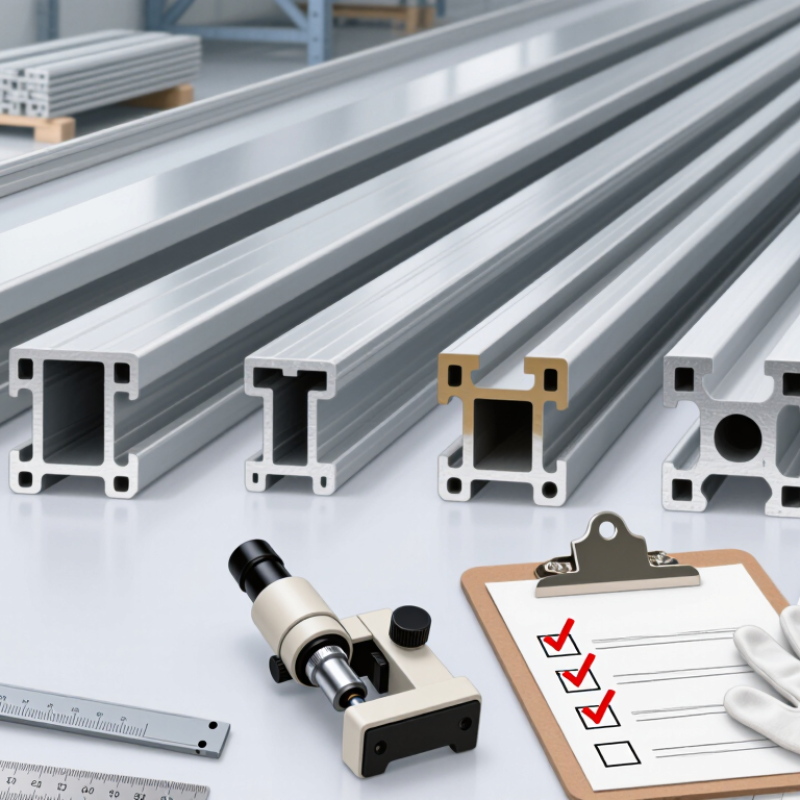
Before comparing aluminum profile suppliers, define the profile’s job. Record the cross-section, alloy, temper, length, wall thickness, and dimensional tolerances. Add a marked-up drawing if slots, holes, or machining features matter. “Standard profile” is not a complete specification. Small details matter.
Describe the working conditions too: loads, vibration, temperature, moisture, and exposure to chemicals. Note how the profile will be cut, joined, finished, and installed. A supplier needs these details to assess manufacturability and recommend a suitable extrusion route. It is tempting to leave tolerances flexible, but vague requirements can create fit problems at assembly. The International Aluminium Institute’s 2023 outlook projects global aluminium demand reaching 119 million tonnes by 2030, about 40% above its 2020 level. That forecast makes clear project specifications useful when discussing capacity and lead times.
State the required surface finish, color, inspection records, packaging, and delivery schedule. If recycled content or end-of-life recovery matters, write that down and ask how it will be documented. The IAI’s Global Aluminium Cycle analysis estimates that roughly 75% of all aluminium ever produced remains in use. That is useful context, not a guarantee that every profile suits reuse. Request a first-article sample and check critical dimensions against the drawing. A small mismatch can become expensive across a long production run. I still find it easy to overlook packaging until profiles arrive scratched. Define it early.

Specify the alloy and temper before comparing suppliers. This chart shows representative minimum tensile and yield strengths for two commonly extruded aluminum options. Actual requirements vary by product standard, section thickness, and application; confirm the applicable values with your supplier.
An aluminum profile supplier’s technical capability shows in more than a product catalog. Ask which alloys and tempers they commonly process, and how they verify material properties. Request clear drawings with tolerances for wall thickness, straightness, and cut length. A precise answer is a good sign. Ask to see inspection records.
Review the factory’s presses, aging ovens, cutting equipment, and finishing lines. Confirm that the available press capacity suits your profile’s dimensions and wall design. Check whether the supplier can manage each required step, or relies on outside processors. A polished sample can hide a difficult production process. Repeatability matters more.
Ask how first-article samples are checked before full production. Look for measurements tied to your drawing, not vague claims of quality. A capable supplier should explain how defects are recorded and corrected, and how material lots remain traceable. Compare a sample with a production run when possible. It is easy to overlook variation between shifts. Discuss how the supplier handles changes to dies, specifications, or order volume; practical limits deserve honest answers.
When choosing an aluminum profile supplier, ask for its current ISO 9001 certificate and verify the issuing body, scope, and expiration date. The ISO Survey 2022 recorded about 1.26 million valid ISO 9001 certificates worldwide. That shows the standard is widely used, not that every certified supplier delivers consistent profiles. Ask how inspections cover billet composition, extrusion dimensions, surface finish, and packing. Request a recent audit summary, plus records showing what happens when a measurement falls outside tolerance.
Traceability should connect each profile bundle to its production batch. Request a sample material certificate, such as an EN 10204 Type 3.1 document, and check that its heat or batch number matches the bundle label. Then ask the supplier to trace that number back to the billet source and test results. A tidy certificate alone is not enough. I would also check whether records remain searchable after shipment; this detail is easy to overlook.
Tips: Choose one delivered bundle and test the paper trail yourself. Can the supplier identify its alloy, temper, dimensions, inspection result, and production date? Ask how long records are retained and how quickly they can be retrieved. If answers are vague, pause. A supplier may have good systems, yet the documents can still leave gaps.
A low quote can still be the expensive choice. Compare suppliers using the same alloy, temper, dimensions, finish, order quantity, and packaging requirements. The World Bank’s Pink Sheet puts average aluminum prices at about US$2,256 per tonne in 2023. That benchmark is useful context, not a finished-profile price: extrusion, machining, coating, and scrap allowances also affect the quote. Ask for each cost separately, and check how long the price remains valid.
Lead time needs the same scrutiny. Request dates for die preparation, sample approval, production, and dispatch—not just one optimistic delivery estimate. The World Bank’s 2023 Logistics Performance Index covers 139 economies and evaluates factors including shipment timeliness and tracking. Use those measures as prompts: can the supplier provide milestone updates, and can it explain delays with production evidence? A polished schedule is not a guarantee. I would leave room for revision, especially on first orders.
Compare delivery options by total landed cost and practical risk. Ask for a packed-weight estimate, shipment mode, transit range, insurance, and who handles unloading. A cheaper sea shipment may suit a steady schedule; air freight may help with urgent, smaller batches, but can erase savings quickly. Check whether profiles arrive bundled, protected at the edges, and labeled by length. Small details matter. Keep one question open: does the quoted delivery date include customs clearance and final transport, or only dispatch?
| Supplier Option | Best Suited For | Indicative Pricing | Typical Lead Time | Delivery Options | Key Checks Before Ordering |
|---|---|---|---|---|---|
| Local stock distributor | Standard profiles, small quantities, and urgent replacement requirements | Often higher per kilogram than direct production; pricing depends on profile, alloy, finish, and stock availability | Same day to 1 week for stocked items; non-stock items may take longer | Customer pickup, local courier, or regional freight; cut-to-length service may be available | Confirm stock quantity, alloy and temper, dimensional tolerances, finish condition, and cutting charges |
| Regional custom extruder | Repeat orders, custom dies, and projects needing closer coordination | Usually quoted by profile weight and order quantity; tooling is commonly charged separately for a new die | Approximately 2–5 weeks for a new die, followed by about 2–4 weeks for production, subject to capacity | Road freight, scheduled deliveries, or collection; packaging and unloading requirements should be agreed in advance | Ask whether the quote includes die costs, finishing, inspection, packaging, and freight; request approval samples |
| Overseas integrated manufacturer | Large production runs, bundled finishing, and buyers able to plan ahead | May offer a lower unit price at higher volumes; compare the landed cost, including freight, duties, and handling | Production commonly takes several weeks; ocean transit can add several more weeks, depending on route and schedules | Ocean freight, air freight for urgent or small shipments, or buyer-arranged freight under agreed Incoterms | Verify applicable standards, quality documentation, export packing, payment terms, inspection arrangements, and customs responsibilities |
| Fabrication-focused supplier | Profiles requiring machining, drilling, assembly, or other value-added operations | Higher than an unfinished profile because processing, setup, and inspection are included | Often 3–8 weeks, depending on the profile, processing steps, order size, and production schedule | Consolidated shipment of finished parts, palletized freight, or staged deliveries for production schedules | Specify drawings and revision levels, critical dimensions, surface protection, inspection criteria, and acceptable defect limits |
| Specialty finishing supplier | Profiles requiring anodizing, powder coating, or a specified decorative appearance | Finishing is commonly priced separately or added to the profile price; color, coating thickness, and batch size affect cost | Allow additional processing time beyond extrusion; color matching and sample approval can extend the schedule | Supplier-arranged freight or return shipment after finishing; protective packaging is important to prevent surface damage | Confirm finish specification, color tolerance, coating or anodizing requirements, sample approval, and handling protection |
| Planning note: Lead times and pricing vary with alloy, profile complexity, order quantity, die availability, finish, inspection requirements, and shipping route. Treat these comparisons as general buying guidance and request a current, specification-based quotation before placing an order. | |||||
Choosing an aluminum profile supplier means judging more than alloy options and quoted prices. Notice how the team handles a small technical question. Do they confirm wall thickness, tolerance, finish, and delivery dates in writing? A prompt, specific reply can reveal how production issues may be handled later. Salesforce’s 2023 State of the Connected Customer report found that 88% of customers consider the experience a company provides as important as its products. For a profile buyer, clear updates are part of that experience.
Ask who owns your order after the quotation. Check whether engineering, production, and logistics share the same specifications. McKinsey’s B2B Pulse research has reported that buyers use an average of ten interaction channels during the purchasing journey. That makes consistent information across email, calls, and order portals valuable. A polished portal alone proves little. Try a practical test: request a drawing revision and observe how the supplier tracks approval and communicates any delay.
Long-term reliability shows up in ordinary details: stable tolerances between batches, accessible inspection records, and realistic lead times. Ask for sample inspection reports and a clear process for handling nonconforming parts. Then compare those answers with what happens during a trial order. One easy mistake is treating a friendly sales contact as evidence of dependable support. People change roles; documented processes matter. And be honest about your own needs: vague forecasts or late design changes can strain even a capable supplier. A useful partnership includes frank conversations about both sides’ limitations.