Choosing fiber optic cable for an international project is not just a matter of comparing price per meter. A cable that looks suitable in a catalog may not match the route, equipment, or installation method on site. Soil conditions, indoor and outdoor transitions, pulling distance, connector type, and expected bandwidth all shape the right choice. Small details matter.
This guide, 12 Fiber Optic Cable Buying Tips for Global Buyers, helps purchasing teams turn those variables into practical questions. It explains how to check single-mode or multimode requirements, fiber count, jacket and armor options, bend performance, connector compatibility, and operating conditions. It also covers supplier documentation, sample testing, production consistency, packaging, lead times, and after-sales support. These checks can reduce avoidable delays, especially when cable must travel across borders and arrive ready for installation.
Specifications deserve careful reading. Specs can mislead. A low quoted price may exclude testing or protective features, while an impressive data sheet does not guarantee consistent manufacturing. Ask for clear test reports, relevant product standards, and written confirmation of the exact construction being offered. When possible, compare samples against project drawings and the actual installation environment. Even a detailed checklist has limits; local site conditions can change, and buyers should confirm final requirements with qualified network or installation professionals. This is a practical starting point, not a substitute for engineering review.
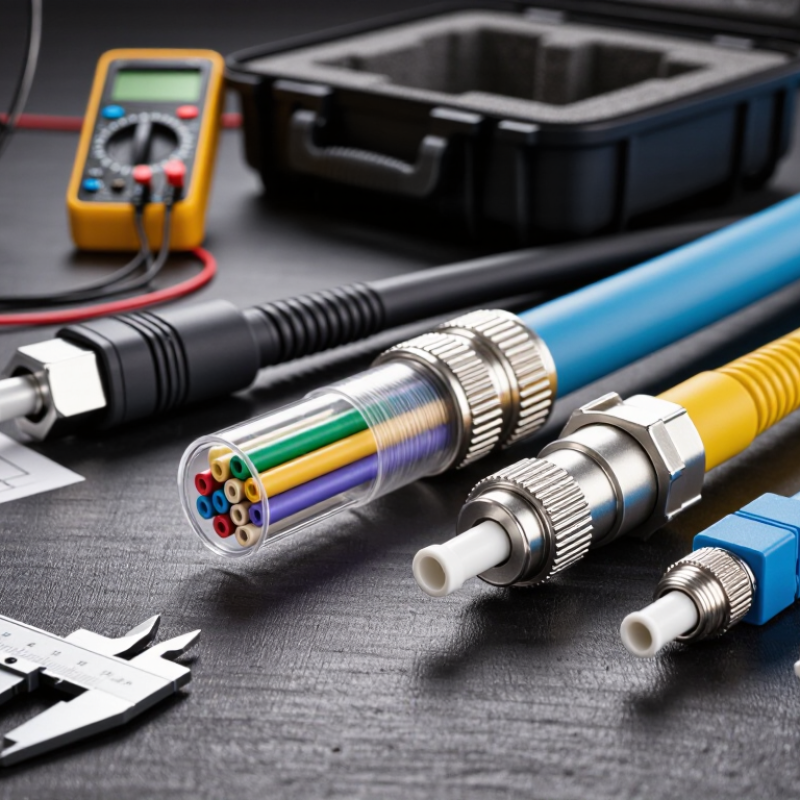
Fiber optic cable selection starts with the route and the equipment at each end. Single-mode cable suits long links between buildings or across a campus, where signals must travel farther with low loss. Multimode cable is often used inside data centers and offices, where equipment distances are shorter. Check the transceivers before choosing: their supported fiber type and wavelength must match the cable. A mismatch can leave a carefully installed link unusable.
The installation environment matters just as much. Indoor tight-buffered cable is easier to handle in racks and conduits, while outdoor loose-tube designs protect fibers from moisture and temperature changes. For a direct-buried route, ask whether the cable needs armor and confirm the project’s installation requirements. Small details count. Measure the path, allow sensible slack, and check bend-radius limits; tight corners can damage performance even when the jacket looks fine. For a fiber-to-the-home connection, a drop cable may be appropriate, but connector type and termination method still need confirmation. In practice, buyers sometimes focus on distance and overlook future repairs. That’s an easy mistake. Review the cable construction, fiber count, and test documentation with the installer before ordering, especially when drawings are incomplete or site conditions may change.
Start with the network’s actual workload: expected bandwidth, link distance, and room for future expansion. A short office link and a long campus backbone may need different fiber types. Check whether single-mode or multimode fiber suits the equipment and transmission distance. Confirm connector type and optical budget with the devices at both ends. A mismatch can turn a suitable cable into a frustrating installation. Small details matter.
Walk the route before ordering. Note conduit space, bends, pull-box locations, and any shared pathways that could complicate access. Respect the cable’s minimum bend radius and pulling-tension limits; tight corners can damage fibers even when the outer jacket looks fine. Measure the route, then allow practical slack at termination points. Outdoor sections also need jackets suited to moisture, sunlight, and temperature changes. Check local project specifications for fire performance and installation requirements.
A common planning miss is assuming an existing duct is clear because its entrance looks tidy. Verify it. Record route lengths, transitions, and likely maintenance access, preferably on a simple marked-up floor plan. Conditions can change between survey and installation, so keep some flexibility in the cable plan. It is not always possible to predict every obstacle. That uncertainty deserves attention.
Standardized maximum link reach varies by fiber type and transceiver mode.
OM3 and OM4 support shorter 10GBASE-SR links, while OS2 with 10GBASE-LR supports links up to 10 km. Before buying, verify the required link distance, transceiver compatibility, and installation conditions such as pathway length and routing.
A fiber cable should match the route, environment, and equipment—not just the purchase price. Measure the path, note bends, and identify indoor, outdoor, or transition sections. Indoor risers need suitable fire-rated construction; outdoor routes often need moisture-resistant materials and protection from sunlight. Direct burial may require additional mechanical protection. Small details matter.
Choose fiber count from current ports, planned expansion, and the consequences of a damaged strand. A simple point-to-point link may need only a few fibers, while a campus backbone or ring can use many more. Leave reasonable spare capacity, but avoid paying for strands with no clear purpose. More is not always better. Also check whether the cable’s size and weight fit existing ducts and trays.
Match fiber type and performance to transceivers, distance, and data rate. Single-mode fiber commonly serves longer links; multimode can suit shorter links when the optics support it. Verify attenuation, operating wavelength, connector type, and the equipment’s limits in the project documents. A tidy specification can still miss a tight bend near a cabinet. Review installation conditions, too, since pulling tension and bend radius affect reliability. Where requirements are uncertain, confirm them with the network designer before ordering.
Before comparing prices, match the cable specification to its installation environment and destination market. IEC 60794 covers optical fiber cables, but the relevant test requirements depend on cable design and use. Indoor routes may require flame-performance checks, while outdoor installations may need evidence of water penetration, tensile, or crush resistance. Check the test scope. A standards reference without a clear cable type or test method tells you little.
Ask for recent test reports tied to the exact product construction, not just a similar model. Review attenuation results, test conditions, sample identification, and acceptance limits. Confirm that instruments were calibrated and that the report identifies the testing laboratory. Paperwork is not proof. A certificate can look complete and still leave a gap if its scope excludes the cable you are buying.
Quality certifications need careful reading too. ISO 9001 indicates a quality management system; it does not certify every cable’s performance. Check certificate validity, scope, issuing body, and manufacturing site. Also request batch traceability, so reel labels can be linked to production and test records. This takes time, and smaller orders may receive less detailed documentation. That is a practical concern, not an automatic warning sign. Ask what evidence is available before shipment, and record any unresolved specification differences in the purchase documents.
Compare suppliers on more than unit price. Request the cable specification, test results, batch traceability, and a written warranty. Ask how the supplier handles attenuation failures and replacement claims. A polished datasheet is useful, but it cannot replace a sample inspection. Check whether quoted prices include connectors, packaging, and export documents; small exclusions can reshape the final cost. One awkward point: the cheapest offer may be the least clear.
Shipping deserves equal scrutiny. UNCTAD’s Review of Maritime Transport 2024 reports that more than 80% of world trade by volume moves by sea, making port delays and freight changes relevant to cable orders. Get separate estimates for production time, transit time, insurance, and customs clearance.
The World Bank’s 2023 Logistics Performance Index assessed 139 economies across six dimensions, including shipment quality, tracking, and timeliness. Use those measures to compare routes, not just freight rates. Before paying, agree on carton labels, drum dimensions, delivery terms, and photo evidence before dispatch.
After-sales support needs specifics: response hours, fault-analysis steps, and spare-length availability. Put them in writing. Then check the first delivery against the agreed tests. I would still review the process after one order; a checklist can miss details.