
Crystal Furniture brings light, texture, and a polished focal point into a room. The term covers more than one material. Some pieces feature cut crystal knobs or decorative inlays, while others use crystal glass, faceted glass, or natural quartz. These materials are not interchangeable, and product descriptions can sometimes blur the difference.
This guide explores ten types, from crystal-accented coffee and side tables to console tables, dining tables, desks, display cabinets, and beds. Each serves a different purpose. A low table may catch window light beside a sofa, while crystal pulls can add a subtle glint to a cabinet. Some designs favor bold sparkle. Others keep the crystal details small.
The details matter. Look at how each piece is built, where the crystal appears, and whether it suits everyday use. A delicate decorative surface may need gentler cleaning than a sturdy table with crystal-style hardware. Check care instructions and construction details before buying; appearance alone tells only part of the story.
Not every option will fit every home. Some pieces can feel formal, and reflective surfaces may show fingerprints or dust more readily. That is worth considering. The best choice balances visual appeal with practical needs, room size, and existing materials. Below, each type offers a different way to bring crystal character into a space—without assuming more sparkle is always better.
Crystal seating brings a light, sculptural look to a room. Chairs are often made from clear acrylic or molded polycarbonate, while some designs use glass components. “Crystal” usually describes the transparent appearance, not solid gemstone construction. That distinction matters when comparing weight, strength, and care needs. A clear chair beside a timber table can make a small dining area feel less crowded. Still, transparency does not guarantee comfort.
Look for a stable base, smooth edges, and a seat shaped to support your back. Check the maker’s stated weight limit and care instructions before buying; materials and construction vary. A bench can work well in an entryway, but it may feel cold during long waits. Add a thin cushion if needed. Scratches show easily, especially on glossy surfaces. I would not place clear seating where it gets frequent, harsh contact.
Tips: Use a soft microfiber cloth and mild soapy water. Avoid abrasive pads, which can leave fine marks. Test cleaners on a hidden spot first. Keep chairs away from direct heat, and lift them rather than dragging them across hard floors. A little care helps preserve their clarity.

Clear acrylic seating is often described as crystal-clear. The chart shows representative seat heights in centimeters based on common furniture dimensions; actual measurements vary by design.
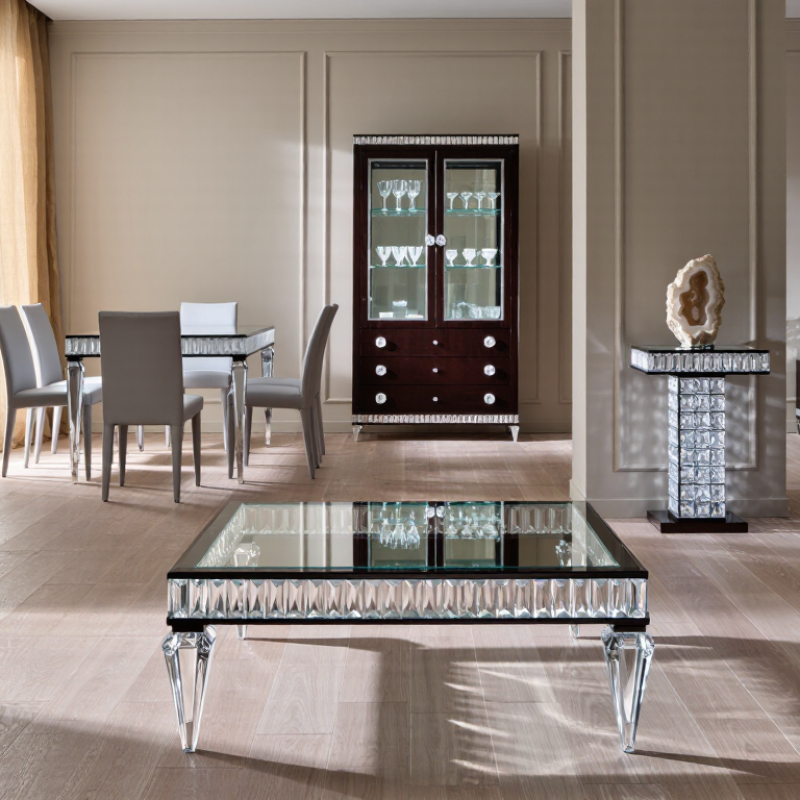
Crystal tables bring light into a room without adding visual bulk. The word “crystal” often describes clear, finely cut glass, not solid gemstone. Coffee tables suit low seating areas, where beveled edges catch daylight and reflect the shapes of nearby objects. Choose a stable base and check the maker’s stated weight limit before placing heavy books or décor on top.
Looks effortless.
For dining, a crystal-glass top can make a compact room feel more open, but fingerprints show quickly. Use coasters and a soft cloth; abrasive cleaners may dull the finish.
Side tables work well beside a sofa or bed, especially where a bulky wooden piece would crowd the walkway. Their small tops are less forgiving, though. A mug near the edge can feel precarious, so look for a broad base and smooth, carefully finished corners.
Crystal furniture is not automatically practical just because it looks refined.
It can also feel cold beside soft fabrics, and that contrast may not suit every room. Measure the space, including walking clearance, before choosing a table.
Crystal storage brings sparkle into practical furniture. Cabinets with crystal doors keep books, glassware, or small keepsakes visible while reducing dust. Look closely at the frame, hinges, and door alignment; decorative panels matter less if the doors wobble. A cabinet should sit level on firm flooring. Tall models may need wall anchoring, especially in busy rooms.
Shelves offer a lighter display, but every bracket and board has a load limit. Check the maker’s specifications before arranging heavy objects. Leave space between pieces so crystal edges do not knock together when someone reaches in. It sounds obvious. In real homes, shelves often become crowded.
Display cases suit delicate collectibles and small ornaments. Glass sides reveal detail, while a solid base can make the arrangement feel grounded. Choose a case with doors that open comfortably and shelves you can clean without awkward stretching. A soft microfiber cloth usually removes fingerprints; abrasive pads can scratch finishes or panels. Still, a crystal-front cabinet may show smudges more readily than expected. That is part of the trade-off, and a reason to consider where hands naturally touch.
Here, “crystal furniture” refers to storage and display furniture that uses crystal glass, clear glass, mirrored glass, or crystal-style decorative details. Glass panels and shelves are commonly paired with wood or metal frames for support.
| # | Furniture Type | Typical Construction | Storage or Display Use | Common Placement | Practical Consideration |
|---|---|---|---|---|---|
| 1 | Glass-Front Display Cabinet | Wood or metal frame with clear glass doors and interior shelves | Displays glassware, collectibles, books, and decorative objects while helping protect them from dust | Living room, dining room, or study | Check door clearance and shelf spacing before placing taller objects inside |
| 2 | Glass Shelving Unit | Open shelves made from glass, supported by a metal or wood frame | Holds frequently accessed objects and keeps a room visually open | Living room, office, or hallway | Follow the manufacturer’s load limits and distribute weight evenly across each shelf |
| 3 | Wall-Mounted Glass Shelves | Glass shelves attached to wall brackets or concealed supports | Displays small ornaments, framed items, or lightweight everyday accessories | Bathroom, kitchen, or compact living area | Use fixings suitable for the wall type, and avoid overloading or placing heavy items near the edge |
| 4 | Corner Curio Cabinet | Tall cabinet designed with an angled or curved front, often with glass panels and shelves | Makes use of corner space for displaying collections and keepsakes | Dining room, living room, or entry area | Measure the corner and nearby doorways; tall cabinets may also need anti-tip anchoring |
| 5 | Glass Vitrine | Enclosed display case with glass sides, a glass door, and a glass or solid base | Provides a clear view of objects from multiple angles, often for a focused collection | Living room, gallery-style space, or office | Position away from direct sunlight and strong impact zones to reduce fading and breakage risks |
| 6 | China Cabinet with Glass Doors | Cabinet combining a glass-front upper section with enclosed lower cupboards or drawers | Displays dishes and serving pieces while concealing table linens or less decorative items | Dining room or kitchen dining area | Confirm that shelves are level and suitable for the weight of the stored dishes |
| 7 | Mirrored Display Cabinet | Cabinet with mirrored backing or panels, typically combined with glass shelves or doors | Displays accessories and reflects light, making the contents more visible | Bedroom, dressing area, or living room | Mirrored surfaces show fingerprints easily and benefit from gentle, non-abrasive cleaning |
| 8 | Glass-Shelf Bar Cabinet | Enclosed or partially open cabinet with glass shelves and compartments for bottles or glassware | Organizes drinkware, bottles, and bar accessories for serving | Dining room, lounge, or entertainment area | Keep bottles stable and check that each shelf is designed for the intended load |
| 9 | Modular Glass Display Cabinet | Separate cabinet sections that can be arranged side by side or stacked as designed | Creates adaptable storage for collections, books, or decorative objects | Living room, home office, or retail-style display area | Use compatible sections as intended; secure stacked units and keep heavy items on lower shelves |
| 10 | Console Table with Glass Shelves | Narrow table with a glass top or lower glass shelf, supported by a metal or wood frame | Offers a surface for décor with an additional level for baskets, books, or small objects | Entryway, hallway, or behind a sofa | Choose a depth that preserves a clear walkway and use coasters to protect the glass top |
Crystal bedroom furniture brings sparkle into a room without requiring a fully mirrored space. A bed frame may feature crystal-style buttons on its upholstered headboard, or small faceted details along the rails. These accents catch bedside light and add texture. They should remain decorative, not structural; the frame still needs a sturdy base and secure joints.
Nightstands offer a smaller, practical way to introduce the look. Clear or glass-like drawer knobs pair easily with wood, painted finishes, and soft upholstery. A mirrored tabletop can brighten a dim corner, but fingerprints and dust show quickly. The effect can also feel a little cold beside crisp white bedding. Warm lamps, woven cushions, or a timber floor help balance the shine. More sparkle is not always better.
Tips: Check that knobs sit firmly and have smooth edges. Keep drinks on a coaster to protect reflective surfaces. Before buying, measure the bed and nightstand together; a narrow bedside gap can make drawers awkward to open. Choose low-glare lighting if crystal details feel too bright at night.
Crystal accent desks bring light and texture to a workspace without making the entire piece feel ornate. Look for crystal-cut glass panels, faceted knobs, or clear inlays set into a stable wood or metal frame. The contrast matters: reflective details stand out against a quieter surface. A desk should still offer a comfortable writing area and secure storage. Pretty, but practical.
Console tables use crystal accents especially well in entryways and living rooms. A narrow table with faceted supports can catch daylight near a window, while a crystal-edged top adds sparkle beneath a wall mirror. Check how the finish looks from several angles; some details appear bright in a showroom but subdued at home. Measure the walkway, too. Shining edges cannot make a cramped passage feel wider.
Care needs are easy to underestimate. Dust and fingerprints show quickly on clear, reflective surfaces, so a soft microfiber cloth helps keep them presentable. Avoid assuming every “crystal” component is solid crystal; construction and durability vary by piece. Ask how the accents are attached, and inspect joints for movement. These details can make a desk or console feel refined, though too many reflective elements may compete with the room. I would choose one focal piece, then leave it room to breathe.