Global buyers evaluating Laser Dielectric Film should look beyond headline reflectance values. A coating that performs well on a datasheet may still fail under real operating conditions. Wavelength range, laser damage threshold, substrate compatibility, and environmental stability all matter. Small tolerances matter.
Fortune Business Insights’ Laser Technology Market report estimated the broader global laser technology market at USD 20.21 billion in 2023, with continued growth projected through 2032. This figure does not measure dielectric films specifically, but it signals expanding demand for reliable laser components. For procurement teams, the practical question is whether a manufacturer can translate optical specifications into repeatable production. Ask for test methods, batch records, and performance data at your intended wavelength and pulse conditions. Not just reflectance.
H. Angus Macleod, author of the established reference Thin-Film Optical Filters, is a relevant authority on optical coating design. His published work supports a useful buying principle: layer design and process control shape coating performance. I cannot verify a verbatim statement from Macleod specifically about Laser Dielectric Film, so I will not present an invented quotation as his words. That gap matters. Manufacturer comparisons should rely on traceable measurements, clearly defined specifications, and evidence from applications close to your own.
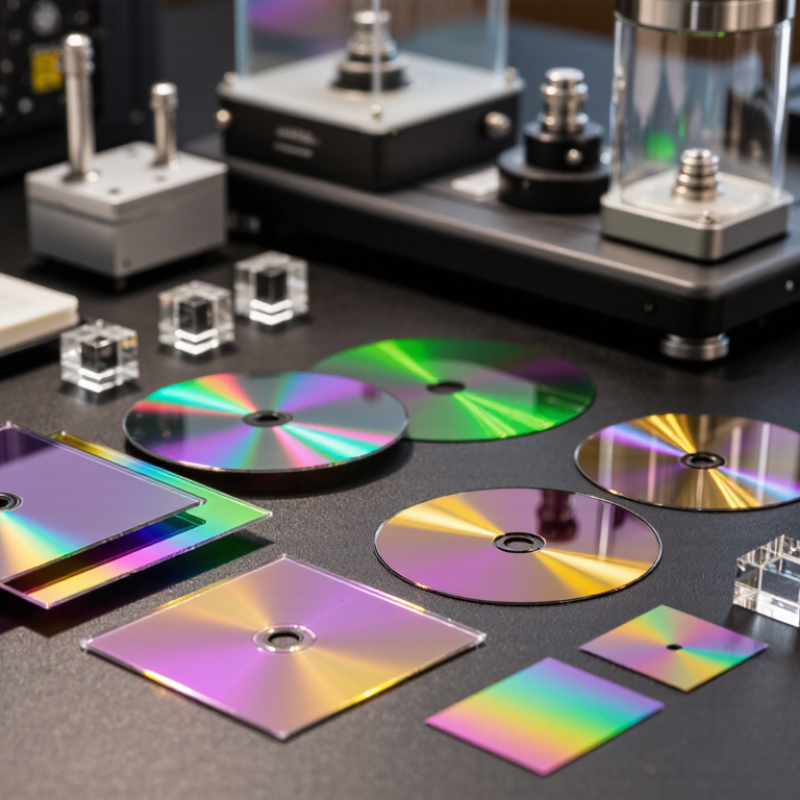
Laser dielectric films are thin optical coatings built from alternating layers with different refractive indices. Deposited on glass or fused silica, each layer redirects a portion of incoming light. Designers tune layer thicknesses so reflected waves reinforce or cancel at selected wavelengths. A quarter-wave stack can reflect a laser line while transmitting much of the remaining spectrum. Real coatings often use more complex designs.
Performance depends on wavelength, incidence angle, polarization, and pulse duration. A tiny surface defect can concentrate energy and trigger damage, even when average power seems modest. ISO 21254 describes methods for measuring laser-induced damage thresholds. Grand View Research’s 2024 Laser Technology Market Size report estimated the broader laser technology market at USD 20.3 billion in 2023, reflecting the expanding use of laser systems—not a direct measure of coating sales. Small details matter. And coating specifications can still leave practical questions unanswered.
Tips: Match the coating’s wavelength and damage-threshold rating to the actual laser conditions. Ask whether testing used comparable pulse duration and beam size. Keep optics clean; contamination can absorb energy and create hot spots.

Laser dielectric films should be selected against the laser’s actual operating conditions, not a catalogue headline. Compare reflectance or transmission at the working wavelength, angle, and polarization. Also check laser-induced damage threshold (LIDT), pulse duration, repetition rate, and beam size. ISO 21254-2:2011 describes both 1-on-1 and S-on-1 damage-threshold test methods. An LIDT value without its test conditions is hard to apply reliably. Small details matter.
In practice, ask for test data that matches your setup. A coating tested with nanosecond pulses may not perform the same way with ultrashort pulses. High repetition rates can also build heat in the film and substrate. Inspect absorption, coating uniformity, surface defects, and environmental durability alongside peak reflectance. A clean, well-polished optic can still underperform if its coating shifts with temperature. That risk deserves attention.
Tips: Request the wavelength, pulse width, incidence angle, polarization, and shot count behind every LIDT figure. Compare like with like. If test conditions are missing, ask the supplier to clarify them before approving the film.
Laser dielectric films are built as alternating layers of high- and low-refractive-index materials on a carefully cleaned substrate. Engineers calculate each layer’s optical thickness, often near one-quarter of the target wavelength, then deposit the stack by vacuum methods such as ion-beam sputtering. Tiny thickness errors can shift the reflection band. The coating is checked for spectral performance, adhesion, surface defects, and contamination. Small defects matter.
Laser resistance needs its own test. ISO 21254-2:2011 describes 1-on-1 and S-on-1 damage-threshold procedures; results are reported in joules per square centimetre and must state wavelength and pulse duration. SPIE Laser Damage proceedings likewise emphasize these test conditions, because a threshold without them is hard to compare. Inspectors expose sampled coated areas to controlled pulses, then examine them for pits, cracks, or changes in reflectance. One limitation remains: a small test spot may not represent every point on a large optic.
Tips: Ask for the test wavelength, pulse duration, beam size, and test mode with every threshold value. Compare like with like. A polished certificate is useful, but raw test conditions are better.
Representative reflectance spectrum of a dielectric high-reflector coating designed for a 1064 nm laser. The values are illustrative and are not supplier-specific test results.
Dielectric films are typically built by vacuum-depositing alternating layers with different refractive indices. Quality checks can include layer-thickness monitoring and spectrophotometer measurements of reflectance across the target wavelength band; laser-damage testing is a separate qualification.
Global buyers should judge laser dielectric film manufacturers by verified performance, not catalogue language. Grand View Research valued the wider optical coatings market at USD 19.37 billion in 2023 and forecast an 8.1% compound annual growth rate through 2030. This is market context, not a forecast for laser dielectric films alone. Growth makes supplier comparisons more important, not less.
Ask for coating wavelength, reflectance or transmission curves, substrate limits, and laser-induced damage threshold test conditions. Small defects matter. A curve measured at a different angle may not predict performance in your system.
Experienced manufacturers should provide traceable lot records and explain how they control layer thickness and environmental durability. Request test results at your operating wavelength, pulse duration, and beam size; damage thresholds cannot be compared fairly without those conditions. ISO 21254 provides standardized methods for testing laser-induced damage, so ask which procedure and test setup were used.
Check whether samples match production specifications, then inspect them under suitable lighting for pinholes, scratches, or coating nonuniformity. Still, paperwork can look better than a real part. I would verify a sample before committing to a large order, especially when the film must perform across a narrow wavelength band.
For global buyers, a laser dielectric film supplier should be judged by measurable performance, not brochure claims. Start with the operating wavelength, reflectance or transmission targets, and laser damage threshold. Ask how these values are tested and whether the report covers the exact coating design and substrate you plan to order. Small differences matter.
Check certifications carefully. Confirm that each certificate is current, independently verifiable, and relevant to the facility making your parts. Request material traceability, inspection records, and sample test reports. A certificate alone does not prove that every batch meets your specifications. I would want to see how the supplier handles a failed inspection, too. That answer can reveal more than a polished presentation.
Delivery capability deserves equal attention. Ask for realistic lead times, minimum order quantities, production capacity, and packaging details. For example, coated optics may need protective separators and sealed packaging to reduce handling damage during transit. Clarify how schedule changes are communicated and whether urgent repeat orders can be supported. A sample order can test both coating quality and response speed. Still, one successful shipment is not a guarantee; forecasting demand and agreeing on acceptance criteria takes extra effort, and it is easy to overlook.