Blog

Top 10 Jewelry Equipment Manufacturers for Global Buyers

Choosing the right Jewelry Equipment manufacturer can shape production quality, workshop safety, and long-term operating costs. A compact laser welder, a reliable polishing machine, or a precise rolling mill can make daily work smoother. Poorly matched equipment can do the opposite. Small details matter.

This guide introduces ten manufacturers serving buyers across different markets and production needs. Their product ranges may include casting systems, engraving tools, polishing equipment, and machinery for larger-scale manufacturing. Buyers should compare more than headline specifications. Check service access, spare-part availability, training, warranty terms, and compatibility with existing workflows. Ask for clear technical documentation. Where possible, request a live demonstration or speak with current users.

There is no universal winner. A small repair studio may value a simple, space-saving machine, while a production facility may need higher throughput and repeatable settings. Claims about output and precision also deserve careful review; results depend on materials, operator experience, and maintenance. That part is easy to overlook. This list is a starting point, not a substitute for hands-on evaluation. Manufacturer capabilities and support can vary by region, and product lines change over time. Buyers should verify current details directly before making a purchase. A little extra checking may feel slow, but it can prevent costly surprises later.
Top 10 Jewelry Equipment Manufacturers for Global Buyers

Jewelry Equipment and Its Role in Modern Production

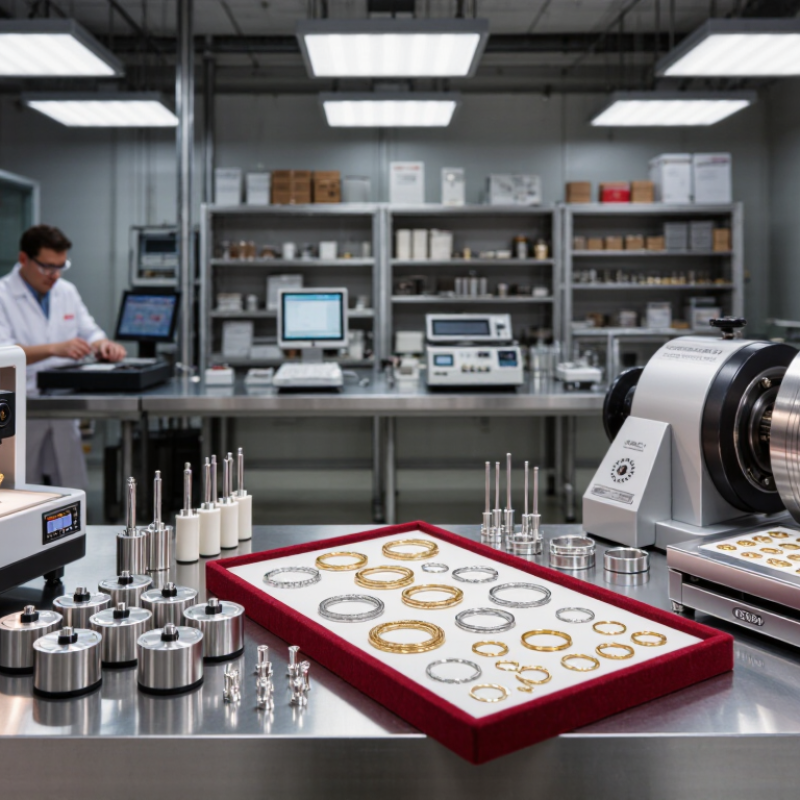
Modern jewelry production relies on equipment that makes small, repeatable operations possible. A rolling mill controls sheet thickness; a casting machine helps reduce trapped air in intricate forms. Laser welders can join delicate components with less heat spread than many traditional methods. The right setup depends on the material, design, and daily production volume, not just a machine’s advertised capacity.

Small details matter. A polished surface can still hide uneven edges, and a precise machine cannot replace skilled inspection. In practice, operators need clear controls, stable temperature readings, and routine maintenance access. Dust extraction is also important near polishing stations, where fine particles can collect on benches and tools. These considerations help buyers compare equipment manufacturers beyond price and headline specifications.

Equipment affects workflow as much as output. A dependable casting system may shorten rework, while compatible finishing tools help maintain a consistent appearance across batches. Ask how calibration is checked, which consumables are required, and what training is available. Documentation and responsive technical support are useful, though they do not guarantee perfect results. One point is easy to miss: a compact workshop may need flexible equipment more than maximum-speed machinery. The best production plan still leaves room for adjustment, because designs and order sizes change.

Jewelry Production: Melting Points of Common Metals

Melting-point data helps manufacturers select suitable melting and casting equipment and set appropriate process temperatures. Values shown are for pure metals; jewelry alloys can melt across a range of temperatures.

How to Evaluate Jewelry Equipment Manufacturers

When evaluating jewelry equipment manufacturers, look beyond polished catalogs. Ask how a machine performs during repeated production, not just a short demonstration. A laser welder, rolling mill, or polishing unit should deliver consistent results across ordinary workdays. Request sample pieces made with your materials and settings. Inspect edges, surface finish, and variation between pieces.

Check the details that affect daily use. Are calibration steps clear? Can operators reach controls without awkward hand positions? Ask for maintenance intervals, spare-part availability, and written warranty terms. A reliable manufacturer should explain what is covered and how service requests are handled. Documentation matters. If instructions are vague, training can become slower and mistakes harder to trace. Compare the full operating cost, including installation, consumables, maintenance, and staff training.

Speak with buyers who use similar equipment, and ask specific questions about downtime and support response. A video call may show a machine running, but it cannot prove long-term reliability. Arrange an on-site or supervised test when possible. I would not treat a neat showroom as proof of quality. That judgment can still be wrong; a careful test reduces uncertainty, rather than removing it. Also note whether the manufacturer answers technical questions directly or avoids precise figures.

Top 10 Jewelry Equipment Manufacturers for Global Buyers - How to Evaluate Jewelry Equipment Manufacturers

Use these ten criteria to compare suppliers. The weightings are a suggested evaluation framework, not verified ratings of individual manufacturers. Check requirements for the destination market and the specific equipment before placing an order.

# Evaluation criterion Suggested weight What to verify Evidence to request
1 Product fit and process coverage 15% Whether the equipment suits the intended operation, such as casting, forming, welding, polishing, engraving, or inspection. Technical datasheets, process-flow details, material compatibility, and a demonstration using a comparable part.
2 Build quality and component specification 12% Machine construction, component specifications, guarding, electrical design, and suitability for the expected duty cycle. Bill of materials or component list, inspection records, operating limits, and photographs or video of the actual machine configuration.
3 Performance and repeatability 12% Whether stated capacity, accuracy, output, and repeatability match the buyer's actual parts and production conditions. Documented test method, sample results, acceptance tolerances, and a production trial where practical.
4 Safety and regulatory documentation 12% Applicable machinery, electrical, and workplace-safety requirements in the destination market. Requirements vary by equipment and jurisdiction. Risk assessment, manuals, declarations or certificates applicable to the specific product and market, and electrical specifications.
5 Customization and integration 10% Ability to accommodate required tooling, utilities, shop-floor layout, controls, and interfaces with existing processes. Written scope, interface drawings, utility requirements, change-control process, and confirmation of what is included in the quotation.
6 Quality control and traceability 10% How incoming parts, assembly, final inspection, and corrective actions are controlled and recorded. Inspection checklist, sample test report, serial-number policy, and quality-system documentation. Verify any claimed certification with its issuer.
7 Installation, training, and documentation 8% Support for commissioning, operator training, maintenance training, and clear operating instructions in an agreed language. Installation plan, training agenda, manual sample, delivery scope, and a written statement of remote or on-site support terms.
8 Spare parts and after-sales service 8% Availability of consumables and replacement parts, service response arrangements, warranty terms, and repair options. Parts list, warranty document, service contact process, stated response targets, and parts-shipping terms.
9 Total cost of ownership 7% Purchase price plus tooling, freight, import charges, installation, utilities, consumables, maintenance, and expected downtime. Itemized quotation, payment and delivery terms, recommended consumables, maintenance schedule, and any excluded costs.
10 Delivery, packaging, and export readiness 6% Realistic lead time, export packing, shipment responsibilities, and the documents needed for customs clearance and receipt. Written production and shipping schedule, packing details, agreed delivery terms, and a list of export documents supplied.
Total suggested weighting 100% Adjust the weighting to reflect your process, market, and service needs.

Comparison tip: Score each criterion using the same scale, such as 1 (insufficient evidence) to 5 (requirements met with documented proof). Confirm specifications, compliance, delivery terms, and warranty coverage in writing before ordering.

Ten Leading Manufacturers Serving Global Buyers

Ten leading manufacturers serving global buyers are best compared by the work their equipment must perform, not by catalog size. A small workshop may need a compact rolling mill, polishing motor, and dependable replacement parts. A production facility may prioritize casting systems, laser welders, ventilation, and documented machine testing. Ask each supplier for operating requirements, service terms, and realistic delivery timelines. Details matter. A machine that runs smoothly in a demonstration may behave differently under a full production schedule.

Tips: Request a written specification sheet and check voltage, workspace needs, and consumable costs. Ask how quickly common parts can be shipped. If possible, speak with a buyer who uses similar equipment. A glossy catalog can still leave practical questions unanswered.

For global buyers, clear communication is part of equipment quality. Confirm installation guidance, operator training, warranty coverage, and access to technical support across time zones. Compare quotations using the same requirements; a lower initial price may exclude setup or essential accessories. Review safety features and maintenance instructions with the people who will operate the machines. Not every manufacturer will fit every workshop, and a perfect comparison is difficult. Keep notes from product calls, then test the claims against your actual production needs.

Comparing Equipment Range, Technology, and Support

A jewelry equipment manufacturer’s catalog should match the work a workshop actually performs. Some suppliers focus on casting and melting, while others also offer rolling mills, polishing units, laser welders, and engraving systems. A broad range can simplify purchasing. It does not guarantee that every machine is suitable. Check capacity, material compatibility, and the space needed for installation.

Technology matters most when it improves repeatability and control. Digital temperature settings, adjustable laser parameters, and stable speed controls can help operators produce consistent results. Ask for operating specifications, maintenance intervals, and sample test procedures before comparing machines. A polished product photograph is not enough. Real workshop conditions are messier.

Support deserves equal attention, especially for buyers working across borders. Confirm available languages for manuals, response hours, spare-part lead times, and remote troubleshooting options. Ask whether technicians provide installation guidance or operator training. Small details matter: a missing seal or unclear wiring diagram can delay production. One weakness in any comparison is relying only on advertised features; independent performance checks may take time, but they reveal more than a sales sheet.

Choosing a Manufacturer for Your Production Needs

Choosing a jewelry equipment manufacturer starts with the work your shop must perform, not a machine’s headline speed. List daily tasks, such as wire drawing, polishing, casting, or stone setting, and note the materials and batch sizes involved. Compare working tolerances, output consistency, and changeover time with those needs. Request operating manuals, maintenance schedules, and clear specifications before asking for a quote. Small details matter.

Tips: Send a sample part or drawing and request a trial run under realistic settings. Check whether the price includes tooling, installation, training, and spare parts. Confirm response times and which components can be replaced locally.

A capable manufacturer should explain equipment limits plainly and provide test records or references related to similar production. If possible, inspect a machine in operation and observe its noise, vibration, finish quality, and operator access. Ask how calibration is checked and how often wear parts need attention. Do not assume a polished demonstration reflects a full production shift; it may not. That uncertainty deserves a clear, written answer.