China has a broad network of optical networking suppliers, but choosing a manufacturer takes more than comparing prices. This guide to the Best Optical SFP Module Manufacturers in China focuses on practical evidence buyers can verify. It considers product range, engineering support, quality controls, and communication after a purchase. A polished catalog is useful. It is not proof of consistent performance.
When evaluating an Optical Sfp Module supplier, match the specification to the actual network. Check data rate, wavelength, fiber type, transmission distance, connector, and supported temperature range. For example, a 10G module for single-mode fiber may not suit a short multimode link. Ask whether digital diagnostics are available and how compatibility is tested with your switches. These details can prevent avoidable installation delays.
Reliable manufacturers should explain their testing process and provide clear product documentation. Buyers can request sample units, inspection records, warranty terms, and information about batch traceability. Also clarify lead times, minimum order quantities, and how technical questions are handled. Not every supplier fits every project. A smaller vendor may offer responsive engineering help, while a larger one may provide broader stock and production capacity. Neither advantage should be assumed without evidence.
No shortlist can replace independent verification. Specifications may look similar, yet firmware support, component sourcing, and quality consistency can differ. Treat supplier claims as a starting point, compare them against your equipment requirements, and confirm important details in writing. A careful review takes time. It can save more.
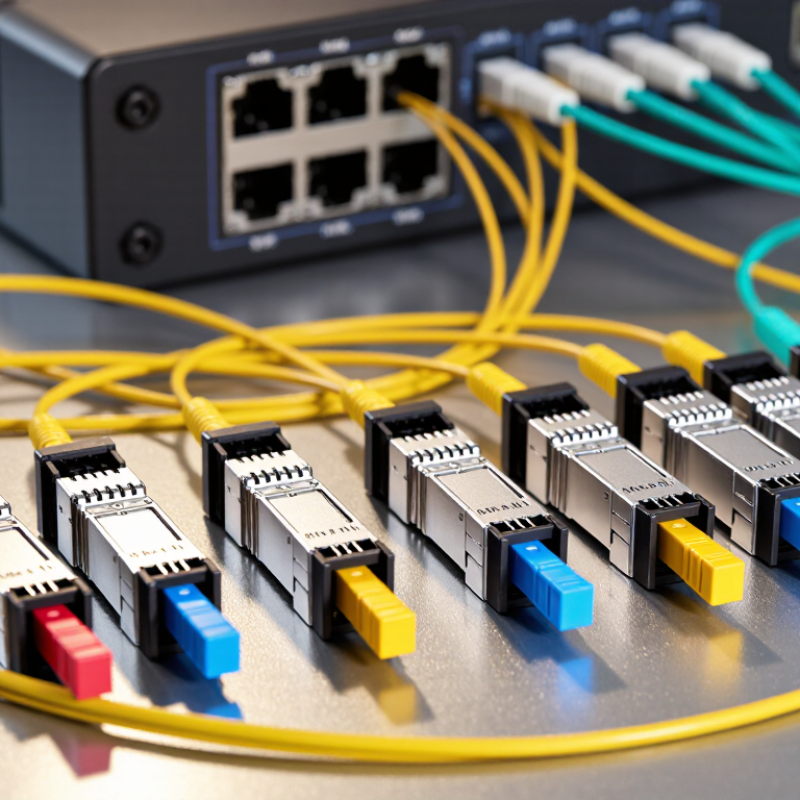
Optical SFP modules differ in more than their labels. A 1.25 Gb/s SFP commonly serves Gigabit Ethernet links. IEEE 802.3 specifies 1000BASE-X signaling at 1.25 GBd, with encoding overhead carrying 1 Gb/s of Ethernet data. Check the interface and fiber type before choosing one. A familiar cage does not guarantee compatibility.
A 10 Gb/s SFP+ module typically uses a 10.3125 GBd serial signal. IEEE 802.3 defines this rate for 10GBASE-R, using 64b/66b encoding. A 25 Gb/s SFP28 module commonly runs at 25.78125 GBd for 25GBASE-R. These figures come from IEEE 802.3 specifications, a useful technical reference for comparing module and host requirements. Not interchangeable.
For a real link, verify wavelength, connector, fiber grade, reach, and host support. For example, 10GBASE-SR is designed for multimode fiber, while LR optics use single-mode fiber. The actual supported distance depends on the optic and cable plant. SFF-8472 also defines digital diagnostics used to monitor values such as temperature and transmit power. One caveat: labels can make selection seem simpler than it is. I would still confirm the host platform’s compatibility list and test the link under load.

When comparing optical SFP module manufacturers in China, match wavelength to the fiber and the actual link distance. An 850 nm module is commonly used with multimode fiber for short data-center links. A 1310 nm module is widely used with single-mode fiber for moderate reaches. At 1550 nm, many designs support longer links, but dispersion and optical budget still matter. Small details matter.
Typical examples include 10 Gb/s 850 nm links reaching around 300 meters over OM3 fiber, and 1310 nm links reaching around 10 kilometers over single-mode fiber. Some 1550 nm modules are rated for 40 kilometers or more. These are not universal guarantees. Data rate, fiber quality, connector loss, temperature, and receiver sensitivity can change the usable reach. Check the module’s specification sheet for the exact fiber type and distance conditions.
For a reliable comparison, request transmit-power and receiver-sensitivity ranges at the stated wavelength, plus operating-temperature limits and digital diagnostics support. A label is not a test. Confirm that the optical budget covers the route, including patch panels and any aging connectors. One easy mistake is choosing by maximum reach alone; that can leave too much receive power on a short link. It is worth checking both ends of the link. Even careful selection can miss a site-specific detail, so verify compatibility and measured levels after installation.
Chinese optical SFP manufacturers differ in range, production depth, and engineering support. A useful profile should describe supported data rates, wavelengths, transmission distances, and fiber types. Typical portfolios include 1G, 10G, and higher-speed modules for single-mode or multimode links. Check whether digital diagnostics monitoring is available and clearly documented. Small details matter.
Production capability is more than assembly volume. Ask how modules are aligned, tested, and tracked by batch. Reliable suppliers can explain optical power measurements, receiver sensitivity checks, and temperature testing. A test report tied to a sample unit offers more insight than a broad specification sheet. Not every supplier shares equal detail. That distinction matters.
Customization may cover connector types, operating temperature ranges, labeling, and host-device compatibility. Some manufacturers can adjust firmware coding or build samples against a customer’s equipment list. Confirm the exact test conditions and acceptance limits before approving a custom design. Requesting several samples can reveal variation between units. Published specifications may look precise, yet real-world compatibility still needs verification. A practical supplier profile should make that uncertainty visible rather than glossing over it.
Best Optical SFP Module Manufacturers in China
IEEE 802.3 defines Ethernet requirements that help optical SFP modules communicate at specified speeds and over supported link types. Yet a standards reference alone does not confirm compatibility with every switch. Check the module’s data sheet against the host port, wavelength, fiber type, connector, and transmission distance. A mismatch, such as pairing a single-mode optic with multimode fiber, can prevent a stable link. Small details matter.
Tips: Before ordering, confirm the exact SFP speed and optical specifications. Test a sample in the intended equipment when possible, and record link status and error counts.
MSA guidance supports consistent module dimensions and electrical interfaces across compatible equipment. Digital Optical Monitoring (DOM) adds useful readings, including temperature, voltage, bias current, and transmit and receive optical power. These readings can help technicians spot a weak signal before users notice interruptions. However, DOM support and alarm thresholds may differ between modules and host devices. Review both data sheets; a displayed value is not a complete diagnosis. In practice, teams sometimes trust the label too quickly. Check interoperability under real cable lengths and operating conditions before approving a module for a network.
When comparing optical SFP module manufacturers in China, ask how they verify both 10 km and 40 km performance. A 10 km module should be tested over the specified fiber type, wavelength, and link budget. For 40 km links, request evidence that transmit power and receiver sensitivity leave practical margin. Distance alone is not proof. Connector condition and patch-cord loss can change results.
Look for test records tied to the module’s serial number, including optical power, receiver sensitivity, and temperature checks. Ask whether testing includes error-rate measurements under realistic link conditions, not only a brief power reading. Request the test setup and acceptance limits. Details matter. Also confirm host-device compatibility and whether digital diagnostics monitoring reports plausible readings. A report can look complete while overlooking the actual switch or fiber path.
Support should cover more than shipping a replacement. Ask who helps isolate a link fault, what information they need, and how quickly they respond. Clear guidance on cleaning connectors, checking polarity, and reviewing optical levels can save hours onsite. For a 40 km link, confirm how the supplier handles marginal power budgets and abnormal readings. One imperfect point: published ranges do not always reflect a customer’s cabling. Ask for a written qualification process before ordering.
| Evaluation Dimension | Typical 10 km Link Considerations | Typical 40 km Link Considerations | What to Request or Verify | Weight |
|---|---|---|---|---|
| Optical standard and reach | For example, 10GBASE-LR is commonly specified for single-mode fiber links up to 10 km. | For example, 10GBASE-ER is commonly specified for single-mode fiber links up to 40 km. | Confirm the exact Ethernet rate, optical standard, fiber type, connector, and reach in the module datasheet. Reach depends on the complete link, not the module alone. | 15% |
| Wavelength and fiber compatibility | 10GBASE-LR commonly operates around 1310 nm over single-mode fiber. | 10GBASE-ER commonly operates around 1550 nm over single-mode fiber. | Check transmit and receive wavelengths, fiber type, connector polish, and any wavelength-specific restrictions. Match both ends of the link. | 10% |
| Optical power budget | Review transmitter output, receiver sensitivity, and link loss against the intended 10 km route. | Review the specified optical budget and account for fiber attenuation, connectors, splices, and engineering margin. | Request minimum and maximum transmit power, receiver sensitivity, overload level, and the calculation or assumptions used for the link budget. Verify values against the applicable standard and product specification. | 15% |
| Dispersion and link engineering | Confirm that the selected standard and module support the planned fiber and data rate. | At 40 km, chromatic dispersion and other link impairments may be more significant; verify that the specified module is designed for the required reach and rate. | Ask for the supported reach conditions and any limits on fiber, optical loss, or dispersion. Validate the complete path rather than relying only on a distance label. | 10% |
| Compatibility and host interface | Check the required SFP or SFP+ form factor, data rate, and host-device support. | Check the same host requirements and ensure the longer-reach optic is supported by the intended port and platform. | Request a compatibility list or sample qualification plan for the specific host equipment. Confirm EEPROM identification, digital diagnostics support, and any platform restrictions. | 10% |
| Testing and production quality | Test optical output, receiver performance, function, and link stability at the specified rate. | Include checks appropriate to the longer-reach specification, such as optical performance limits and error-free operation under defined test conditions. | Request a sample test report, test limits, equipment calibration records, lot traceability, and a description of production screening. Confirm that test conditions match the product datasheet. | 15% |
| Digital diagnostics and monitoring | Where supported, check readings for temperature, supply voltage, transmit bias, and optical power. | Check the same diagnostic functions and verify that readings remain within the stated operating limits. | Confirm which digital diagnostic monitoring (DDM/DOM) parameters are implemented, their accuracy limits, and how alarms or warning thresholds are reported. | 5% |
| Environmental and compliance documentation | Verify specified operating temperature range and applicable product documentation. | Verify the same requirements and confirm that the module’s rated conditions suit the deployment environment. | Request the datasheet, operating-temperature range, safety and regulatory declarations relevant to the shipment, and any applicable reliability or environmental test information. | 5% |
| Warranty and failure handling | Assess the warranty terms and process for diagnosing or replacing a failed unit. | Confirm that the same support process covers long-reach modules and provides a way to investigate link-budget or interoperability issues. | Review warranty duration, return authorization steps, failure-analysis process, replacement terms, and the information required for a support case. | 5% |
| Technical support and delivery readiness | Evaluate response quality for compatibility checks, sample testing, and deployment questions. | Evaluate whether support can help review the 40 km link budget and troubleshoot end-to-end performance. | Ask for a named technical contact or support channel, expected response times, sample availability, production lead-time confirmation, and change-notification practices. | 10% |
Evaluation note: Standards and optical specifications vary by data rate and product implementation. Verify every requirement against the exact module datasheet and the intended host equipment and fiber link before purchase.