Choosing the right fastener is a small decision with real consequences. A loose deck board, a vibrating machine guard, or a stripped cabinet hinge can all begin with a poor match. Buyers need more than a familiar name; they need to consider the joint, the material, and the conditions around it. A Bolt Screw may sound like a simple category, but bolts and screws differ in how they engage materials and distribute clamping force. Small details matter.
This guide introduces ten common types, from hex bolts and carriage bolts to wood, machine, and self-tapping screws. It explains where each is typically used and which details deserve a closer look, such as thread style, head shape, drive type, length, and material. Stainless steel can help resist corrosion, while other finishes may suit dry indoor settings or specific assemblies. The right choice still depends on the application and the manufacturer’s specifications.
Picture a screw head sitting flush in a cabinet panel, or a bolt passing through two metal plates with a washer beneath its nut. Those details affect fit, appearance, and serviceability. Fit comes first. Before ordering, check the required dimensions and confirm that the fastener is compatible with the materials being joined. This overview can help build a practical shortlist, though it cannot replace project-specific advice. Even experienced buyers sometimes overlook one measurement; that is worth checking twice.
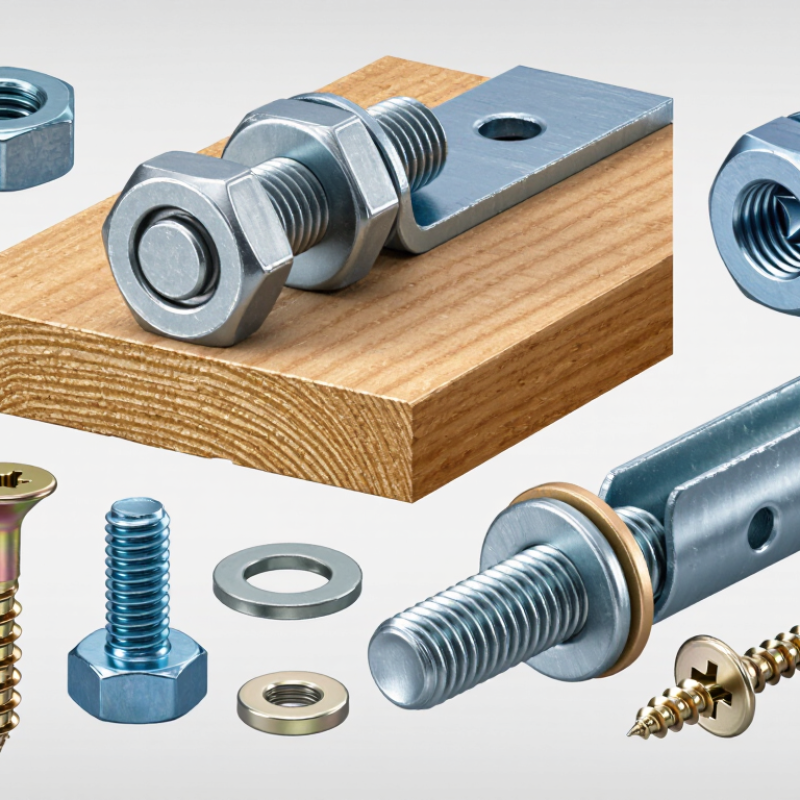
Bolts and screws may look similar, but their threads and intended joints differ. A bolt typically passes through aligned clearance holes and tightens against a nut. Its smooth shank can help spread the load across the joint. A screw usually forms or engages threads in the material, a tapped hole, or a threaded insert. Not always. Some machine screws work with nuts, so the name alone can mislead.
Head shape and drive style affect installation, but they do not define the fastener’s job by themselves. A hex-head bolt suits wrench access, while a countersunk screw sits nearly flush in a matching recess. Wood screws have tapered points and coarse threads that grip timber; machine screws generally use finer, more uniform threads. That matters. In a thin metal panel, the wrong thread can strip easily or leave the joint loose.
Buyers should check material, hole size, load, vibration, and access for tools. The distinction is not perfectly tidy, and product descriptions can vary. Verify the drawing and thread specification before ordering. A small mismatch can complicate assembly.

Hex bolts are common in machinery, equipment frames, and steel connections because a wrench can tighten their heads against a nut. Carriage bolts suit timber joints: their rounded heads sit visibly above the surface, while the square shoulder grips the wood. Flange bolts add a broad bearing face, useful where a separate washer would be awkward. Small detail.
For timber, lag screws bite into a predrilled pilot hole; choosing the wrong hole size can split a board. Machine screws fit tapped holes or nuts in metal enclosures, while self-tapping screws form threads in thin sheet metal. Match screw length and point style to the material, not just the head shape. In practice, a tidy chart can still mislead when the joint material varies.
For structural steel, ASTM F3125 lists Grade A325 bolts with a minimum tensile strength of 120 ksi for diameters from 1/2 to 1 inch. That figure describes bolt strength, not the safe load of an entire connection. NASA’s Fastener Design Manual, RP-1228, notes that friction at threads and bearing surfaces affects torque-based tightening. An oily thread may therefore clamp differently at the same wrench setting. Check the joint design and installation guidance before choosing a fastener; the detail is easy to overlook.
Wood screws have coarse threads that grip timber and composite boards; countersunk heads sit nearly flush in a cabinet door. For outdoor decking, corrosion-resistant screws help withstand rain, though the right coating depends on the wood and exposure. Drywall screws use sharp points and bugle heads to fasten gypsum board without tearing its paper face. They are not substitutes for structural screws.
Machine screws pair with tapped holes or nuts, making them common in appliance panels and equipment housings. Self-tapping screws cut or form threads in thin sheet metal, useful for ducts and enclosures. Small pilot holes and controlled torque matter; overtightening can strip the metal. Set screws secure a pulley or collar against a shaft, usually without a protruding head. Lag screws, despite the name, are heavy wood fasteners for timber connections. Check the load and substrate.
The scale is substantial. Grand View Research’s 2023 Global Fasteners Market Size, Share & Trends Analysis Report estimated the global fasteners market at USD 90.6 billion in 2022, with a projected 4.7% compound annual growth rate from 2023 to 2030. This covers fasteners broadly, not screw performance. A market figure cannot choose a screw for you. Match thread, head, material, and drive to the job; then test a sample. Even experienced buyers sometimes overlook the substrate.
Material choice sets a fastener’s limits. Carbon steel offers strength at a modest cost, while stainless steel resists corrosion in damp settings. Alloy steel suits demanding loads, but its strength does not prevent rust. Match the material and coating to the surrounding metals and environment; a zinc-coated screw beside stainless steel can still create a corrosion concern. Small details matter.
Head style affects access and surface finish. Hex heads work well with a wrench; countersunk heads sit flush in a prepared recess. Pan heads leave a raised profile. Thread choice matters too: coarse threads often suit softer materials, while fine threads allow smaller pitch adjustments in metal. Verify the mating material and engagement depth. That rule is not universal.
Drive type influences installation control. A Torx-style recess generally offers firm bit engagement, while a slotted drive can slip under high torque. Grand View Research estimated the global fasteners market at USD 90.1 billion in 2023 and projected 4.3% annual growth from 2024 to 2030. This market estimate signals broad demand, not a design specification. Check dimensions, strength class, and applicable standards for the actual assembly. I would not choose from a chart alone. A prototype can expose fit problems that a specification sheet misses.
A comparison of representative metric steel fastener property classes and their nominal tensile-strength ratings.
How to read this chart: The values are nominal tensile-strength ratings in MPa associated with the example ISO metric property classes shown. They are examples, not fixed strengths for each fastener type; actual ratings depend on the specified material, property class, diameter, and applicable standard.
Hex bolts use an external hex head; socket-head cap, button-head, and countersunk screws commonly use hex socket drives. Carriage bolts have a rounded head and square neck, while flange bolts have an integrated bearing flange. Machine screws typically have machine threads for tapped holes or nuts; studs are threaded at both ends. Shoulder bolts have a precision shoulder, and pan-head machine screws have a rounded top. Check the drawing or product specification for thread pitch, length, material, coating, and property class before buying.
Selecting a bolt or screw starts with the materials being joined and the forces they must handle. A bolt usually works with a nut or a threaded hole; a screw often cuts or engages threads directly in the material. Check the material thickness, expected load, and whether the joint may need regular removal. Small details matter. A fastener that is too short may not grip securely, while one that is too long can protrude or damage hidden components.
Match the fastener material to the setting. Stainless steel can resist corrosion in damp areas, while coated steel may suit many indoor projects. Dissimilar metals can corrode when exposed to moisture, so check compatibility rather than choosing by appearance. For wood, coarse threads usually grip well; for sheet metal, the right thread and a suitable pilot hole can prevent splitting or distortion. One detail is easy to overlook: the head must fit the tool and sit properly against the surface.
Consider the head style, drive type, and installation space before buying. A countersunk head sits flush in a matching recess; a pan head remains raised. Use a washer when you need to spread pressure across a softer surface. Tighten firmly, but avoid excessive force, especially in plastic or soft wood. I have seen a tidy-looking fastener choice fail because the base material was guessed rather than checked. A quick test on a scrap piece can reveal a poor fit.