
A Skin Tone Analyzer can turn a difficult shade-matching conversation into a more consistent starting point. In a store, a customer might compare foundation swatches along the jaw while warm lighting shifts their appearance. Online, the challenge is sharper: a phone camera, screen settings, and surrounding light can all affect how a complexion looks. The tool estimates skin tone and undertone, then helps narrow product choices. It should guide a decision, not make one for the customer.
The business case sits within a wider shift toward personalization. McKinsey’s 2021 Next in Personalization report found that 71% of consumers expected personalized interactions, while 76% felt frustrated when they did not receive them. Those figures cover multiple industries, not beauty alone, but they help explain why brands are investing in tailored digital services. In cosmetics, a relevant recommendation may save time and reduce the guesswork of browsing dozens of nearly similar shades. Small differences matter.
A useful analyzer also depends on careful design. Google’s Monk Skin Tone Scale, introduced in 2022, offers a ten-shade framework for evaluating skin-tone representation in technology. It is not a universal measure of beauty or a substitute for product testing. Skin can vary across the face, and a camera cannot fully capture texture, undertone, or personal preference. That limitation deserves attention. Brands earn trust when they explain how recommendations are generated, invite users to check results in natural light, and make human support easy to reach. The technology can improve access, but it still needs honest testing and thoughtful use.
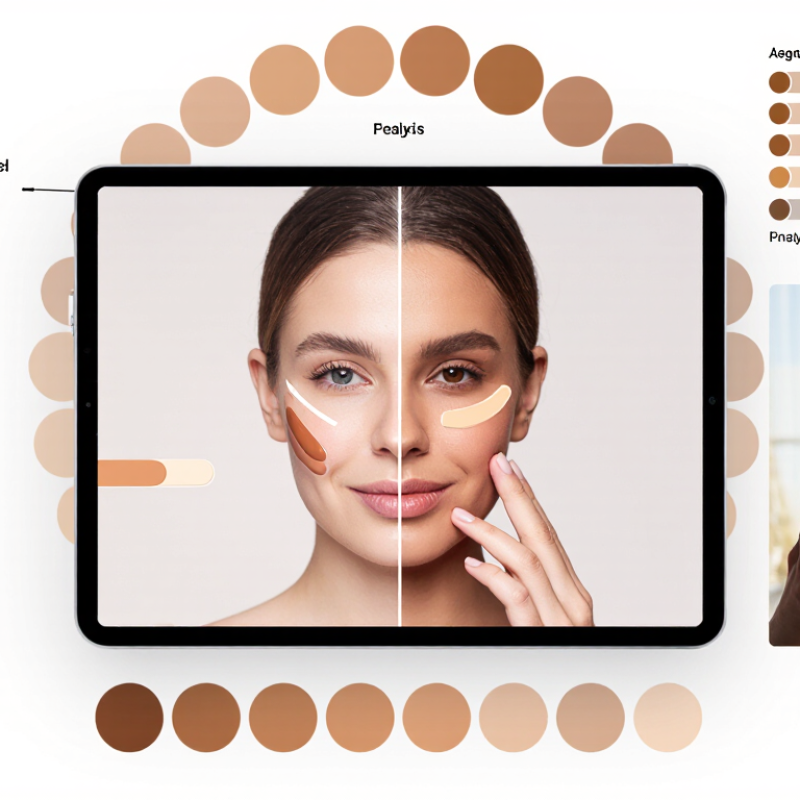
A skin tone analyzer estimates the visible color of skin from a camera image or sensor reading. It may map pixels into color values such as lightness and red-green or yellow-blue balance, then group those values into a shade range. Some tools also estimate warm, cool, or neutral undertones. These are estimates, not direct measurements of melanin or a medical assessment.
Lighting matters. A warm bathroom bulb can make a cheek look more golden; phone filters and white balance can shift the result, too. McKinsey’s 2023 beauty-market report estimated global beauty sales at about $430 billion in 2022, with the market projected to reach roughly $580 billion by 2027. That scale makes better shade guidance commercially useful, but a large market does not make every scan accurate. I would treat a suggested shade as a starting point, not a verdict.
Tips: Scan bare skin in indirect daylight, with filters off. Keep the camera at a consistent distance, and compare the result with your jaw and neck. If the reading changes under different lighting, trust the real-world match more. It is not magic. The tool sees pixels, not the whole person.

A skin tone analyzer turns an image of the skin into color data. The process usually begins with a camera or phone capturing the face under controlled lighting. Software samples small areas, such as the cheek or jaw, and measures their color values. Lighting matters. Warm bulbs or a nearby window can shift those values and affect the reading.
The software may compare measured colors in a standardized color space, then group them into tone ranges. Some systems also estimate undertones, such as warm, cool, or neutral. These are estimates, not fixed facts. A person’s complexion can look different across the forehead, cheeks, and neck, and redness or shadows may influence results. Not a diagnosis.
For a steadier reading, users should remove heavy makeup and avoid strong colored light. The camera should be held at a consistent distance, with the face evenly lit. Even careful tools have limits: camera quality, screen settings, and the analyzer’s training data can all affect its output. One reading should not be treated as the whole story. Human judgment still matters when matching products to real skin.
Beauty brands use skin tone analyzers to make shade selection more consistent across counters and digital tools. A scan can estimate visible skin depth and undertone, then suggest a starting shade for foundation or concealer. That can help staff compare options more systematically than relying on memory or a quick glance. Small differences matter: a shade that looks right under warm store lights may appear too pink beside a window.
The business case also involves personalization. McKinsey & Company’s 2021 Next in Personalization report found that 71% of consumers expect personalized interactions, while 76% feel frustrated when they do not receive them. The survey covers consumer expectations broadly, not beauty alone, so it is useful context rather than proof that analyzers increase sales. Still, tailored shade guidance can make product discovery feel more relevant.
The readings are not perfect. Camera quality, lighting, makeup, and dry or flushed skin can shift results. A careful consultation should check the suggested shade against the jawline in natural light, rather than treating one scan as a verdict. Not a diagnosis. Brands can also review aggregated shade-selection patterns to spot gaps in their ranges, while protecting individual customer information. A useful analyzer supports human judgment; it should not replace it.
Skin tone analyzers can help assess visible skin color and undertone to support more personalized shade recommendations. The chart shows the six categories in the Fitzpatrick Skin Phototype scale, which classifies typical skin responses to ultraviolet exposure. These categories are not a direct measure of skin color or a substitute for an analyzer’s own measurements.
The bar heights show phototype category numbers only—not prevalence, skin-tone measurements, or analyzer performance.
Where Brands Apply Skin Tone Analysis
Brands use skin tone analysis in online shade matching, in-store consultations, and product recommendations. A shopper can scan their face under a window or store lighting, then compare suggested foundation shades on screen. The tool can also help staff narrow options when a customer is choosing concealer or tinted moisturizer. Lighting changes everything. McKinsey & Company’s 2021 report, “The value of getting personalization right—or wrong—is multiplying,” found that 71% of surveyed consumers expected personalized interactions, while 76% felt frustrated when they did not receive them. These figures cover consumers across industries, not beauty alone, but they show why relevant guidance matters.
Behind the counter, aggregated analysis may help teams review which shades are frequently selected, returned, or missing from an assortment. That can inform shade-range planning and highlight gaps across skin tones. Results are only as useful as the images and people included in the testing. A camera is not a lab. Different lighting, device cameras, and undertones can shift a reading, so a suggested shade should remain a starting point—not a promise. Not a diagnosis.
Tips: Test in neutral daylight when possible. Compare the suggested shade along the jawline, and let customers adjust the result when it looks off.
| Application | What the Analyzer Helps Assess | How It Is Used | Practical Benefit |
|---|---|---|---|
| Foundation and concealer matching | Visible skin color and, in some tools, an estimate of undertone under the captured lighting. | Compares the reading with available product shades to suggest a starting match. | Helps narrow a large shade selection; users can still check the match in person when possible. |
| Online shade recommendations | A color estimate from a photo or camera image, which may be affected by lighting, camera settings, and display calibration. | Uses the estimate to filter or rank shades in an online product catalog. | Makes online shade discovery more convenient while setting realistic expectations about color accuracy. |
| Virtual makeup try-on | Facial regions and visible skin color needed to place and render a digital product preview. | Applies simulated foundation, concealer, blush, or other makeup colors to a live camera view or uploaded image. | Lets shoppers preview color placement and appearance before deciding whether to explore a product further. |
| In-store beauty consultation | A device-based reading of the skin area being assessed, subject to the device’s instructions and environment. | Provides an additional reference for a beauty adviser during shade selection. | Can support a more consistent consultation, but does not replace the customer’s preference or a physical shade check. |
| Shade-range planning | Aggregated, appropriately collected information about shade-selection patterns and unmet shade needs. | Informs research into shade coverage, product assortment, and where additional testing may be needed. | Can help identify gaps in an assortment; analysis should use representative data and protect user privacy. |
| Personalized product discovery | A shade estimate combined with product attributes such as color, coverage, and finish. | Sorts relevant products or shades for a shopper to review. | Reduces the number of options to browse without treating an algorithmic suggestion as a guaranteed match. |
| Skin-care assessment boundaries | Some systems estimate visible characteristics such as redness or pigmentation; these readings are not medical diagnoses. | May be used to guide cosmetic product education or recommend seeking professional advice for health concerns. | Clear limits help prevent a cosmetic analyzer from being mistaken for a clinical examination. |
Note: Skin tone readings are estimates, not fixed classifications. Results can vary with lighting, camera and device settings, image processing, and how the tool is used.
A skin-tone analyzer can help match foundation shades, but its result is an estimate, not a measurement of someone’s full complexion. Phone cameras shift color under warm bathroom lights, near windows, or when automatic white balance changes. A cheek may also differ from the forehead. Small details matter.
Accuracy needs testing across skin tones, devices, and lighting—not just one studio setup. NIST’s 2019 Face Recognition Vendor Test found demographic differences in many face-recognition algorithms. That report did not test beauty analyzers, so it cannot establish their error rates. It does offer a useful warning: image-based systems can perform unevenly across groups. Brands should publish validation methods and let users correct a poor match. A neat score can still be wrong.
Privacy deserves equal attention. A face image may reveal more than a shade preference, especially when stored with account details. Pew Research Center reported in 2023 that 71% of U.S. adults had little or no confidence that social media companies would use their personal information responsibly. This is not a survey of beauty tools, but it signals real public concern. Clear consent, limited retention, and a simple deletion option should be visible before a photo is uploaded. That is basic respect. A faintly frustrating detail: users may not know whether an image is saved, analyzed, or discarded. Explain it plainly.