Choosing a New Energy Car Production Line is a strategic decision, not merely a machinery purchase. It must connect body assembly, battery-pack installation, software checks, and final inspection. Small gaps matter. A misaligned fixture or inconsistent fastening torque can slow an entire shift.
The IEA’s Global EV Outlook 2024 reports that electric-car sales reached nearly 14 million in 2023, representing about 18% of worldwide car sales. The agency expected sales to approach 17 million in 2024, or more than one in five cars sold. That is a fast-moving market. But forecasts are not factory orders. Regional demand, charging access, and changing customer preferences can alter the model mix.
A well-designed line can help manufacturers respond through modular stations, adaptable tooling, and clear material routes. Traceability also matters: teams need reliable records for critical assembly steps, quality checks, and rework. When assessing a supplier, manufacturers should examine verified cycle times, changeover requirements, maintenance support, and worker training—not just headline capacity. Ask to see how the proposed layout handles a real production scenario. Yet no line is universal. A plant built for one battery format or vehicle platform may need costly changes when products evolve. This is easy to underestimate. Careful planning, realistic demand assumptions, and staged commissioning make the investment more resilient, though they cannot remove every production risk.
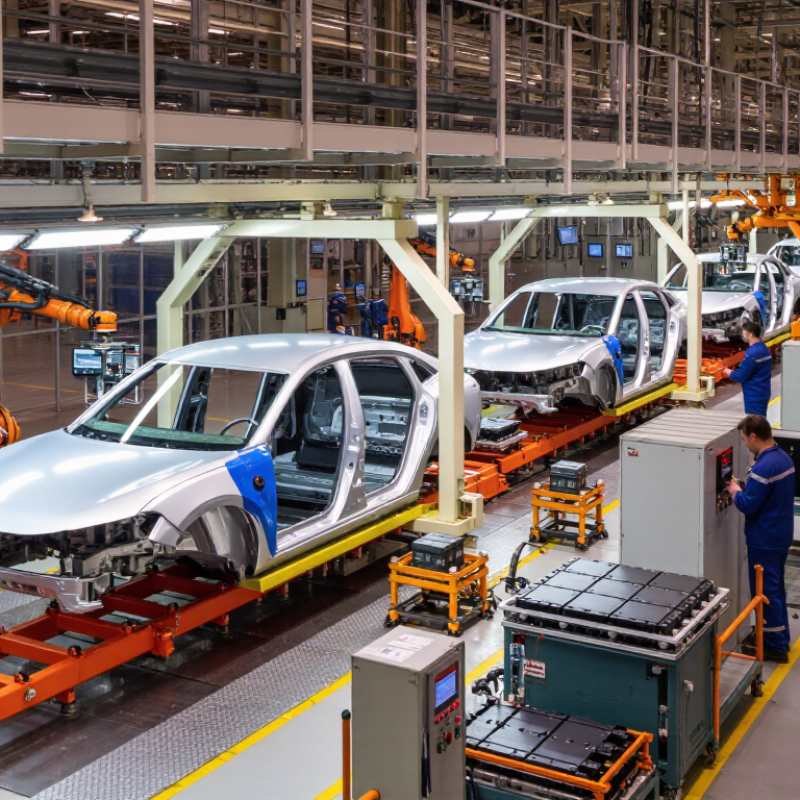
A new energy car production line is a connected system for building vehicles powered by batteries or other electric-drive technologies. It combines familiar body and paint operations with specialized stations for battery packs, electric motors, power electronics, and high-voltage wiring. The defining feature is not one machine. It is how these processes work together.
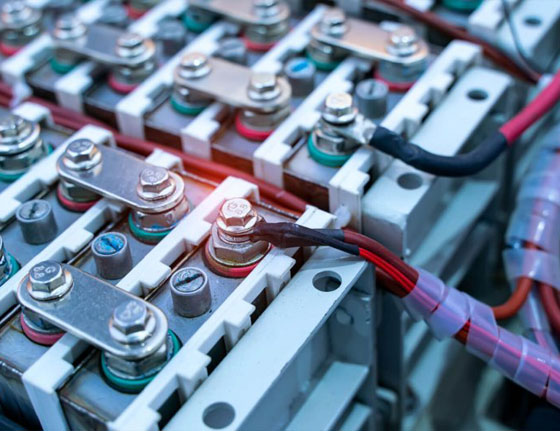
At a battery station, workers or automated tools position modules, tighten fasteners to specified torque, and record inspection results. Sensors can flag an unusual temperature or a missed connection before the vehicle moves forward. Traceability matters. Each pack and key component should be linked to its production data, making faults easier to investigate. The line also needs controlled handling areas and clear procedures for high-voltage components. Small details count.
A well-planned line tests more than whether a car starts. End-of-line checks may assess charging, braking, steering, thermal management, and communication between electronic systems. Flexible fixtures can help accommodate different vehicle sizes, though flexibility adds setup complexity. That trade-off deserves attention. No layout is perfect from day one; trial builds often reveal awkward tool access, slow handoffs, or inspection steps that need redesign. Regular review keeps the process grounded in actual production conditions.
A new energy car production line moves a vehicle through a sequence of controlled steps. The process often begins with forming and welding the body structure. Sensors check key joints, while workers inspect areas that machines may miss. The body then receives surface treatment and paint in sealed, carefully monitored rooms. Small defects can still appear, so inspection remains essential.
Next, teams install the electric motor, battery pack, wiring, and cabin components. Battery modules are handled with dedicated lifting equipment, and connections are checked before power-up. The vehicle’s software and control systems are then configured and tested. On the final line, technicians check brakes, lights, steering, and charging functions. A short road simulation can reveal vibration or unusual sounds. It is not flawless. Test results may send a car back for adjustment, and that feedback helps the team find process gaps. Careful records link each inspection to the vehicle, making faults easier to investigate later. The pace can be demanding, but skipping a check is not a useful shortcut.
A simplified view of the main production stages, from preparing components to final quality checks.
Why choose a dedicated line? It coordinates battery-pack and electric-drive integration with vehicle assembly, while supporting consistent quality checks and production traceability. The sequence shown is simplified: battery-pack production often runs in parallel with body and paint operations, and actual line layouts vary.
Modern vehicle manufacturing relies on connected technologies that keep production precise, traceable, and adaptable. For electric vehicles, automated equipment handles battery modules, drive units, and body assembly. Robots can repeat demanding tasks, while workers oversee setup, inspection, and exceptions. Small errors matter.
Machine vision checks welds, connector positions, and surface defects as parts move along the line. Sensors also record torque, temperature, and equipment vibration. These readings help teams identify drift before it becomes a costly batch problem. Still, cameras can miss defects when lighting changes or components arrive with unexpected variation.
Digital production systems link design data with machines on the factory floor. A digital twin can test line changes before equipment is moved, reducing disruption during upgrades. Battery assembly needs especially careful controls: clean work areas, accurate fastening, and checks for electrical performance. End-of-line testing can verify charging behavior, insulation, and thermal response. It is not magic. Poor data or rushed calibration can make advanced systems confidently report the wrong result. Teams still need practical experience, clear inspection procedures, and time to investigate anomalies rather than simply trusting a dashboard.
A new-energy car production line can make energy use easier to monitor at each stage. Sensors track electricity, compressed air, and equipment downtime, while digital work instructions help operators follow consistent assembly steps. A clear dashboard helps supervisors spot an idle motor or an unusually high energy draw. Small details matter.
Automated handling can reduce repetitive lifting and move battery packs with steadier positioning. That may improve workplace ergonomics and limit handling damage, though automation still needs skilled maintenance and careful safety procedures. Production schedules can also be adjusted to reduce unnecessary equipment start-ups. The gains depend on how well each station is designed and maintained.
Environmental benefits require a wider view. Electric process equipment and renewable electricity can lower a factory’s direct emissions, while recycling clean metal offcuts reduces material waste. Battery production still uses energy and resources, so a new-energy vehicle is not automatically low-impact from manufacture onward. Track water use, scrap, and electricity by process. Some data may be incomplete at first. That deserves attention. Regular audits and supplier reporting can reveal where improvements are real, and where the production line still needs work.
Why Choose a New Energy Car Production Line?
How Can Manufacturers Choose the Right Production Line?
Choosing a production line starts with the vehicle, not the machine catalog. List the battery types, body styles, and expected daily output your plant must handle. Include the actual floor space, utility capacity, and material routes. A line designed for peak volume may sit underused if demand grows slowly. Flexibility has value, but it also adds cost.
Check how each process connects, from battery assembly and vehicle joining to inspection. Ask how changeovers work and how long routine maintenance takes. Traceability matters. Production records should link key parts and test results to each vehicle. Review safety controls, operator training, and support arrangements with the equipment provider. A polished spreadsheet can still miss a cramped aisle or awkward parts delivery. Visit a comparable operating site if possible; real shifts reveal details that drawings may not.
Tips: Map the plant before requesting proposals. Test sample parts and confirm cycle times with realistic conditions. Keep a modest capacity buffer, but avoid paying for unused automation. Compare total ownership costs, including energy, tooling, maintenance, and downtime. Then revise the plan. Some assumptions will be wrong, and early adjustments are usually easier than late ones.
Use the planning ranges below as evaluation benchmarks, not universal specifications. Actual requirements depend on vehicle design, product mix, local regulations, and factory conditions.
| Evaluation Dimension | What to Assess | Useful Data or Planning Benchmark | How to Choose |
|---|---|---|---|
| Product and vehicle mix | Vehicle categories, body styles, battery locations, and expected model changes. | List current and planned models, annual volumes, and the proportion of each model in the production mix. | Select dedicated equipment for stable, high-volume products; consider flexible fixtures and programmable stations when models or variants may change. |
| Required production rate | Annual output, operating calendar, shifts, planned downtime, and target line balance. | Takt time = net available production time ÷ required units. Example: 60,000 vehicles per year over 250 days and two 7.5-hour net shifts requires 16 vehicles per hour, or a 225-second takt. | Size stations against the required takt and validate the result with cycle-time studies, line balancing, and realistic availability assumptions. |
| Battery manufacturing scope | Whether the facility assembles battery packs, installs supplied packs, or includes upstream cell and module processes. | Define process boundaries, pack dimensions and mass, handling points, electrical test requirements, and traceability needs. | Choose the line scope that matches make-or-buy decisions and supplier interfaces; avoid investing in upstream processes that are not part of the manufacturing plan. |
| High-voltage safety | Electrical isolation, interlocks, controlled access, safe testing, and personnel training. | Production and test procedures must address the vehicle’s high-voltage system; battery and vehicle designs commonly use 400 V- or 800 V-class architectures, with actual limits defined by the design. | Require a documented safety concept covering each process step, test station, maintenance activity, and emergency response. Verify compliance with applicable local rules. |
| Automation and labor strategy | Task repeatability, ergonomic risk, labor availability, maintenance capability, and expected production volume. | Compare manual, semi-automated, and automated operations by station; assess cycle time, staffing, changeover time, and equipment recovery needs. | Automate processes where safety, repeatability, or takt supports the investment. Retain adaptable manual or semi-automated steps where product variation is high. |
| Quality and traceability | Critical joining and fastening operations, inspections, end-of-line tests, and product genealogy. | Specify which results need to be recorded, such as torque values, test outcomes, component identifiers, and process timestamps. | Define acceptance criteria and data retention before equipment selection; ensure records can be linked to the vehicle or battery unit. |
| Factory space and material flow | Building footprint, column spacing, floor loading, storage, logistics routes, and access for maintenance. | Map inbound parts, line-side supply, work-in-process buffers, finished vehicles, personnel routes, and service clearances. | Validate the layout against the actual building and material-handling method before purchase; leave room for safe access and future changes. |
| Energy and utilities | Electrical capacity, compressed air, cooling, ventilation, and process-specific utility demand. | Request load lists and peak-demand estimates for each station; distinguish connected load from expected operating demand. | Check utility capacity and operating cost with the facility team. Include energy monitoring and efficient standby modes where practical. |
| Ramp-up and future expansion | Installation, commissioning, training, process validation, staged capacity increases, and model updates. | Build a project schedule with equipment delivery, factory acceptance, site acceptance, pilot builds, and production-readiness milestones. | Compare total lifecycle cost and ramp-up risk, not only purchase price. Specify expansion interfaces and performance acceptance criteria in the project plan. |