Blog

2026 Best Solar Street Lights Outdoor for Buyers?

Solar street lighting is no longer a niche choice for roads, parking areas, and remote sites. IRENA’s Renewable Capacity Statistics 2024 reports that the world added 473 GW of renewable power in 2023, including 346 GW of solar capacity. That growth shows how quickly solar technology is scaling. It does not, by itself, prove that every street-light product is reliable.

For buyers comparing Solar Street Lights Outdoor in 2026, the useful question is how a fixture performs after several cloudy nights, not just how bright it looks in a product photo. Check the measured light output, battery capacity, panel rating, operating temperature range, and stated autonomy. Ask for photometric test results and clear warranty terms. Small details matter. A battery’s performance can change with heat, age, and charging conditions, so headline runtime deserves careful checking.

Costs also need context. IRENA’s Renewable Power Generation Costs in 2023 found that the global weighted-average levelized cost of utility-scale solar electricity fell 12% that year. That is encouraging background, but it is not a street-light price forecast. Site conditions, pole height, spacing, and maintenance access can change the real project cost. A bright specification sheet can still hide weak evidence. This guide compares practical features and buyer questions, while recognizing that no single model suits every road. Check claims against the project’s actual lighting plan and local conditions before choosing.
2026 Best Solar Street Lights Outdoor for Buyers?

What Outdoor Solar Street Lights Are and How They Work

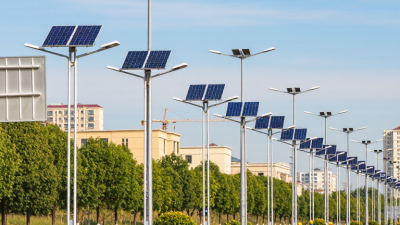
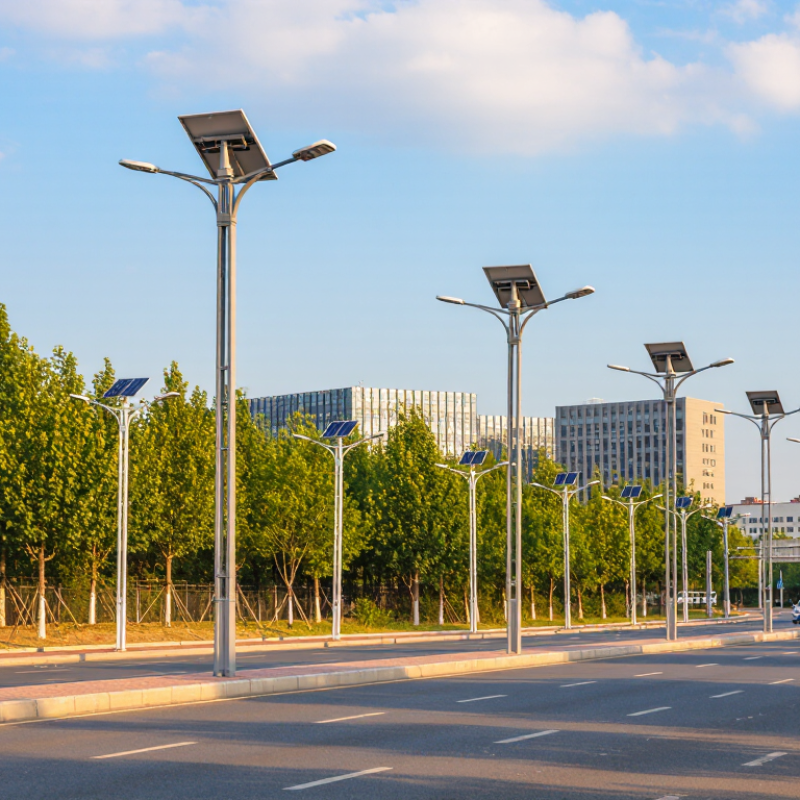
Outdoor solar street lights are self-contained lighting systems for roads, paths, parking areas, and open spaces. A solar panel collects daylight and converts it into electricity. The system stores that energy in a rechargeable battery, usually housed inside the light or its pole. After dark, LED fixtures use the stored power to illuminate the area. No grid connection is needed.

A controller manages charging and switches the light on when daylight fades. Many systems also adjust brightness during quieter hours to conserve battery power. On a clear day, the panel may charge efficiently; shade, dust, and cloudy weather can reduce the energy collected. Small details matter. A panel partly blocked by tree branches may leave a light dim before dawn.

For buyers, it helps to consider the site before comparing brightness claims. Check how many hours of light are needed, whether nearby buildings cast shadows, and how much winter sunlight the area receives. Battery capacity and panel size should suit those conditions, not just a best-case summer day. An installation can look simple on paper, yet poor placement may undermine performance. That is worth checking early.

Main Types, Components, and Lighting Applications

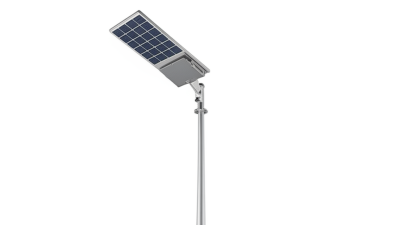
Solar street lights generally fall into three types: all-in-one, semi-integrated, and split systems. All-in-one units combine the panel, battery, and LED fixture in one housing. They suit paths and small parking areas, but offer less flexibility in panel placement. Semi-integrated models separate the panel from the lamp head. Split systems place the panel, battery, and fixture apart, which helps when roofs or trees create shade. More parts, though, mean more installation checks.

Every system depends on a photovoltaic panel, rechargeable battery, LED module, controller, and pole-mounted fixture. The controller regulates charging and can dim lights or respond to motion. Battery capacity and panel size matter most on sites with long winter nights or several cloudy days. Check them against local sunlight, not just advertised brightness.

Small detail. The U.S. Department of Energy says LEDs use at least 75% less energy and can last up to 25 times longer than incandescent lighting; this is a general lighting comparison, not a guarantee for any solar fixture.

For roads, entrances, pathways, and remote work sites, match light distribution to the area. A bright fixture can still leave dark patches. Good plans consider glare, spacing, and maintenance access.

How to Assess Brightness, Battery Life, and Weather Resistance

2026 Best Solar Street Lights Outdoor for Buyers?

Judge brightness by where the light lands, not the largest lumen number. Ask for a photometric report showing illuminance across the intended road or walkway. IES RP-8 guidance evaluates roadway lighting through measures such as illuminance and luminance, rather than headline output alone. Check the beam pattern, mounting height, and dimming schedule. A bright spot beneath the pole can still leave dark gaps nearby.

Battery claims need conditions. Compare battery capacity in watt-hours and stated runtime at the same brightness setting. Ask how many cloudy nights the fixture can handle, and whether it dims before dawn. NREL’s review of nearly 2,000 photovoltaic degradation rates reported a median module decline of about 0.5% per year. That figure concerns panels, not batteries, so it cannot predict battery life. A spec sheet can still mislead.

For weather resistance, look for a tested IP rating under IEC 60529. IP65 means dust-tight protection and resistance to water jets, not protection against submersion. Check seals, cable entries, and the battery compartment; those small details often face wind-driven rain first. Small detail, big difference. Ask for the test conditions, too. A rating alone cannot show how well a fixture handles years of heat, cold, and repeated wet-dry cycles.

2026 Solar Street Light Buying Guide: Brightness, Battery Life & Weather Resistance

Weather resistance: The chart compares IP water-protection digits under IEC 60529. IPX5 covers water jets, IPX6 powerful water jets, and IPX7 temporary immersion under specified test conditions. These ratings are categories, not a linear performance scale; an IPX7 rating does not automatically indicate IPX5 or IPX6 jet protection. The first digit 6 in IP65, IP66, and IP67 indicates dust-tight enclosures.

Brightness and battery: Compare measured light output and the lighting pattern for the installation area, not lumens alone. Check the stated runtime in the intended operating mode, including any sensor dimming, and confirm the battery capacity and expected nights of autonomy suit local sunlight and seasonal conditions.

Site Planning, Installation, and Routine Maintenance

Planning matters more than choosing the brightest fixture. Walk the site at dusk and mark entrances, paths, parking areas, and shaded corners. Note trees, rooflines, and seasonal shadows that could block sunlight. A layout that looks balanced on paper may still leave a dark patch beside a gate. It is easy to miss that.

Estimate pole spacing from the light’s distribution pattern, not just its advertised brightness. Check the expected hours of sunlight and the number of cloudy days in the area. If winter sunlight is limited, allow for shorter runtime or consider a larger system. Do not assume one sunny afternoon reflects year-round conditions. Confirm pole foundations suit local soil and wind exposure. Follow the product instructions, and use a qualified installer when electrical or structural work is beyond your skills.

After installation, check that panels face the intended direction and remain free from shade. Small adjustments help. Wipe dust, leaves, and bird debris from panel surfaces with a soft cloth, following the maker’s care guidance. Inspect poles, fasteners, and visible wiring for looseness or wear. Once a month, compare nighttime operation across fixtures; dimming in one area can reveal a dirty panel or aging battery. Keep a simple maintenance log. It may seem fussy, but it makes recurring problems easier to spot.

How to Compare 2026 Models and Choose the Right Light

When comparing 2026 outdoor solar street lights, start with the site, not the brightest number on the box. Measure the road width, mounting height, and hours of useful light needed after sunset. A narrow driveway may need a different beam pattern than a broad parking area. Check whether published output describes initial brightness or sustained overnight performance. Numbers can mislead.

Look at panel size, battery capacity, and stated autonomy together. A light claiming several cloudy nights should explain its test conditions; winter shade can cut charging sharply. Ask for runtime data at the selected brightness setting, not just a maximum figure. Motion dimming can save energy, but test whether the sensor responds to people approaching from the side. That detail matters.

Inspect the housing and seals, and match the ingress rating to rain, dust, and cleaning exposure. Confirm the pole diameter, bracket adjustment, and access to replaceable components before ordering. Compare warranties and independent test documents, but read exclusions carefully. A high rating does not guarantee even light on the ground. If possible, review a nighttime layout or measure a sample installation; glare near windows is easy to overlook. Leave room for error.

2026 Best Solar Street Lights Outdoor for Buyers? - How to Compare 2026 Models and Choose the Right Light

Compare common solar street-light configurations by application and system capacity. The ranges below are general buying benchmarks, not specifications for a particular product or a guarantee of performance.

Configuration Typical LED input power Indicative delivered light output Typical solar-panel rating Typical battery capacity Common mounting height Best suited for Buyer considerations
Compact pathway light 10–25 W About 1,000–3,750 lm 20–60 W 100–300 Wh 3–5 m Paths, small courtyards, garden walkways, and low-traffic access areas. Lower installation cost and modest pole-height requirements. Confirm that the light distribution suits the path width; a high lumen claim alone does not establish useful ground-level illumination.
Residential street light 25–50 W About 2,500–7,500 lm 60–150 W 300–800 Wh 5–7 m Residential lanes, small parking areas, and neighborhood roads with light to moderate traffic. Check pole spacing, optical distribution, and dimming schedules. Battery and panel sizing should reflect local winter sunlight and the required overnight operating time.
Local-road configuration 50–90 W About 5,000–13,500 lm 150–300 W 800–1,800 Wh 7–9 m Wider neighborhood roads, commercial access roads, and medium-sized outdoor parking areas. Request a lighting layout showing spacing and maintained illuminance. Verify battery chemistry, operating-temperature limits, and the number of autonomy nights specified.
High-output road or area light 90–150 W About 9,000–22,500 lm 250–450 W 1,500–3,000 Wh 8–12 m Large open areas, broad access roads, and sites that need higher light levels or wider pole spacing. Requires careful structural and lighting design. Check pole and wind-load requirements, panel orientation, shading, battery reserve, and whether the proposed output can be sustained through poor-weather periods.
How to compare fairly: Delivered-light figures are indicative estimates using roughly 100–150 lm per watt of LED input; actual maintained output varies with optics, temperature, driver settings, and product design. Ask for a photometric report and a site-specific lighting plan. Solar generation depends on location, season, panel angle, and shading, while battery autonomy depends on the load, usable battery capacity, and control settings. Compare warranty terms, replacement-part availability, ingress protection rating, and documented battery capacity—not headline wattage alone.