Best Commercial Solar Street Light Manufacturers in China
Commercial Solar Street Lights are moving from niche installations to practical infrastructure for roads, campuses, industrial parks, and rural routes. Their appeal is easy to see: a solar panel charges a battery by day, while an LED luminaire lights a road after dusk. Yet performance depends on more than the wattage printed on a product sheet. Battery chemistry, panel sizing, controller settings, pole height, and local weather all shape real-world results.
The cost backdrop is changing. IRENA’s Renewable Power Generation Costs in 2023 reports that the global weighted-average cost of electricity from newly commissioned utility-scale solar PV fell 12% year over year, to USD 0.044 per kilowatt-hour. That figure describes utility-scale generation, not the installed cost of a solar street light. The distinction matters. Buyers comparing manufacturers in China still need project-specific quotations, test records, and clear warranty terms. Small details count.
A useful comparison should examine lighting performance, autonomy during cloudy periods, corrosion protection, battery replacement access, and after-sales support. Ask for photometric data, not only claims about brightness. Check whether test conditions match the proposed site, and confirm how suppliers define battery life. Some specifications remain difficult to compare. That is worth admitting. This guide introduces Chinese manufacturers and highlights practical questions for evaluating their products, while recognizing that the best supplier depends on climate, road layout, budget, and maintenance capacity.
Commercial Solar Street Lights: Applications and Core Components
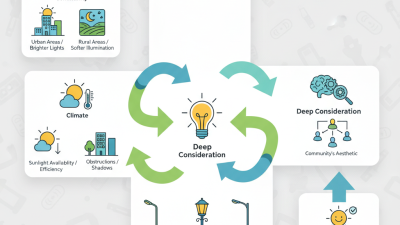
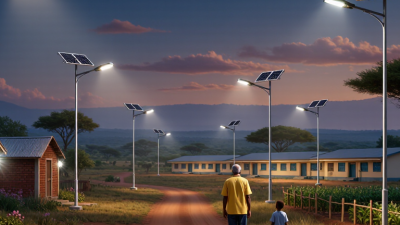
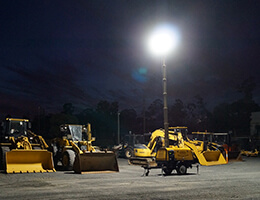
Commercial solar street lights suit roads, logistics yards, parking areas, campuses, and remote access routes where trenching is costly. They can operate independently of the grid, but performance depends on local sunlight, shade, and overnight demand. A pole beside a warehouse may need brighter, longer coverage than a quiet access lane. That distinction matters.
A typical system combines a photovoltaic panel, charge controller, battery, LED luminaire, pole, and mounting hardware. The controller manages charging and protects the battery from excessive discharge. The battery must store enough energy for the expected night hours and cloudy periods. Panel angle and size affect daily charging; nearby trees or buildings can reduce output. A neat specification sheet can still mislead. Check measured light distribution, not just wattage, and review battery capacity against actual operating hours.
IRENA’s Renewable Power Generation Costs in 2023 report found that utility-scale solar PV’s global weighted-average electricity cost fell 12% year over year, to USD 0.044 per kilowatt-hour. That figure does not predict a street light’s operating cost, but it reflects broader improvements in solar economics. Site-level results still vary. Maintenance plans should include battery replacement, panel cleaning, and inspection of seals and wiring—details that are easy to overlook.
Commercial Solar Street Lights: Applications and Core Components
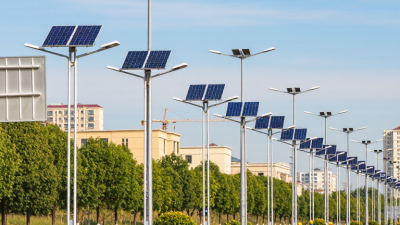
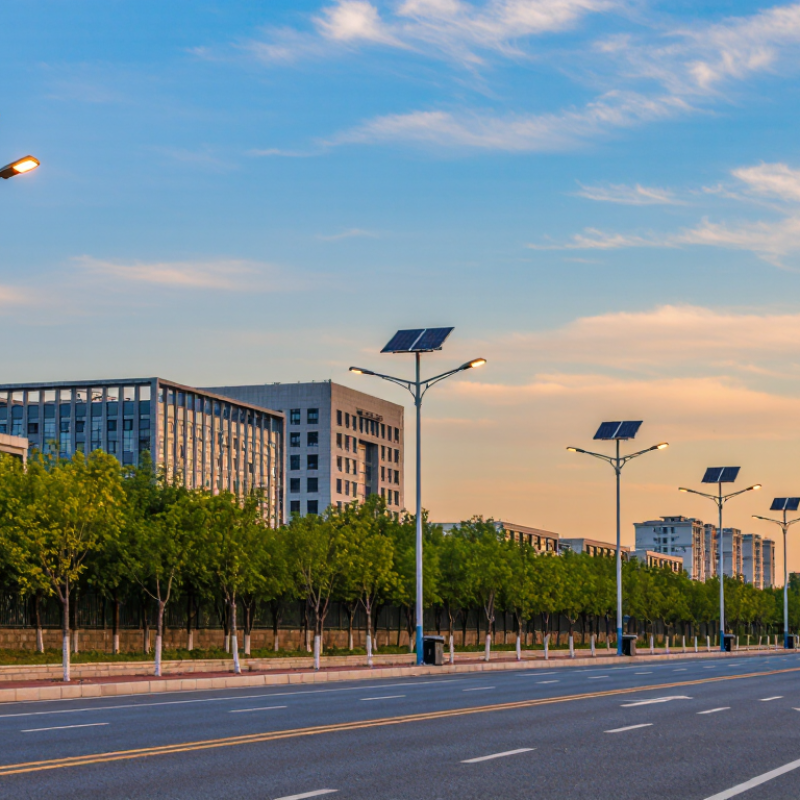
Solar street lights are used along roads, in parking areas, parks, pathways, and off-grid locations. Core components include a photovoltaic panel, LED luminaire, battery, charge controller, pole, and foundation.
The chart shows an illustrative system, not a universal product specification: a 60 W LED operating for 12 hours uses 0.72 kWh per night. A 300 W panel receiving 4 peak sun hours produces an estimated 0.96 kWh per day after an assumed 20% system loss. A 1.2 kWh battery at 80% usable capacity provides 0.96 kWh of usable storage.
How to Evaluate Chinese Solar Street Light Manufacturers
Best Commercial Solar Street Light Manufacturers in China
How to Evaluate Chinese Solar Street Light Manufacturers
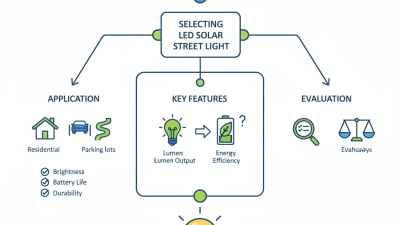
A reliable supplier should explain how its system performs beyond a sunny showroom. Ask for the battery chemistry, usable capacity, panel output, and expected operating hours. Numbers can mislead. Request the assumptions behind them, including daily sunlight, lamp power, and consecutive cloudy nights. For a road that needs lighting until dawn, compare the stated autonomy with your local weather and dimming schedule.
Review test documents for the exact product configuration, not just a similar model. Check enclosure protection, corrosion resistance, and temperature limits against your installation site. Ask how the manufacturer controls battery, controller, and LED quality during production. A factory visit can help, but a documented sample inspection may be more practical. Ask for dated production records and clear warranty terms. Ask for proof.
A small pilot installation reveals details that brochures miss: uneven light on the pavement, slow charging, or a pole bracket that is awkward to service. Measure illuminance at several points after dark, then check battery status after cloudy days. One limitation is easy to overlook: test results from one climate may not predict performance in yours. Request references for comparable projects, while treating claims as leads to verify, not guarantees.
Leading Commercial Solar Street Light Manufacturers in China
China’s leading commercial solar street light manufacturers benefit from a deep solar-component supply chain. The International Energy Agency’s 2022 report, Solar PV Global Supply Chains, found that China held more than 80% of global manufacturing capacity across key solar panel production stages. This scale can support component access, but it does not guarantee a dependable finished light. Buyers should assess battery cells, controller settings, LED output, and documented quality checks.
For a roadside project, request a lighting simulation and check the assumed daily operating hours. Ask how the system performs after several cloudy days, not only under ideal test conditions. Review battery replacement access, enclosure protection, pole wind-load calculations, and warranty exclusions. A bright sample in a showroom tells little about winter performance. Specifications can also look complete while leaving key test conditions unclear.
Tips: Ask for independent test reports and sample units from the same production line as the quoted order. Compare usable battery capacity, not just the advertised rating. No supplier is perfect; clarify who handles failures and spare parts before signing.
Comparing Products, Technologies, and Manufacturing Capabilities
Comparing commercial solar street light manufacturers in China starts with more than advertised lumen output. A bright lamp can still leave dark patches if its optics do not match the road width and pole height. Ask for a photometric layout, not just a lumen figure. Small details matter. Compare battery capacity in watt-hours, panel output, and expected autonomy under cloudy conditions. A system with adjustable dimming may preserve light through longer nights, but its control settings should be clearly documented. Check whether the charge controller uses MPPT and how the battery is protected from heat and over-discharge.
Manufacturing capability shows up in repeatability. Request specifications for the production model, sample inspection records, and test reports for water and dust resistance. Ask how suppliers check LED boards, battery packs, seals, and wiring before assembly. A neat sample is not proof that every shipment matches it. It is worth comparing warranty terms with the stated operating conditions; the fine print can be easy to overlook. For coastal sites, ask about corrosion protection, while high-wind locations need suitable pole and mounting calculations. No single specification settles the choice. A lower-cost unit may suit a small parking area, while a road project may need stronger evidence, consistent batch quality, and serviceable components.
How to Select a Manufacturer for a Commercial Project
For a commercial solar street light project, assess the manufacturer’s engineering process, not just the catalogue. Ask for photometric files that match your road width, pole height, and required spacing. A bright sample on a warehouse floor proves little. Request battery capacity, panel output, autonomy estimates, and the assumptions behind them, including local sunlight and operating hours. Details matter.
Tips: Check the enclosure’s ingress and impact ratings, corrosion protection, and operating temperature range. Ask how the supplier tests battery performance and verifies production consistency. Review warranty terms in writing, including who handles diagnostics and replacement parts. Request references from projects with similar weather and usage. Then inspect a sample. Look closely at cable glands, seals, fasteners, and finish. Small details can reveal rushed assembly.
A dependable manufacturer should explain trade-offs clearly. For example, longer overnight operation may require a larger battery or panel, which affects cost and pole loading. Ask for drawings, installation guidance, and a realistic delivery schedule. Confirm that quoted specifications apply to the exact model being offered. A pilot installation can expose poor light distribution or charging issues before a full rollout. It takes time. Still, I would not skip it, even when the project schedule feels tight.